
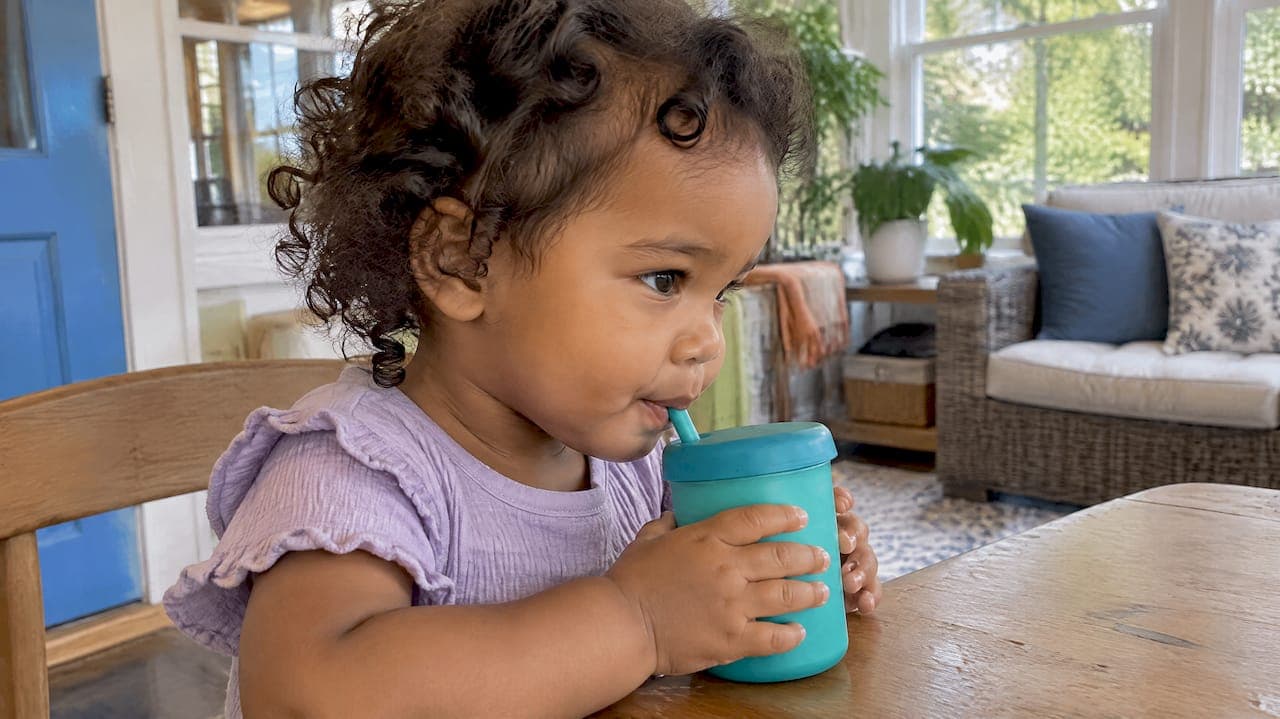
Most children learn to drink from a straw with a little patience, a short straw and a few minutes of playful practice a day. You can start around 6 months, when solid foods begin, and many children are comfortable with cups by 12 to 18 months. If your child is older and still stuck, the steps below usually help, and we will also show you when it makes sense to bring in a feeding therapist.
We work with families across Pasco and Hillsborough Counties, and straw drinking is one of the most common questions parents bring us. It looks simple, but it asks a lot of a small mouth. Let's walk through it together.
TL;DR
- Offer a cup with a straw at about 6 months, alongside solid foods, and keep practice sessions to a few minutes.
- Start with a short straw, a supported upright seat and a liquid or puree your child likes.
- Use a pipette-style hold or a squeeze-valve straw cup to show the "aha" of liquid arriving, then fade the help.
- Practice with more than one kind of cup: straw, open cup and others.
- Coughing, choking, back arching or tears at most meals are reasons to ask for a professional evaluation.
Table of Contents
- Why straw drinking matters
- When to start
- What you need before you begin
- Step-by-step: how to teach straw drinking
- Thickened liquids can make the first sips easier
- Troubleshooting common roadblocks
- Use more than one kind of cup
- Our perspective: skills, not shortcuts
- Signs it's time to ask for help
- How we can help
- FAQ
- Sources
Why straw drinking matters
Drinking through a straw is about more than getting fluids in. Speech-language pathologists point out that a successful straw sip takes coordinated work from the lips, tongue and soft palate, the same muscles that later support advanced feeding skills and speech sounds. Think of it as a small workout that builds a foundation.
There is also a practical side. A child who can use a straw can take a drink at a restaurant, on a walk or at preschool without a bottle or a spouted lid, and that makes the transition off the bottle easier.
When to start
The CDC says you can offer a cup and straw around 6 months, when your baby starts solid foods. The American Academy of Pediatrics gives the same timing and notes you can offer a sippy cup with a spouted lid or a cup and straw at that stage.
A few reminders as you begin:
- Milestones are a general timeline, not a deadline. Babies with feeding difficulties, orofacial differences or a history of tube feeding may take longer, and that is okay.
- Your baby does not need to master the straw at 6 months. The first months are about exploring, getting a little liquid in the mouth and having fun.
- Breast milk or formula remains the main drink in the early months. Straw practice is a skill, not a replacement.
What you need before you begin
Keep the setup simple.
- A supportive seat. A high chair with the feet supported and the back upright gives your child better control. Reclined or slouched positions make swallowing harder.
- A short straw. Practitioners often advise against long, thin straws for beginners because they can encourage a bottle-like, forward-tongue pattern. A short straw that barely reaches past the lips encourages the rounded lip closure and tongue lift of a more mature swallow, as described in this speech-language pathologist's straw handout. Cutting a regular straw in half is an easy way to get there.
- A liquid your child loves. Breast milk, formula or a favorite puree is a better motivator than plain water on day one.
- A calm moment. Pick a time when your child is alert and not ravenous or exhausted.
Step-by-step: how to teach straw drinking
Step 1: Let your child watch you
Children learn by imitation. Sip from your own straw at the table, make a little "mmm" and let your baby see your lips close around it. Do this at several meals before you ask for anything.
Step 2: Try the pipette hold
Dip the straw into the liquid, place a finger over the top end to trap a little liquid inside, and bring the tip to your child's lips. When you release your finger, a small amount flows into the mouth. Your child gets the sensory "aha" that this tube delivers something good, without needing to suck yet. Authoritative guidance recommends the pipette method or a squeeze-valve straw cup to build suck, swallow and breathe coordination.
Keep the amount tiny, a few drops to a teaspoon, so your child can swallow comfortably.
Step 3: Move to a squeeze-valve cup if you like
A soft cup with a valve lets you gently squeeze liquid up the straw as your child's lips close around it. The same ASHA article notes that valve-based cups are a frequently recommended starting tool because they give an immediate success. The goal is to squeeze less each time, so your child gradually does more of the sucking.
Step 4: Fade your help
Once your child opens the mouth and closes the lips around the straw when you approach, squeeze a little less, then stop squeezing while your child sucks. Celebrate every attempt, even the ones that only produce a smile and a bubble.
Step 5: Keep sessions short
A few minutes at a time is plenty. Two or three short tries a day beat one long, frustrating one. Stop before your child melts down, and end on a success, even if it was just a lip touch.

Thickened liquids can make the first sips easier
Many parents are surprised to learn that you can start with something thicker than water. A smooth yogurt or thin puree moves more slowly up a short straw, which gives the lips and tongue more feedback to learn from. Once your child can pull a thicker liquid with confidence, thinner liquids like milk and then water feel much less overwhelming, and the cough-or-gag reaction that fast-moving liquid can trigger becomes less likely.
A word of care: if your child has been told to use specific liquid consistencies by a doctor or therapist, follow that plan and ask before making changes.
Troubleshooting common roadblocks
If progress is slow, it usually points to one of a handful of simple fixes.
| What you see | What to try |
|---|---|
| Chewing or biting the straw | Use a shorter straw, offer thicker liquid, and give a few tiny sips with the pipette hold first. |
| Pushing the tongue forward, bottle-style sucking | Shorten the straw so it only just passes the lips, and check that your child's chin and trunk are supported. |
| Liquid dribbling out | Reduce how much is in the straw, and gently help the lips close around it. |
| Coughing on thin liquids | Go back to a thicker liquid, take smaller sips, and slow down. |
| Turning away or crying | Take a break. Play with the cup and straw away from mealtime, with no pressure. |
| Takes the straw but won't suck | Return to the pipette hold. Many children need a few days of "liquid arrives on its own" before they try. |
If your child gags often, it can help to know the difference between gagging and choking. Our guide on spotting choking versus gagging explains what each looks like and what to do at different ages.
Use more than one kind of cup
Parents sometimes worry that a particular cup will ruin their child's mouth development. According to ASHA's coverage, there is no scientific evidence linking sippy cups to oral and facial development problems. The real concern is relying on only one type of cup, which limits the movements your child gets to practice.
So rotate. Offer a straw cup at one meal, a small open cup with a sip of water at another, and let your child explore a variety. Our step-by-step guide to open cup training for babies pairs well with straw practice, because each skill builds the other.
If your toddler has started refusing cups altogether or is leaning heavily on milk, our therapist-written plan for toddler cup refusal can help you reset.
Our perspective: skills, not shortcuts
We see straw drinking as a window into how your child's mouth is working as a whole. When it comes easily, wonderful. When it doesn't, we ask why before we reach for a trick. Is it the seating? Is the tongue moving forward out of habit? Is there sensory discomfort, a history of tube feeding, or a coordination issue with breathing and swallowing?

That is the heart of our holistic, family-centered approach: we look for root causes rather than quick fixes, and we build the plan around your family's meals, routines and comfort level. As a practice founded by a pediatric healthcare professional who is also a parent, we know how stressful it feels to watch your baby struggle with something that looks so easy on social media.
Here is what we would tell any parent. Keep it playful. Keep it short. Celebrate effort. And remember that a child who needs more time is not behind in any way that makes you a failing parent.
— Thriving Joy
Signs it's time to ask for help
Most children who are slow with straws just need more practice or a better setup. But some signs deserve a professional evaluation. According to ASHA's guidance for families on feeding development, watch for:
- coughing or choking during or after swallowing
- arching the back during feeds
- persistent crying at mealtimes
- missing several feeding milestones by age 3
- losing skills your child once had
ASHA also shares that more than 2 million children in the US are estimated to have pediatric feeding disorder, and points families to the Feeding Matters six-question screener as a starting tool.
Call your pediatrician promptly if your child coughs, chokes or turns blue with drinks, loses weight, or has repeated chest infections, since these can signal swallowing problems that need medical attention. Any breathing difficulty is an emergency: call 911.
Straw habits sit alongside other oral habits too. If your child is also sucking a thumb or pacifier a great deal, this overview of when thumb sucking harms teeth explains why dental professionals want to hear about it, and your child's dentist can advise you.
Speech can be part of the picture because the same oral muscles are involved. If you are also noticing late talking, our guides to the early signs of speech delays and what happens during a speech-language evaluation can help you know what to expect.
How we can help
If you live in Pasco or Hillsborough County, our feeding therapy services in Lutz support babies and children who struggle with straws, cups, textures or mealtimes. We can see your child at our office, at home, or at daycare or preschool, so practice happens where your child actually eats. We accept private pay, major health insurance plans and scholarships, and we can talk through the options when you reach out.
Prefer to learn alongside other parents? Our parent coaching and workshops, including Starting Solids 101 and Picky Eating Workshops, give you practical strategies you can use at your next meal. To understand what a first visit looks like, read about how feeding therapy helps toddlers.
FAQ
What is the best age to start teaching straw drinking?
About 6 months, when your baby begins solid foods, is a good time to offer a cup and straw, according to the CDC. Many children are using cups well by 12 to 18 months. Older children can still learn, and the same steps apply.
Should I use a long straw or a short one?
Start short. A straw that barely extends past the lips supports a more mature lip and tongue pattern than a long, thin straw. Cutting a regular straw in half works well, and you can move to a standard length as your child gains skill.
Can I teach straw drinking with water?
Yes, but water is thin and fast, so it can be harder at first. Many families start with breast milk, formula or a smooth puree, then move to water once the sucking motion is steady. If your child coughs on thin liquids, go back to something thicker and check in with your pediatrician or a feeding therapist.
Are straw cups better than sippy cups?
Not necessarily. The ASHA article says the main risk is relying on a single type of cup. The best approach is variety: straw cups, open cups and other options used across the week.
When should I worry that my child still can't use a straw?
Worry less about the exact age and more about the pattern. Coughing, choking, back arching, constant mealtime distress or lost skills are reasons to ask for an evaluation. If your child is simply new to it, a couple of weeks of short, playful practice is reasonable before reaching out.
Sources
- CDC: Fingers, Spoons, Forks, and Cups
- HealthyChildren.org (AAP): From Bottle to Cup
- ASHA Leader: Skip the Sippy? Coaching Parents on Sippy Cup Use
- ASHA: Resources for Families on Feeding Development
- How to Teach Your Child to Drink from a Straw (Melanie Potock, MA, CCC-SLP)