

Food chaining is a feeding method that expands a child's diet by linking new foods to ones they already accept, changing only one sensory trait at a time. Here's your mini plan to start today: pick a food your child already eats without complaint, change one small attribute of it (temperature, shape, or brand), and offer it right next to their usual favorite so nothing feels forced. This works because the brain treats a food that looks, smells, or feels familiar as safer to try.
- Pick one accepted food as your anchor.
- Change exactly one attribute (never several at once).
- Serve the new version alongside the old favorite, with zero pressure to finish it.
Pro Tip: If your child has a diagnosed food allergy, gags frequently, or shows signs of a swallowing problem, talk with a child therapy specialist or feeding specialist before starting any new-food plan at home.
Key Takeaways
Food chaining works because it changes one sensory attribute at a time from a food a child already trusts, and most kids need repeated exposures rather than a single successful try.
| Point | Details |
|---|---|
| Change one attribute at a time | Use the 5 T's (taste, texture, temperature, type, time of day) to design each small link. |
| Expect multiple exposures | Plan for roughly 6 to 20 tries per new food based on clinical guidance before judging a link successful. |
| Log every attempt | Track date, reaction, and amount tasted so you know when to repeat a step or move forward. |
| Watch for red flags | Weight loss, frequent gagging, or a diet under 15 to 20 foods signal it's time for a specialist. |
| Get specialized support | Thriving Joy Pediatric Therapy builds individualized feeding plans alongside speech and lactation support. |
Table of Contents
- What Is Food Chaining, and Where Did It Come From?
- Steps to Build a Food Chain at Home
- Eight Food Chains You Can Copy Today
- Troubleshooting Refusals Without Losing Momentum
- How Long Does Food Chaining Take, and When Should You Get Help?
- Get Hands-On Support From Thriving Joy Pediatric Therapy
- Frequently Asked Questions
- Sources
What Is Food Chaining, and Where Did It Come From?
The technique was developed by pediatric feeding specialists as an individualized, home-based program for kids with extreme food selectivity, according to a chart review documenting food chaining's clinical roots. Instead of judging success by how much food gets eaten, it measures progress by how many new foods a child will tolerate on their plate, touch, or taste.
The core principle is simple: change one sensory attribute at a time. A crispy chicken nugget doesn't become grilled chicken breast in one leap. It moves through small, deliberate steps first.
That's a sharp contrast to the approaches most parents try first and regret:
- Forcing bites or using the "one more spoonful" rule, which usually backfires and builds mealtime dread.
- Hiding vegetables in sauces, which can erode trust once a child figures it out.
- Swapping a whole meal at once instead of one attribute, which overwhelms a sensitive palate or texture-sensitive mouth.
Steps to Build a Food Chain at Home
Building a chain takes some planning, but the process is straightforward once you see it laid out.
Step 1: Map your child's accepted foods. Write down every food your child eats without a fight, and note its sensory profile: crunchy or soft, warm or cold, plain or seasoned, familiar brand or homemade.
Step 2: Pick a target food and build tiny links toward it. Alberta Health Services guidance recommends changing only one small thing at a time and introducing just one new food in the mix. If your child eats crispy chicken nuggets, your first link might be a different nugget brand, not baked chicken tenders.
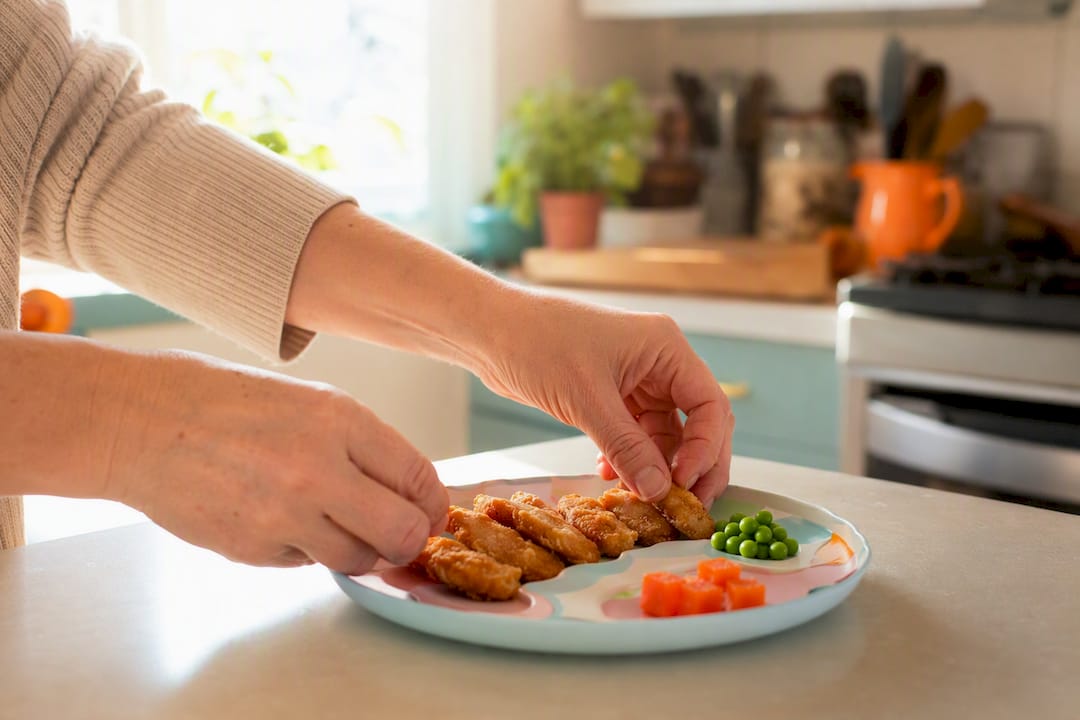
Step 3: Present new links without pressure. Put the new item on the same plate as the accepted food, let your child explore it with sight, smell, and touch before tasting is even expected, and wait several days between changes before pushing further.
Use the 5 T's to decide which attribute to change next:
- Taste — mild ranch dip before a stronger marinara.
- Texture — soft roasted carrot before a raw, crunchy one.
- Temperature — room-temperature applesauce before chilled fruit.
- Type or brand — a different cracker brand before a different shape entirely.
- Time of day — offering a new food at snack time, when pressure is lower than dinner.
Keep a simple log: date, which food, your child's reaction, how much they touched or tasted, and what you'll try next. This record keeps you from repeating a step that already failed or rushing one that's still working.
Pro Tip: Wait until your child is calm and only mildly hungry before introducing a new link. A starving, cranky child rarely takes food risks.
Eight Food Chains You Can Copy Today
Each chain moves through small links. Watch for choking hazards with raw, hard, or round foods, and cut anything new into age-appropriate pieces.
- Meat: chicken nuggets → different nugget brand → baked chicken tenders → grilled chicken strips → plain grilled chicken breast.
- Vegetable: French fries → sweet potato fries → roasted potato wedges → roasted carrot sticks → steamed broccoli.
- Dairy: flavored yogurt tube → smooth vanilla yogurt → plain yogurt with honey → plain yogurt → cottage cheese.
- Fruit: fruit snacks → dried mango → applesauce → soft canned peaches → fresh peach slices.
- Snack: cheese crackers → cheese cubes → string cheese → sliced cheddar → cheese on whole-grain toast.
- Grain: white bread → whole wheat bread → whole wheat pasta → brown rice → quinoa.
- Sauce/condiment: ketchup → mild BBQ sauce → marinara → salsa → mustard.
- Mixed dish: cheese quesadilla → chicken quesadilla → chicken taco → chicken and rice bowl → chicken stir-fry.
Troubleshooting Refusals Without Losing Momentum
A stalled chain usually means the link is too big, not that your child is being difficult.
- Shrink the change further. If a new cracker brand fails, try the same brand in a different shape first.
- Repeat the same link several times before switching to a different sensory dimension.
- Pair new foods with a favorite dip or condiment your child already trusts.
- Offer two acceptable choices instead of one mandate, so your child feels some control.
- Praise the attempt itself. Comments like "You touched it, nice job" work better than "If you eat it, you get dessert."
Practitioner guidance suggests giving a link roughly six to eight tries before deciding to adjust it, rather than abandoning a food after one bad reaction.
Pro Tip: Never use a new food as a reward or a punishment. Both approaches teach your child that the food itself is the problem, not the challenge of trying it.
If allergies run in your family, introduce single-ingredient links one at a time and watch for reactions before combining foods.
How Long Does Food Chaining Take, and When Should You Get Help?
Most children need multiple exposures before a new food earns a spot on their "accepted" list. NHS feeding guidance puts that range at roughly 10 to 20 exposures, while other clinical summaries cite 6 to 15 exposures for many kids. Either way, patience matters more than pace.
Contact a feeding specialist if you notice:
- Weight loss or growth that's slowing down.
- Frequent gagging, vomiting, or choking during meals.
- A diet limited to fewer than 15 to 20 total foods.
- Mealtime anxiety severe enough to disrupt family routines.
A pediatric feeding therapist can bring in an occupational therapist, speech-language pathologist, or registered dietitian to address oral motor skills, sensory processing, and nutritional gaps together, rather than one piece at a time.
A Clinical Perspective on Pacing and Patience
Every child's chain moves at a different speed, and that's not a failure. What matters most is pairing sensory-based steps with a team that watches the whole picture, feeding, growth, and communication together, so no red flag gets missed while you wait for progress.
Get Hands-On Support From Thriving Joy Pediatric Therapy
Thriving Joy Pediatric Therapy gives you what a printed food-chain worksheet can't: a feeding specialist watching your child's specific sensory triggers, oral motor skills, and growth in real time, so links get adjusted before frustration sets in. Our team combines feeding therapy, lactation counseling, and speech therapy under one roof, which matters when a feeding struggle overlaps with a speech delay or an early breastfeeding issue.
An initial feeding evaluation typically includes a review of your child's accepted foods, an oral motor and sensory assessment, and a personalized chaining plan built around their specific triggers, not a generic worksheet. This fits families whose child has stalled on fewer than 15 to 20 foods, shows mealtime anxiety, or has gagging and growth concerns that go beyond typical pickiness. If any of that sounds like your house, reach out to schedule a feeding evaluation and get a plan built around your child instead of a general checklist.
Frequently Asked Questions
What is food chaining in simple terms? It's a feeding strategy that introduces new foods by linking them to foods a child already eats, changing just one trait, like texture or taste, at a time.
How is food chaining different from just offering new foods repeatedly? Random exposure asks a child to accept something totally unfamiliar. Food chaining builds a bridge from a trusted food, which lowers the sensory jump required.
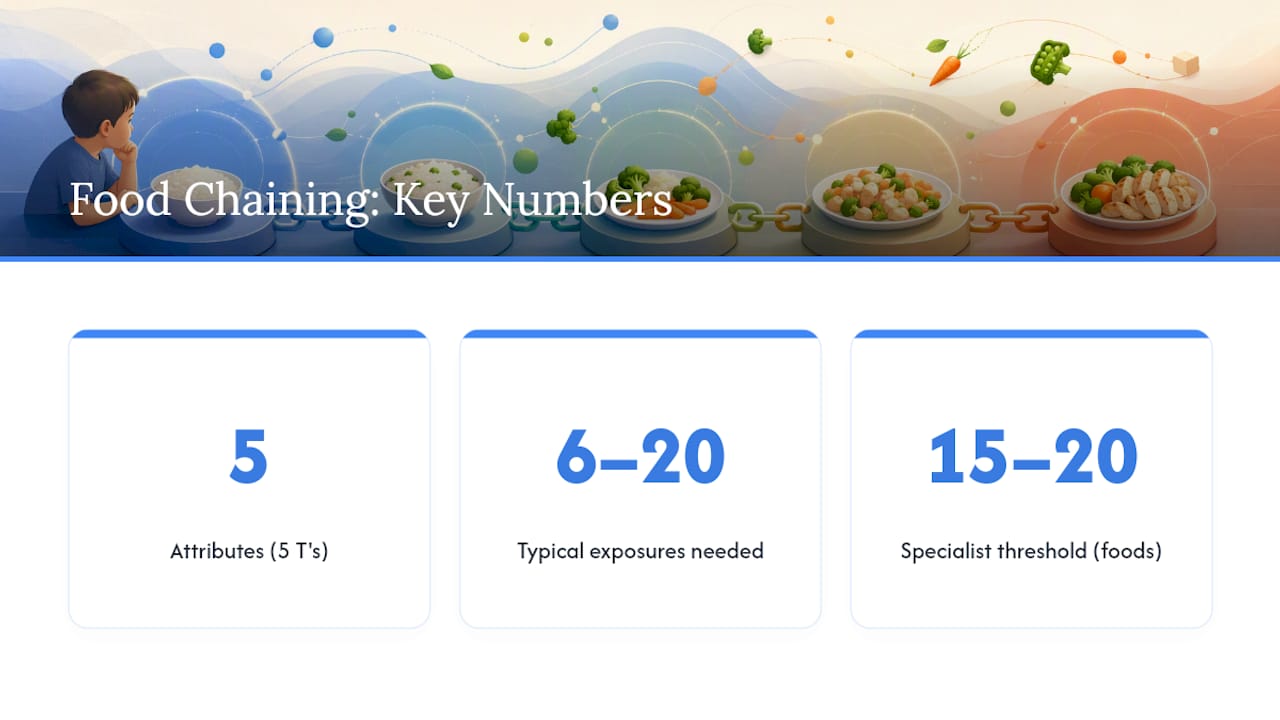
What are the 5 T's in food chaining? Taste, texture, temperature, type or brand, and time of day. Each represents one attribute you can adjust without changing everything about a food at once.
How many times will my child need to try a new food before accepting it? Guidance varies, but many sources point to somewhere between 6 and 20 exposures depending on the child and the food.
When should I stop trying food chaining at home and see a specialist? Reach out if your child shows weight loss, frequent gagging or vomiting, extreme mealtime anxiety, or a diet limited to fewer than 15 to 20 foods.
This article is general information, not a substitute for advice from a qualified doctor. Consult a qualified healthcare professional about your own circumstances before acting on anything here.
Sources
- Food Chaining: a systematic approach for the treatment of children with feeding aversion
- Patient Information Leaflet
- New Foods: Step by Step