
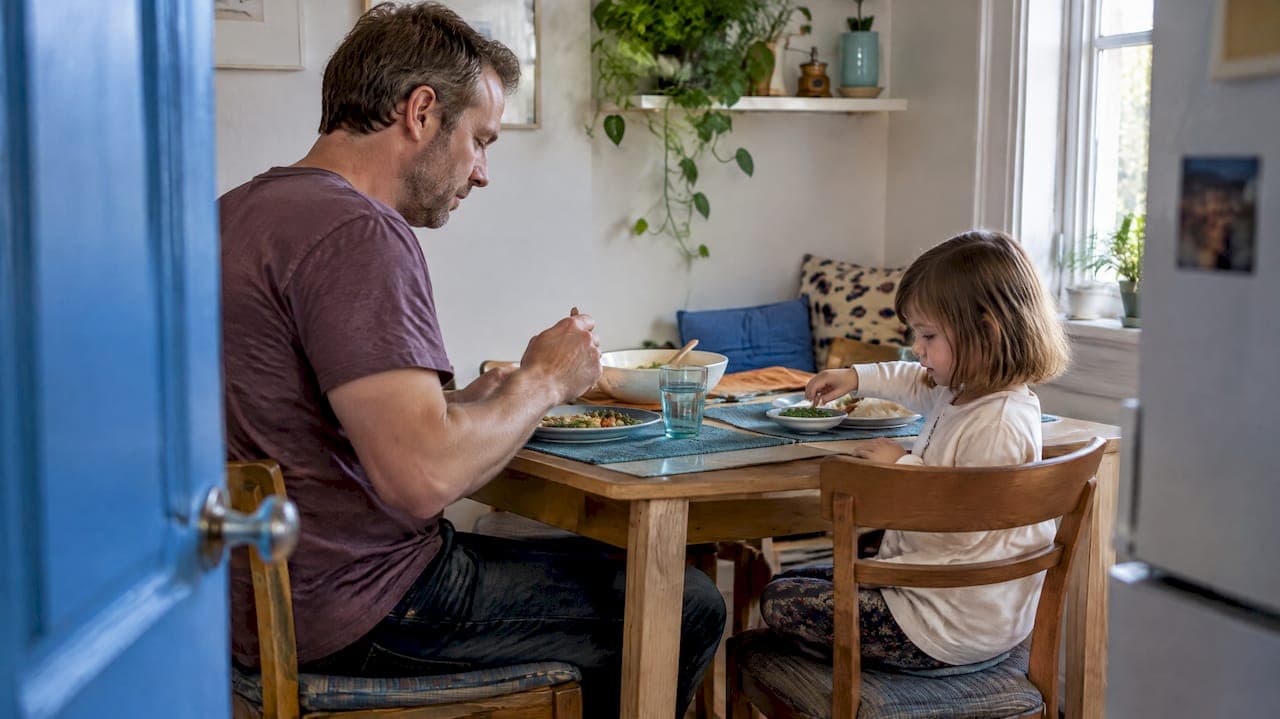
If dinner has turned into a negotiation, you are not alone, and you are not doing it wrong. Most parents feel pressure at meals at some point: the worry about how much your child ate, the urge to coax one more bite, the tension that settles over the table. The hard truth is that pushing tends to backfire, and the good news is that easing off usually helps meals get calmer within weeks, not years. This guide explains what counts as pressure, what research says about it, what to do in the middle of a toddler meltdown, and when it is time to bring in a feeding specialist.
TL;DR
- Pressure means any effort to get a child to eat more, less, or something specific: bribes, praise for eating, punishments, "just one more bite" rules. Research links it to pickier eating, not better eating.
- Your job is to decide what, when, and where food is offered. Your child's job is to decide whether to eat and how much.
- During a meltdown, stay calm, skip the lecture, end the meal when it is clearly over, and offer the next meal or snack at its regular time.
- Get a professional evaluation if your child chokes, cries at meals, takes very long to eat, is losing weight or skills, or has eaten a very limited range for two weeks or more.
Table of Contents
- What counts as pressure at meals
- Why so many parents end up pressuring
- What research says about pressure and eating
- When a mealtime meltdown is happening right now
- Building calmer meals without forcing
- Is this typical toddler behavior, or something more?
- How feeding therapy can help families at the table
- Our perspective: take the pressure off, keep the care
- FAQ
- Sources
What counts as pressure at meals
Pressure is broader than yelling or forcing a spoon into a mouth. Many of the habits parents see as gentle encouragement are also pressure. According to the Ellyn Satter Institute, pressure includes praising, bribing, punishing, criticizing, or insisting on "no thank you" bites.
Here is how it often looks at a real table:
- "Three more bites and you can have dessert."
- "Look how nicely Emma is eating her broccoli!"
- Airplane spoons, songs, or screens to get food in.
- Sitting a child at the table until the plate is clean.
- Commenting on how little or how much a child has eaten.
- Making a separate, favorite food the reward for trying the "real" dinner.
Even a cheerful tone can carry pressure. A child can hear the message underneath: I need you to eat this, and I am worried if you do not. Children are very good at noticing what matters to us, and the thing they learn to do with a high-stakes request is dig in.
Researchers describe pressure to eat as a non-responsive feeding practice. It overrides a child's natural ability to regulate how much they eat and can interfere with the development of healthy independence. In other words, it works against the very skill we want our children to build: listening to their own hunger and fullness.
Why so many parents end up pressuring
Pressure rarely comes from a lack of love. It comes from care, fatigue, and worry, usually all at once.
The American Academy of Pediatrics notes that parents may worry about wasting food, feel they are forcing their child to eat, and give in because they are tired and want to avoid a mealtime battle. That pattern is so common it deserves a name: the push-then-cave cycle. You encourage, your child resists, you push harder, the situation blows up, and then you hand over crackers to make it stop. Your child learns that refusing eventually brings the preferred food, and you learn that mealtimes are stressful.
A few other forces feed the cycle:
- Growth worries. Toddlers eat less than parents expect, and a small appetite can look like a problem.
- Comparison. A cousin eats everything, a neighbor's child loves salad, and suddenly your child feels behind.
- Advice overload. Relatives, social media, and daycare reports all offer opinions about what and how much your child "should" eat.
- Personal history. Many of us grew up with clean-plate rules, and they feel like the responsible thing to repeat.
None of this makes you a bad parent. It makes you a person who wants your child to be well nourished. The goal is to move that care into a form your child can actually use.
What research says about pressure and eating
The research on this topic is fairly consistent, and it points the same way across different kinds of studies.
In a well-known experiment, preschoolers ate more and made fewer negative comments when they were not pressured. The findings supported earlier studies linking pressure to negative reactions to healthy foods.
A study of children who were pressured to eat at home found that pressure was associated with lower energy intake, lower fruit and vegetable intake, and higher pickiness. It may also impair a child's ability to regulate how much they eat.
What about growth? Many parents pressure because they fear their child is underweight. A review of food-related parenting practices found little evidence that pressuring children to eat helps with weight maintenance. The tactic does not appear to deliver the result parents hope for.
A more recent review sorted parenting feeding practices into coercive control, structure, and autonomy support. It found that coercive practices appear to have more negative than positive effects. Structure and autonomy support, meaning predictable meals and room for the child to choose, are the more promising side of that picture.
The takeaway is not that parents should stop caring. It is that the way we show care matters. Calm structure helps. Pushing hurts.

When a mealtime meltdown is happening right now
Knowing the research is one thing. Staying steady with a screaming two-year-old and a cooling dinner is another. These steps are meant for the heat of the moment.
- Lower your own energy first. Take a breath and soften your voice. A toddler meltdown is rarely about the broccoli. It is usually hunger, tiredness, a wish for control, or all three.
- Skip the bribe, the threat, and the lecture. The American Academy of Pediatrics advises avoiding "food fights," bribing, and punishing and keeping meals calm and regularly scheduled.
- Name the feeling, not the food. "You are upset. That is okay. We will try again at snack time." Short and kind works best.
- Let hunger do its job. If a toddler refuses a meal, the same guidance says to avoid fussing and let hunger guide eating. Remember the division of responsibility: you provide the food, and your child decides whether to eat it.
- End the meal without drama. If your child is clearly done, calmly clear the plate. Offer the next meal or snack at its usual time rather than making up the missed calories with a bottle or snack ten minutes later.
- Stay safe. If your child is upset, check that they are seated and supervised. The CDC advises that children sit in a high chair or other safe place while eating, be watched at all times, and not eat in the car, stroller, or while walking or crawling. Crying while eating raises choking risk, so pause the meal if your child is very upset.
The milk trap
A common pattern is the toddler who refuses dinner, then melts down until milk appears. The AAP suggests that for a child who depends on milk, you avoid rescuing them with milk and trust that hunger will lead them to try other foods. For this habit, experts suggest gradually reducing milk to no more than 16 ounces per day while offering solid foods at meals. If milk is tied to your child's growth or medical needs, check with your pediatrician before changing anything.
A short example
Picture a three-year-old who flings her plate when peas appear. Her dad used to say, "Two bites, then you can leave." Now he serves peas next to foods she already likes, eats some himself without comment, and says, "You can eat what you like." Some nights she touches a pea. Some nights she eats only rice. After a couple of weeks, the flinging stops, because nothing at the table is a contest anymore. This is a composite illustration, not a client story, but it reflects what responsive feeding looks like in practice.
Building calmer meals without forcing
Meltdowns are easier to prevent than to manage. The aim is a table where your child feels safe enough to be curious.
Set a predictable rhythm
Offer meals and snacks at regular times, with a gap long enough for your child to arrive hungry. Avoid serving meals when your child is overtired. Grazing and constant milk or juice dull the appetite and make the meals themselves more of a fight.
Share the work of the table
The AAP recommends that parents provide the food and children decide whether to eat, along with modeling healthy eating, limiting media distractions, and repeatedly offering new foods. Here is what that can look like day to day:
- Serve one or two foods your child usually accepts alongside anything new.
- Put small portions on the plate and let them ask for more.
- Let your child help wash vegetables, stir, or set the table.
- Turn off the TV and keep tablets away from the table.
- Eat with your child when you can, and enjoy your own food.
Expect changing preferences
A food loved on Monday may be rejected on Thursday. The CDC notes that toddlers may change their food preferences daily, that this is normal, and that parents are encouraged not to make an issue of it. Calm is the strategy, not a consolation prize.
Talk about something else
Skip the commentary on the plate. Talk about the day, the dog, the color of the cups. When food stops being the main topic, it becomes just food.
Practice responsive feeding
Responsive feeding is a reciprocal and nurturing approach in which caregivers respond promptly and supportively to a child's hunger and fullness cues. A child who turns away, pushes the spoon, or closes their mouth is telling you something. Listening builds trust, and trust builds willingness. If you would like concrete steps, our guide to responsive feeding at home walks through four principles you can start practicing tonight.
What to expect
Change is gradual. Many families notice calmer meals first, with less crying and fewer standoffs, and expanded eating comes later. Try to judge progress by the atmosphere at the table over a week or two, not by a single dinner.
Is this typical toddler behavior, or something more?
Most food refusal is a phase. Sometimes, though, the struggle is not about pressure or preference at all. A child may have an oral-motor difficulty, sensory sensitivities, reflux, constipation, or a pattern that has narrowed their diet to a handful of foods. In those cases, parents can do everything "right" and still hit a wall.
The American Speech-Language-Hearing Association says to seek help if a child is missing several feeding milestones, not progressing, or losing skills, or shows warning signs such as choking, crying at meals, meals taking longer than 30 minutes, or weight loss. Their guidance is to talk to your pediatrician and ask about an evaluation by a speech-language pathologist.
ASHA also describes pediatric feeding disorder as impaired oral intake that is not age-appropriate and lasts at least two weeks, linked to medical, nutritional, feeding skill, or psychosocial challenges. If that sounds familiar, our article on what to do after two weeks of feeding problems explains why a team approach helps.
Call your pediatrician promptly if you notice any of these:
- Coughing, gagging, or choking with most meals
- Crying or arching during feeding
- Meals that regularly run longer than 30 minutes
- Weight loss or flattening growth
- Losing foods your child used to eat, or a very short list of accepted foods
- Needing a tube, bottle, or pouches for most intake, past the age you expected
For babies, our list of feeding red flags can help you decide when to ask. For toddlers, how feeding therapy helps with mealtime struggles shows what changes when a therapist joins the picture.
How feeding therapy can help families at the table
Feeding therapy is not about making a child eat. It looks for the reason eating is hard, then builds skills and comfort step by step, with parents as full partners.
At Thriving Joy, our feeding therapy serves infants and children in Pasco and Hillsborough Counties, and we can see families at our office, at home, or at daycare or preschool, wherever meals actually happen. We accept private pay and major health insurance plans, and scholarships are available. You can learn about the process on our feeding therapy page, or read how a feeding evaluation works and what to bring, including a food diary and a short mealtime video.
If you would rather build skills in a group, we also offer parent coaching, feeding support groups, and workshops, including Starting Solids 101 and Picky Eating Workshops.
If worry about eating has made you wonder about your child's speech too, the two often overlap, since the same mouth muscles are used for both. Our guides to early signs of speech delay and what a speech-language evaluation involves can help you decide whether to ask.
Our perspective: take the pressure off, keep the care
We work with parents who arrive exhausted, second-guessing every dinner. Many say some version of "I know I should not push, but I cannot just do nothing." We understand. Doing nothing is not the goal. The goal is to move your effort from controlling the outcome to shaping the environment.
We treat feeding challenges the way we would want our own families treated: with a holistic, family-centered approach that looks for the root cause rather than a quick fix. A child who refuses food may have a sensory aversion, a motor challenge, a medical issue, or simply a history of stressful meals. Each of those needs a different plan. Pressure, however well intended, can hide the real reason and add a new problem on top of it.
We also know the other side of this, because our founder combines a pediatric healthcare background with personal experience as a parent. Feeding a small child is emotional work. You deserve support that respects how much you care, and a plan that makes your next meal feel more manageable than your last.
When families step back from pressure and get the right help, meals tend to become a place for connection again. That is the long-term improvement we hope for, and it is possible.
— Thriving Joy
FAQ
Is it okay to ask my child to take just one bite?
It depends on how it lands. A required "no thank you" bite is a form of pressure, according to the Ellyn Satter Institute, and it can make a food feel like a chore. Offering the food repeatedly, eating it yourself, and letting your child touch, smell, or ignore it is a gentler way to build familiarity.
Will my toddler starve if I stop pushing?
A healthy toddler who is offered regular meals and snacks will generally eat when hungry, and a few light meals are common. The AAP encourages parents to let hunger guide eating and to keep offering balanced options. If your child is losing weight, seems unwell, or refuses most foods for two weeks or more, call your pediatrician.
Why does my toddler melt down at almost every meal?
Common reasons include hunger that has gone too far, tiredness, distraction by screens, wanting independence, or tension from past mealtime battles. Try consistent timing, a calm table, and small choices, such as which cup to use. If crying comes with choking, gagging, or long meals, ask your pediatrician about a feeding evaluation.
Should I let my child eat in front of a screen to get food in?
We recommend against it. The AAP advises limiting media distractions at meals, and a distracted child cannot easily notice hunger and fullness. Screens can also hide choking risks, since children should be seated and watched while they eat.
When should I see a feeding therapist instead of waiting it out?
See one if your child chokes, cries at meals, takes longer than 30 minutes to eat, loses weight or skills, or has had very limited intake for two weeks or more. Start with your pediatrician, and ask about a speech-language pathologist evaluation. If you are in Pasco or Hillsborough County, you can reach out to us through our feeding therapy page.
Sources
- Solve your child's feeding problems, Ellyn Satter Institute
- Responsive Feeding Recommendations, PMC
- Toddler Food and Feeding, American Academy of Pediatrics
- 'Finish your soup': counterproductive effects of pressuring children to eat, PubMed
- Children Who Are Pressured to Eat at Home Consume Fewer Fruits and Vegetables, PMC
- Food-related parenting practices and child and adolescent weight, PMC
- Parental Feeding Practices and Children's Eating, PMC
- 10 Tips for Parents of Picky Eaters, HealthyChildren.org
- Your Toddler Only Wants Milk? How to Ease a Milk Dependency, HealthyChildren.org
- Positive Parenting Tips: Toddlers (2 to 3 years old), CDC
- Choking Hazards, Infant and Toddler Nutrition, CDC
- ASHA Shares Resources for Families on Feeding Development, ASHA