

Most fear of new foods in young children is a normal developmental stage called food neophobia, and it usually peaks between 18 and 24 months before easing on its own. For most kids, gentle, no-pressure exposure at home is the right first move. If you're seeing panic, gagging, weight loss, or a shrinking list of accepted foods, that's your cue to call your pediatrician and rule out ARFID or a medical cause.
TL;DR:
- Most children naturally pass through a food neophobia phase between 18 and 24 months, which rarely lasts beyond a year with gentle, no-pressure exposure.
- Sensory sensitivities, negative feeding experiences, medical issues, and family feeding practices all contribute to a child's fear of new foods, often requiring tailored approaches.
- Avoiding pressure and using repeated, low-stakes exposure strategies can help children gradually accept new foods, with progress tracked through non-eating milestones.
- Severe or persistent food refusal affecting growth, nutrition, or daily routines warrants professional evaluation for underlying issues like ARFID or sensory processing disorders.
- Combining medical, sensory, behavioral, and nutritional therapies, when needed, shortens the journey from food fear to acceptance, especially if begun early.
Table of Contents
- What Is Food Neophobia and When Does It Peak?
- What Causes a Child's Fear of Trying New Foods?
- Is It Normal Neophobia or Something More Like ARFID?
- What Happens if Severe Food Fear Goes Unaddressed?
- How Do You Help a Child Overcome Food Aversion at Home?
- Building a 4-to-12-Week Plan to Try New Foods
- When Should You Seek Professional Help for Feeding Fears?
- What Clinical Treatments Help Children Overcome Food Fear?
- What Family-Centered Feeding Therapy Looks Like at Thriving Joy
- A Clinician's View on Patience and Partnership
- Getting Professional Support for Your Child's Feeding Fears
- Sources
- FAQ
What Is Food Neophobia and When Does It Peak?
Food neophobia is the technical term for what most parents describe as their toddler suddenly refusing anything new on the plate. It's not a diagnosis and it's not a character flaw in your child. It's a wired-in caution response that shows up right around the time toddlers start exploring the world on their own two feet, and researchers believe it once helped small children avoid eating something toxic before they had the judgment to know better.
This is different from garden-variety picky eating, where a child dislikes certain foods but will still try new ones with some encouragement. Neophobia is specifically about the fear of the unfamiliar itself. Food doesn't have to taste bad to get rejected. It just has to look, smell, or feel unknown.
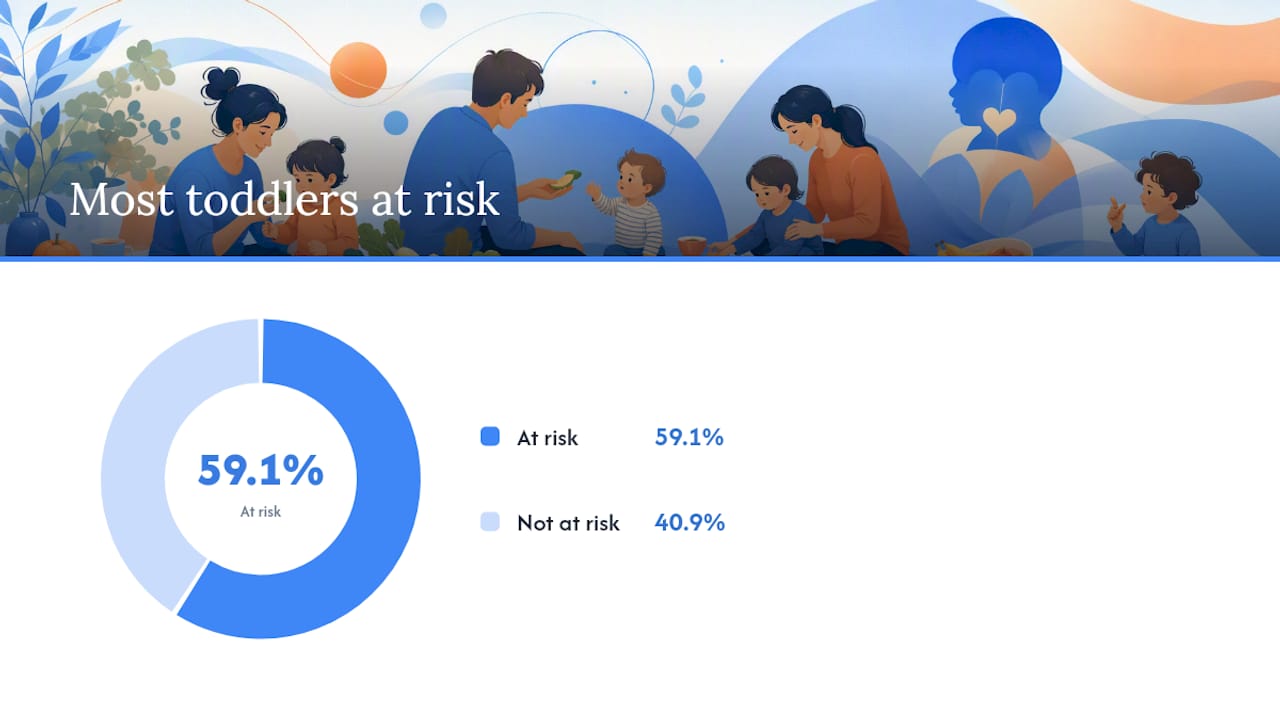
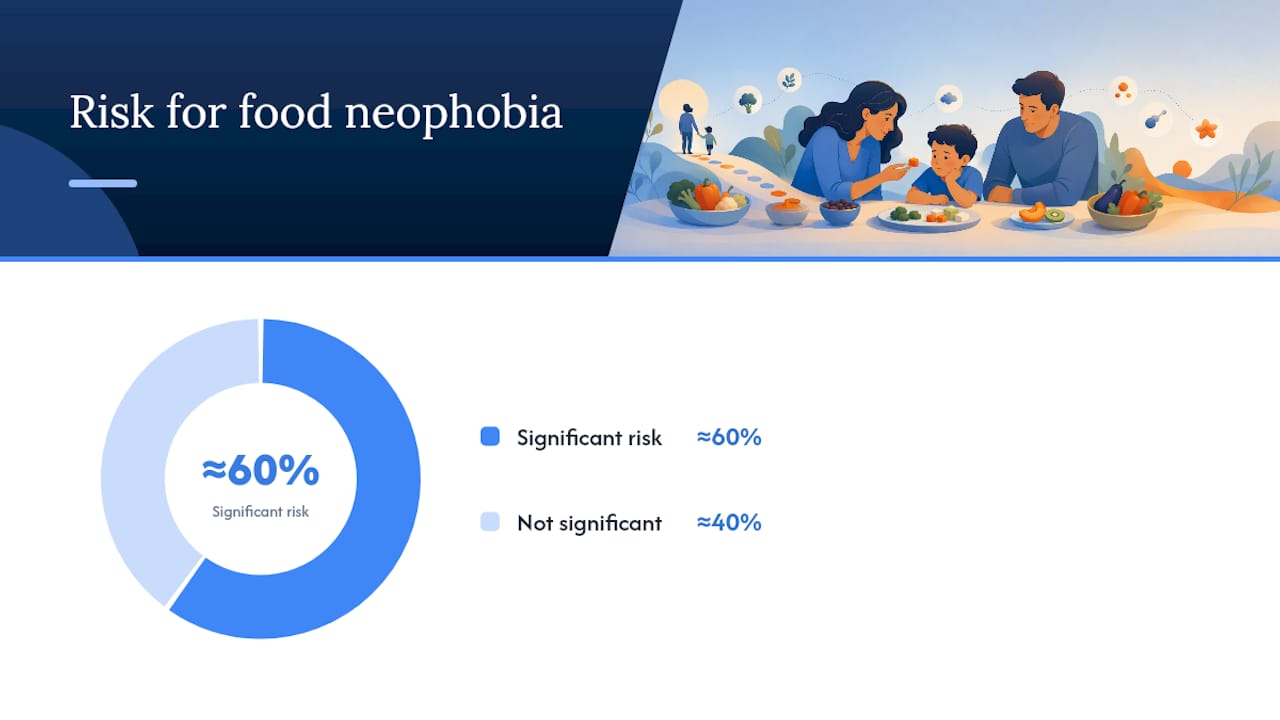
The timeline is well documented. Food neophobia most commonly intensifies in children between 18 and 24 months of age, which lines up almost exactly with the toddler push for independence and control. A 2024 study following young children found that 59.1% of the 345 kids observed were at significant risk for food neophobia, which tells you this is closer to the norm than the exception at that age.
Here's what tends to drive it, in plain terms:
- Novelty itself feels risky. A toddler's brain treats an unfamiliar food the way it treats an unfamiliar dog: worth a wide berth until proven safe.
- Familiarity builds tolerance, not the other way around. Kids typically need to see a food many times, sometimes ten or more, before they're willing to put it near their mouth.
- Autonomy is part of the picture. Around 18 to 24 months, toddlers are testing control over their bodies and environment, and mealtime becomes one more place to say no.
- It's usually self-limited. For most children, this phase softens over months, especially when parents don't turn mealtime into a battleground.
If you're in the middle of this stage right now, it can feel like your child has permanently rejected vegetables, forever. Almost always, that's the neophobia talking, not a lasting food preference. The window between "I've never seen this" and "I trust this enough to try it" is longer for some kids than others, and that's normal too.
What Causes a Child's Fear of Trying New Foods?
Food neophobia rarely has one single cause. It's usually a mix of sensory wiring, past experience, temperament, and how mealtime gets handled at home, and untangling which factors are driving your child's avoidance is the first real step toward helping them.
Sensory processing differences sit at the top of the list for a lot of kids. Some children are genuinely more sensitive to texture, smell, or the visual "wrongness" of foods touching on a plate. This shows up often in children with autism and related sensory profiles, where occupational therapy can play a meaningful role in gradually building tolerance rather than forcing acceptance.
Negative feeding experiences leave a mark that outlasts the original event. A choking scare, a bout of reflux, a stretch of vomiting after eating, or a history of tube feeding can teach a child's nervous system that eating itself is unsafe. Once that association forms, it can generalize far beyond the original trigger food.
Underlying medical issues deserve a serious look before anyone assumes the problem is purely behavioral. Clinical guidance is consistent on this point: rule out reflux, swallowing difficulties, and food allergies before starting any behavioral feeding program, because treating the wrong problem wastes time and can deepen a child's distrust of food.
Temperament and family feeding practices round out the picture, and this is the piece parents have the most direct control over. Some kids are simply more cautious by nature. But how caregivers respond to that caution matters enormously.
Statistic Callout: Nearly 6 in 10 young children in one 2024 sample of 345 kids scored at significant risk for food neophobia, according to research published in PMC, underscoring how common this stage is rather than how rare.
Research on parental feeding behavior finds that pressure, bribing, and bargaining tend to backfire. Telling a child "three more bites and you get dessert" often raises anxiety around the very food you want them to accept, and can slow progress compared to gradual, low-pressure exposure. A few patterns worth watching for in your own household:
- Repeated pressure to "just try it" at every meal
- Using dessert or screen time as a bargaining chip for vegetables
- Making a visible big deal out of both successes and failures at the table
- Serving the feared food only in isolation, with no familiar foods alongside it
None of these habits are unusual, and most parents fall into at least one under stress. Recognizing the pattern is the first step toward shifting it.
Is It Normal Neophobia or Something More Like ARFID?
Ordinary neophobia and a feeding disorder like Avoidant/Restrictive Food Intake Disorder (ARFID) can look similar on the surface. Both involve a child refusing new foods. The difference lies in intensity, breadth, and impact, and a few concrete markers help parents tell them apart.
-
Watch the emotional reaction, not just the refusal. A child with ordinary neophobia might make a face and push a plate away. A child edging toward ARFID may panic, gag involuntarily, cry, run from the table, or shut down entirely at the sight or smell of a new food. Gagging and vomiting as involuntary responses to unfamiliar food are a clinical signal, not just strong dislike.
-
Check growth and nutrition, not just the food list. Typical neophobia doesn't usually threaten a child's growth curve, because enough safe foods remain in rotation. If your child's list of accepted foods has shrunk to fewer than ten items, or your pediatrician flags flattening weight gain or faltering growth, that points toward a more serious feeding disorder that needs evaluation.
-
Look at how far the avoidance reaches. Does the fear show up only at home, or does it follow your child to daycare, school, and grandma's house too? Functional impact across multiple settings, along with mealtime avoidance so severe it disrupts family routines or school attendance, is a meaningful difference from a picky phase confined to dinner at home.
-
Consider a validated screening tool. Clinicians and researchers often use the Food Neophobia Scale for Children (FNSC) or a Food Selectivity Questionnaire (FSQ) to quantify how severe the avoidance is and track change over time. These tools are useful alongside clinical observation, not a replacement for a doctor's exam, but they give parents and providers a shared language for describing severity.
If your child's reactions look more like the second column across most of these markers, that's worth a conversation with your pediatrician rather than waiting it out.
What Happens if Severe Food Fear Goes Unaddressed?
Left unmanaged, severe or persistent fear of new foods can create real nutritional and social costs, though the good news is that most of these risks are manageable once identified.
The most common nutrient gaps in children with heavily restricted diets involve iron, zinc, vitamin D, and vitamin B12, since these nutrients cluster in food groups that get avoided first, like meats, leafy greens, and fortified dairy. Over time, that can translate into fatigue, slowed growth, or a pediatrician flagging faltering growth on the curve.
Beyond nutrition, the social and emotional toll deserves equal attention:
- Mealtime anxiety that spreads from the dinner table to birthday parties, school lunches, and sleepovers
- Family tension when meals become a daily source of conflict rather than connection
- A child's growing self-consciousness about eating differently from peers as they get older
- Missed developmental practice with new tastes, textures, and social eating skills during a key window
Here's the part that should offer real reassurance: early recognition changes this trajectory substantially. Systematic reviews show that interventions built around familiarity, sensory play, and repeated exposure improve diet variety, and the earlier those strategies start, the shorter and gentler the road tends to be. Waiting rarely makes this easier. Addressing it, even in small steps, almost always does.
How Do You Help a Child Overcome Food Aversion at Home?
The most effective home strategies share three principles: repeated, low-stakes exposure; predictability; and zero pressure to actually eat the food. Getting those three right matters more than any single trick you try.
-
Put the feared food on the table without any expectation to eat it. This sounds too simple to work, but repeated, pressure-free exposure is one of the best-supported tactics for reducing food neophobia. Just seeing broccoli on the table twenty times, with no demand attached, does real work over weeks.
-
Let your child play with food before eating it. Squishing, smelling, stacking, or using a new food as a paintbrush sounds silly, but sensory play builds familiarity through the senses your child actually trusts before their mouth gets involved.
-
Use food chaining to bridge from accepted foods to new ones. If your child loves plain crackers, the next step isn't broccoli. It's a slightly different cracker, then a cracker with a mild dip, moving in small increments toward variety instead of leaping to something wildly unfamiliar.
-
Eat together as a family whenever you can. Kids watch what the people they trust eat, and modeling calm, neutral interest in new foods does more than any verbal encouragement.
-
Match your approach to your child's sensory profile. If your child accepts only crunchy foods, don't jump to soft or mushy textures. Start with a crunchy variation of something new, then experiment with shape or temperature before changing texture altogether. Beginning with variations of accepted sensory profiles reduces perceived novelty while still expanding what your child eats.
-
Keep the pace slow and steady rather than daily and intense. Two to four low-pressure exposures a week tends to work better than a forced encounter every night, because it keeps stress low enough that your child's nervous system stays receptive rather than defensive.
Pro Tip: Track progress by non-eating milestones, not bites taken. If your child touched a new food, smelled it, or let it sit on their plate without protest, write that down as a win. Those small steps are the actual foundation eating is built on.
For a closer look at what this looks like day to day, solutions for toddlers refusing new foods walks through common scenarios parents run into. And if you're prepping for the solids stage entirely, safely introducing solid foods is a solid companion resource for setting the stage before neophobia even kicks in.
Building a 4-to-12-Week Plan to Try New Foods
Turning general strategies into a plan with actual checkpoints makes progress visible, which matters on the hard weeks when it feels like nothing is changing.
-
Weeks 1 to 2: Toleration. The only goal is having the new food present on the table or plate without any reaction beyond mild discomfort. Success looks like your child eating their usual meal while the new food sits nearby, untouched. That's a win, not a failure.
-
Weeks 3 to 4: Interaction. Encourage touching, smelling, or moving the food around the plate. This is the food-play stage. Track it with a simple checklist: touched, smelled, or moved counts as progress, regardless of whether anything gets eaten.
-
Weeks 5 to 7: Licking and tiny tastes. Once interaction feels comfortable, invite (never require) a lick or a taste smaller than a grain of rice. Keep expectations tiny on purpose. A single lick after weeks of avoidance is a genuine breakthrough.
-
Weeks 8 to 12: Repetition and generalization. Once your child has tasted a food once, repeat that success several more times before expecting it to become a regular part of meals. Then try presenting it slightly differently, like a different shape or brand, to see if the acceptance holds.
Setbacks happen, and they don't mean the plan failed. If your child panics or shuts down at a step, back up to the previous stage for a week rather than pushing forward. If you notice weight loss, dehydration, or your child's list of accepted foods keeps shrinking despite consistent effort over several weeks, that's your signal to pause the home program and bring in professional support rather than keep pushing alone.
When Should You Seek Professional Help for Feeding Fears?
Certain signs mean it's time to call your pediatrician rather than keep managing this solo. Weight loss or growth that has flattened, signs of dehydration, gagging or vomiting with most new foods, and clear nutritional gaps all warrant a prompt evaluation rather than a wait-and-see approach.
A thorough workup for significant feeding fear typically pulls together several specialists, each looking at a different piece:
- Pediatrician to check growth trends, screen for medical red flags, and coordinate referrals
- Gastroenterologist if reflux, swallowing pain, or digestive symptoms are suspected
- Feeding therapist to assess mealtime behavior and design a structured exposure program
- Occupational therapist for sensory-based aversions involving texture or oral motor skills
- Psychologist when anxiety appears to be the primary driver of avoidance
- Registered dietitian to evaluate nutrient intake and recommend supplementation if needed
A typical evaluation includes a medical exam, direct observation of a mealtime, a sensory screen, and a review of growth records over time. You can make that first appointment far more productive by keeping a two-week food and symptom diary beforehand, noting what was offered, where, your child's reaction, how much they ate, and any physical symptoms like gagging or stomach pain. If you've already noticed early red flags in feeding, bringing that history to the appointment speeds up the whole process.
What Clinical Treatments Help Children Overcome Food Fear?
When home strategies aren't enough, several evidence-based clinical treatments target different pieces of the problem, often combined for the best results.
- CBT-AR (cognitive behavioral therapy adapted for ARFID) addresses the fear and anxiety driving avoidance directly, using structured, gradual exposure paired with anxiety management skills rather than just food-by-food practice.
- Occupational therapy focuses on sensory integration, helping children build tolerance for textures, smells, and mouth sensations that trigger a defensive response.
- Pediatric feeding therapy uses food discovery and hierarchical exposure, moving a child step by step from tolerating a food's presence to interacting with it and eventually tasting it, paired with parent coaching so the strategies continue at home.
- Dietitian-guided nutrition support closes gaps left by a restricted diet and manages medical stabilization when a child's weight or growth requires closer monitoring.
Statistic Callout: Treatment that combines medical evaluation, sensory-based occupational therapy, nutrition support, and exposure-based therapy tends to outperform any single approach used alone, since severe feeding fear rarely has just one driver.
Parents should expect this process to unfold over months, not weeks. Progress is typically slow and uneven, and the families who stick with it tend to be the ones measuring success by small, non-eating milestones rather than a finish line of "eats everything now." To see what this progression looks like in more detail, how feeding therapy helps toddlers walks through the stages session by session.
What Family-Centered Feeding Therapy Looks Like at Thriving Joy
Thriving Joy approaches fear of new foods the way most credible feeding specialists do: by looking for the root cause first, not just managing the symptom at the table. Our services span feeding therapy, lactation counseling, one-on-one parent coaching, and hands-on workshops, because feeding challenges rarely live in isolation from the rest of a family's routine.
A first session usually starts with a family interview covering feeding history, current mealtime patterns, and any medical background, followed by direct observation of how your child actually responds to food. From there, early sessions focus on small, achievable steps, often starting with sensory tolerance rather than tasting, so your child builds trust before anyone asks for a bite. Every plan gets built around your child's specific sensory profile and your family's daily rhythm, not a generic checklist.
A Clinician's View on Patience and Partnership
Progress with food fear is rarely a straight line, and the families who do best are the ones who stop expecting one. A child who tolerates a new food on their plate for the first time after six weeks of quiet exposure has made real progress, even if nothing got eaten. Celebrate that.
No-pressure approaches work because they respect the nervous system's timeline instead of fighting it. Consistency matters more than intensity. And when red flags appear, whether that's weight concerns, gagging, or avoidance spreading across every setting, partnering with a professional early tends to shorten the road, not lengthen it.
— Thriving Joy
Getting Professional Support for Your Child's Feeding Fears
If home strategies have stalled or your child shows any of the red flags covered above, Thriving Joy's feeding therapy offers exactly the kind of root cause approach severe food fear needs, rather than a generic behavioral script. The family-centered model means sessions can happen in various settings, and the approach draws on pediatric feeding expertise and parenting experience to build plans tailored to each child rather than a one-size-fits-all program.
Families reaching out for an evaluation can expect an initial assessment covering feeding history, direct observation, and a discussion of insurance or private pay options. Bringing a two-week food and symptom diary to that first conversation gives the team a clearer starting picture and speeds up the plan. If you'd rather start with strategies you can practice at home first, Thriving Joy's parent coaching and workshops, including Starting Solids 101 and Picky Eating Workshops, are a lower-commitment way to build skills before committing to individual therapy. Reach out through Thrivingjoy to schedule an evaluation and take that first concrete step.
This article is general information, not a substitute for advice from a qualified doctor. Consult a qualified healthcare professional about your own circumstances before acting on anything here.
Sources
- Food neophobia: developmental trajectory and correlates (PMC)
- ARFID — Cleveland Clinic
- Study on parental behaviors and feeding outcomes (MDPI Children)
FAQ
What Is the Fear of New Foods Called?
The clinical term is food neophobia, and when it becomes severe enough to affect nutrition or daily functioning, it may be classified as Avoidant/Restrictive Food Intake Disorder (ARFID). Most cases of neophobia in young children are a normal, temporary developmental stage rather than a disorder.
Why Am I Terrified of Trying New Foods?
Fear of new foods in adults and older children usually traces back to unresolved sensory sensitivities, past negative experiences with food, or anxiety that never got addressed during childhood. The same principles that help kids, gradual exposure without pressure, tend to help teens and adults too, though progress often benefits from professional guidance like CBT-AR when anxiety is strongly rooted.
What Age Does Neophobia Start?
Food neophobia most commonly intensifies in children between 18 and 24 months of age, coinciding with the toddler push toward independence. It can persist into the preschool years for some children before gradually easing with consistent, low-pressure exposure.
At What Age Does ARFID Typically Appear?
ARFID can appear at any age, including infancy, but it's often first recognized in toddlers and young children when food avoidance goes well beyond typical picky eating and starts affecting growth or daily life. Unlike ordinary neophobia, ARFID doesn't reliably resolve on its own and usually needs a multidisciplinary evaluation involving a pediatrician, feeding therapist, and sometimes a psychologist.