
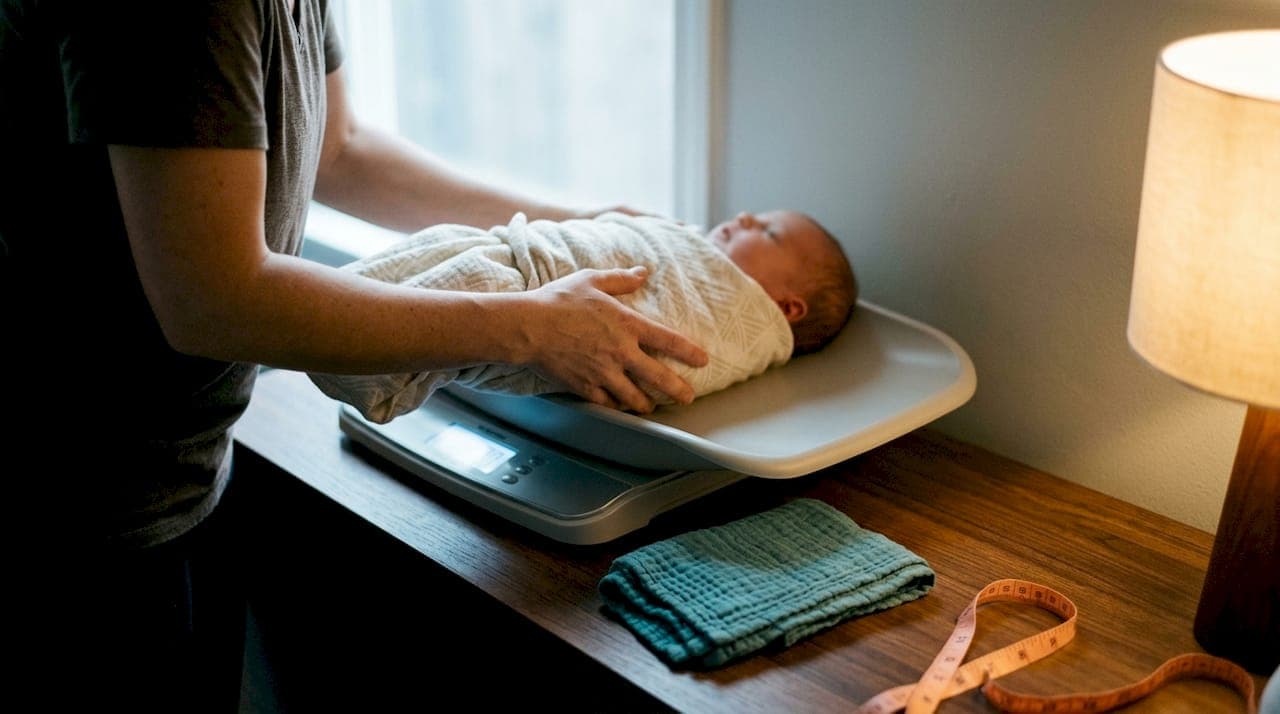
A weighted feed gives you a useful snapshot of milk transfer during one nursing session, but it's not a substitute for growth trends and clinical assessment. It works best as a targeted check when gain is slow, transfer is uncertain, or you're comparing before and after a procedure like a tongue-tie release. If your numbers look low, treat it as one data point among several. Repeat the check, watch your baby's diaper output, and call your IBCLC or pediatrician if the pattern holds.
TL;DR:
- A single weighted feed has limited accuracy, with possible errors up to 30 milliliters, making trends across multiple sessions more reliable.
- Consistency in technique, including scale placement, clothing, and diaper setup, is essential to obtain dependable measurements.
- Use weighted feeds mainly when growth or diaper output is concerning, not for routine monitoring, and always pair results with other clinical signs.
- Repeating the test 3 to 5 times over 24 to 48 hours provides a clearer picture of transfer patterns than a one-time measurement.
- Professional assessment with calibrated scales and clinical observation offers more precise guidance than home checks alone.
Table of Contents
- How to Do a Weighted Feed at Home
- When Do You Actually Need a Weighted Feed?
- How Accurate Is a Single Weighted Feed?
- What Do the Results Actually Mean?
- Reducing Errors and Easing the Worry
- How Professionals Use Weighted Feeds Differently
- A Balanced Take on the Number on the Scale
- Get a Clearer Answer Than a Home Scale Can Give You
- Sources
- FAQ
How to Do a Weighted Feed at Home
Getting a reliable weighted feed comes down to consistency more than fancy equipment. The technique itself is simple, but small variations in setup can throw your numbers off by grams that matter.
Here's the process, step by step:
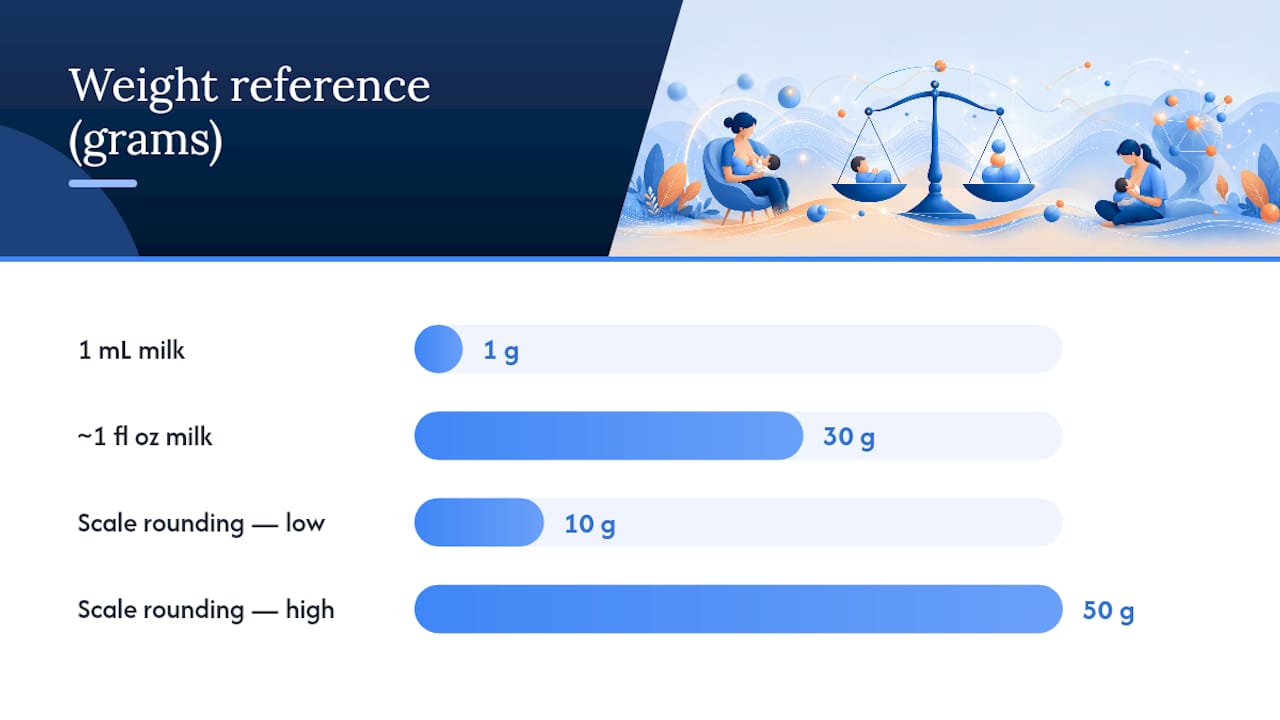
- Choose a scale with gram-level resolution. A kitchen scale rounding to 10 or 50 grams won't catch the differences you're looking for. A lactation consultant can point you toward scales sensitive enough for this purpose, sometimes called lactation-grade infant scales.
- Set the scale on a hard, level surface. Carpet or a soft mattress can throw off the reading by shifting slightly under the scale's feet.
- Dress your baby in the same diaper and clothing for both weighings. Don't change a diaper between the "before" and "after" weigh.
- Zero or tare the scale with your baby already dressed in that exact setup, before the feed starts.
- Weigh immediately before nursing, then immediately after, without adding or removing layers in between.
- Record both numbers right away. It's easy to misremember a figure by the time you've settled a fussy baby.
Converting the difference is straightforward: roughly 1 gram of weight gained equals about 1 milliliter of milk transferred, and about 30 grams works out to roughly 1 fluid ounce, according to Momcozy's home how-to guide. If your baby spits up, drools, or has a diaper leak mid-check, note it. That feed's numbers are compromised, and you'll want to try again at the next session rather than guess at a correction.
Pro Tip: Keep a small notebook or phone note with your scale, so the diaper size, clothing layer, and time of day are logged right alongside each weight. Those details matter more than people expect when you're comparing feeds later.
When Do You Actually Need a Weighted Feed?
Weighted feeds earn their place when something specific is unclear, not as routine monitoring for every breastfeeding pair. They tend to help most in these situations:
- Weight gain has slowed or dropped off the expected growth curve
- Diaper output is lower than expected for your baby's age
- You're worried about a weak or shallow latch
- Oral motor concerns have come up, like a suspected tongue or lip tie
- You need a before-and-after comparison around a procedure, such as a frenectomy
If your baby is gaining well, producing a normal number of wet and dirty diapers, and settling contentedly after most feeds, you likely don't need to weigh anything. Save the exercise for when there's a genuine question to answer. When you do use it, a single check rarely tells the full story. Hopkins Medicine recommends pairing weight checks with diaper counts and overall feeding frequency, and many clinicians ask for repeated checks across 24 to 48 hours before drawing any conclusion.
How Accurate Is a Single Weighted Feed?
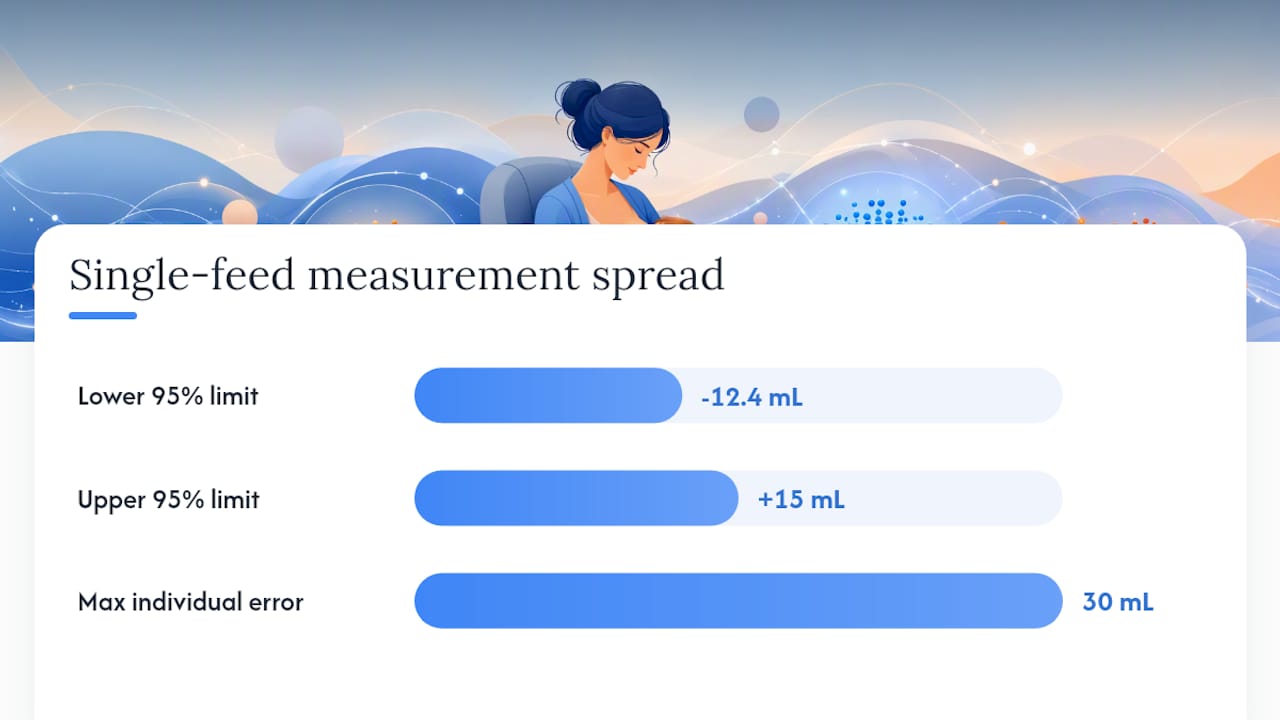
Here's the number every parent doing this at home should know: in a study of 94 infants, weighted feeds showed good average accuracy, but individual measurements could be off by a wide margin. The 95% limits of agreement between the weight change and actual milk intake ranged from about negative 12.4 milliliters to positive 15 milliliters, with some individual errors reaching as high as 30 milliliters. That means a single feed could easily show your baby transferring several sips less, or more, than what actually happened.
Several things drive that imprecision:
- Scale sensitivity, especially with home scales that round to the nearest 10 or 20 grams
- Evaporative water loss from a baby's skin during longer feeds
- Any change in clothing or diaper between the two weighings
- Spit-up, drool, or a diaper leak during the session
- A wiggly, active baby shifting position on the scale
The practical takeaway is that one feed's number is genuinely noisy. That's not a flaw in your technique. It's a limit of the method itself. Clinicians lean on trends across several feeds, combined with diaper counts and growth curve data, rather than treating any single weigh-in as a verdict.
What Do the Results Actually Mean?
A single low number doesn't confirm a supply or transfer problem, and a single good number doesn't rule one out either. The more reliable approach is averaging results across multiple feeds at different times of day, since babies often transfer more at some feeds than others depending on hunger, time since the last session, and even time of day.
If most of your feeds are averaging low transfer, and that pattern lines up with reduced diaper output or a flattening growth curve, it's worth getting seen that same week rather than waiting it out. Here's a simple checklist to work through:
- Repeat the weighted feed across 3 to 5 sessions, ideally spread over 24 to 48 hours
- Track diaper output alongside each check (wet and dirty counts)
- Log the time of day and how long each feed lasted
- Note anything unusual, like a shorter-than-usual latch or a distracted baby
- Bring your written records to your pediatrician or IBCLC rather than just describing them from memory
KellyMom's guidance on normal weight gain is a good reference point for what typical gain looks like week to week, so you have context for whether your numbers fall inside a normal range or warrant a closer look.
Reducing Errors and Easing the Worry
Small mistakes creep in easily, and a spiral of anxiety can creep in right alongside them. A few habits keep both in check.
- If a diaper leaks or your baby spits up mid-feed, discard that check and try again next time rather than guessing at an adjustment
- Minimize handling and repositioning between the two weighings; every shift adds a small margin of error
- Keep the exact same scale, clothing, and diaper setup every single time you check
- If you don't have access to a sensitive scale, ask about renting or borrowing a calibrated one, or schedule a weigh-in with an IBCLC
- Limit checks to specific questions you're trying to answer, not a daily ritual
Pro Tip: If you notice yourself reaching for the scale out of worry rather than a real question, that's a sign to talk to a lactation consultant instead of weighing again. A conversation often settles more than another data point does.
How Professionals Use Weighted Feeds Differently
Clinic settings bring precision that's hard to replicate at home. Lactation consultants typically use calibrated, lactation-grade scales sensitive enough to catch small transfer differences, and they can repeat weighing across a full 24-hour window when a pattern is genuinely unclear.
A clinical visit adds more than a better scale. It typically includes:
- An oral motor and latch assessment alongside the weight check
- Observation of positioning and feeding rhythm in real time
- A feeding plan built around what's actually happening at the breast, not just a number
- Follow-up to confirm whether changes are working
At Thriving Joy, lactation counseling and feeding therapy sessions are built to look at the whole feeding relationship rather than isolating one metric. If your home numbers, diaper counts, and growth trend all point the same worrying direction, that's the moment to book a same-week visit rather than keep testing on your own.
A Balanced Take on the Number on the Scale
Watching your baby's weight when supply feels uncertain is one of the most anxious parts of early parenthood, and a single number on a scale can feel like it should settle everything. It won't, and that's fine. Weighted feeds work well when you use them to answer one specific question, then step back and look at diapers, growth, and how your baby seems overall. When the picture stays unclear, timely support matters more than another weigh-in.
— Thriving Joy
Get a Clearer Answer Than a Home Scale Can Give You
A home weighted feed can flag a concern, but it can't tell you why transfer is low or what to do about it. Thriving Joy's lactation counseling combines a calibrated scale assessment with a full look at latch, positioning, and oral motor function, so you get an answer instead of just another number. A typical first visit walks through your baby's feeding history, watches a live feed, and builds a plan from what's actually happening, not a guess based on one data point. If your home checks or diaper counts have you worried, schedule a lactation counseling visit and get the full picture this week instead of weighing again tomorrow.
Sources
- Test weighing study — BMJ/archival clinical study (PMC2672832)
- Hopkins Medicine — Mismanaged breastfeeding
- KellyMom — Normal weight gain guidance
- Momcozy — Weighted feed how-to
FAQ
How Do You Do a Weighted Feed for a Breastfed Baby?
Weigh your baby immediately before nursing and immediately after, using the same diaper and clothing both times on a scale with gram-level resolution. The difference in grams roughly equals milliliters of milk transferred, and repeating the check across 3 to 5 feeds gives a far more reliable picture than one session, according to Momcozy's guide.
What Is the 3-3-3 Rule for Breast Milk?
Definitions of this rule vary across parenting resources, and it isn't a standard clinical guideline referenced by major pediatric organizations. Rather than relying on an informal rule, track your baby's actual diaper output and weight trend, and discuss any specific concern with your pediatrician or an IBCLC.
How Accurate Is a Weighted Feed?
A single weighted feed is accurate on average but imprecise for any one session. Research on 94 infants found 95% limits of agreement between roughly negative 12.4 and positive 15 milliliters, with occasional individual errors up to about 30 milliliters.
How Much Should a Baby Gain During a Weighted Feed?
There's no fixed target for a single feed, since transfer varies by session, time of day, and how recently your baby last nursed. Instead, compare your baby's overall weekly weight gain against the normal ranges KellyMom outlines and discuss any pattern of low numbers with your pediatrician or IBCLC.