
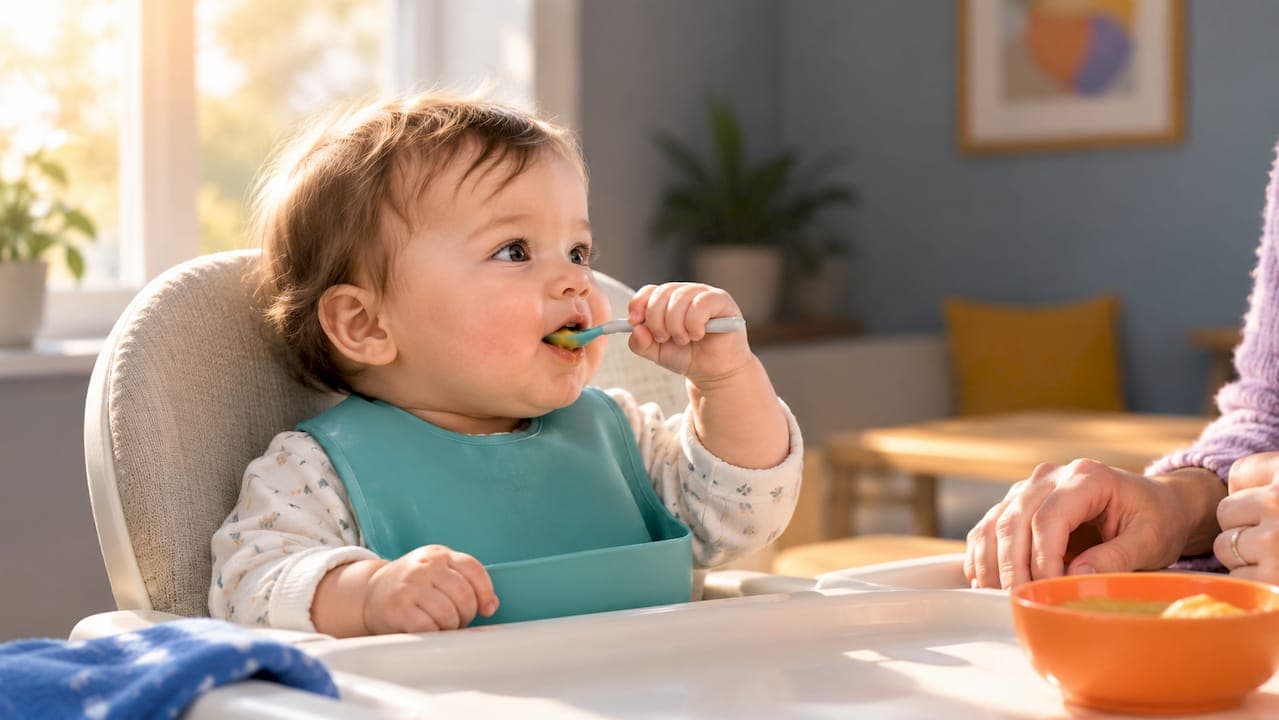
The transition to solids should begin around 6 months, when your baby shows real developmental readiness, not before 4 months. Offer single-ingredient foods one at a time, waiting 3 to 5 days between each to watch for reactions. The goal early on isn't quantity. It's teaching your baby to move food around, chew, and swallow, while breast milk or formula stays the main source of nutrition.
TL;DR:
- Most babies are ready for solids around 6 months, showing signs like sitting upright, interest in food, and bringing objects to the mouth.
- Introduce one single-ingredient food at a time, offering small portions and waiting 3 to 5 days before trying a new item to monitor reactions.
- Focus on iron-rich options such as pureed meats and fortified cereals, and avoid added sugars, salt, honey, and excessive rice cereal early on.
- Gradually increase texture variety with mashed and soft finger foods once purees are tolerated without gagging, to develop oral-motor skills.
- Early allergen exposure is recommended unless your baby has severe eczema or a known allergy, with proper choking prevention and emergency preparedness.
Table of Contents
- What Are the Signs My Baby Is Ready for Solids?
- How Do I Start Introducing Solids the Right Way?
- What Are the Best First Foods for Babies?
- How Do I Move From Purees to Finger Foods Safely?
- How Do I Introduce Allergens and Prevent Choking?
- Why Does My Baby Gag, Refuse Food, or Eat So Little?
- When Should We See a Feeding Specialist?
- The Skill-First View on Starting Solids
- Ready for Hands-On Support With Starting Solids?
- Sources
- FAQ
What Are the Signs My Baby Is Ready for Solids?
Age is a starting point, but readiness is what actually matters. Your baby's body has to catch up with the calendar before that first spoonful makes sense.
Look for these signs before you offer anything beyond milk:
- Sits upright with little or no support and holds their head steady.
- Shows real interest in food, watching you eat or reaching for your plate.
- Brings toys, hands, or other objects to their mouth on their own.
- Moves food to the back of the mouth and swallows, rather than pushing it back out with their tongue.
These signs cluster around 6 months for most babies, according to the CDC. If your baby was born early or has a diagnosed medical condition, readiness may show up on a different timeline entirely.
Pro Tip: Preterm babies are often assessed by adjusted age, not birth age. Ask your pediatrician which milestone timeline applies before you start.
How Do I Start Introducing Solids the Right Way?
Around 6 months, your baby needs more iron and zinc than breast milk or formula alone typically provides, which is part of why health guidance points to this window rather than earlier. The CDC recommends waiting until 6 months and never starting before 4 months, when the gut and oral muscles are still too immature for the job.
Here's a practical sequence for the first couple of weeks:
- Pick one single-ingredient food (an iron-fortified cereal or a smooth vegetable puree).
- Offer a small taste, about a teaspoon, once a day, after or before a milk feed depending on what your baby tolerates better.
- Watch for 3 to 5 days before adding anything new, checking for rash, vomiting, diarrhea, or unusual wheezing.
- If no reaction appears, add a second food, then a third, following the same waiting period.
- By the end of two to three weeks, aim for 2 to 4 well-tolerated foods in rotation.
This pacing isn't about caution for its own sake. It gives you a clear window to trace any reaction back to a specific food, which is far harder once several new ingredients hit the tray at once.
What Are the Best First Foods for Babies?
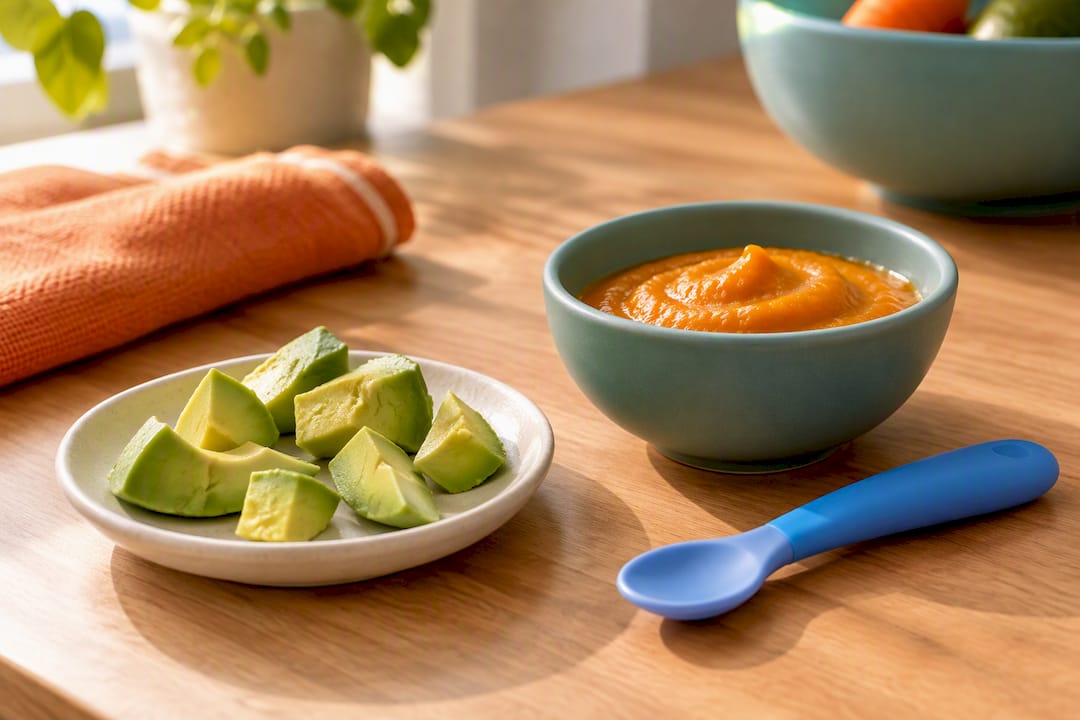
Single-ingredient purees work best at the start: think sweet potato, avocado, pear, or peas, offered one at a time. Iron matters more than most parents expect. Mayo Clinic notes that babies need more iron and zinc in the second half of their first year, which makes pureed meats and iron-fortified single-grain cereal smart early choices, not afterthoughts.
A few practical guardrails as you build out the menu:
- Skip added sugar, salt, and honey entirely before 12 months.
- Limit rice-only cereal because of arsenic concerns; rotate with oat or multigrain options.
- Store-bought purees are safe if you check for added sugar or fillers on the label; homemade is fine too, as long as textures stay smooth and portions start small (one to two teaspoons, working up to a few tablespoons).
- Introduce variety early. There's no proven benefit to delaying common allergens for most babies.
Iron-rich choices deserve more attention than a sweet potato puree, even though the sweet potato gets all the Instagram photos.
How Do I Move From Purees to Finger Foods Safely?
Purees are a starting point, not a destination. Moving toward thicker, lumpier textures within a few weeks of starting solids helps your baby build the oral-motor skills needed for chewing, and waiting too long can actually make that transition harder later.
- Thicken purees gradually, then add soft mashed textures with visible lumps once your baby handles smooth food without gagging excessively.
- Offer soft finger foods, cut into pieces about the size of your baby's pinky finger, once they can sit well and bring food to their mouth reliably.
- Try soft-cooked veggie sticks (carrot, sweet potato), ripe banana slices, or shredded, well-cooked meat.
- Avoid slippery, hard, or round shapes that are difficult to gum into smaller pieces.
Earlier texture progression supports oral-motor skill development and reduces long dependence on purees, a pattern the CDC's guidance backs up directly.
Pro Tip: If your baby still refuses all lumpy textures by 10 months, that's worth mentioning to your pediatrician rather than waiting it out.
How Do I Introduce Allergens and Prevent Choking?
Current guidance favors introducing common allergens like peanut, egg, and fish early and directly, rather than delaying them, unless your baby has severe eczema or an existing egg allergy, in which case your pediatrician may recommend allergy testing first.
Choking prevention deserves equal attention:
- Avoid whole grapes, large chunks of meat or cheese, hard nuts, popcorn, and whole hot dogs.
- Cut round or firm foods into thin strips or small pieces, and cook hard vegetables until soft.
- Learn to tell gagging from choking: gagging is loud, active, and self-resolving; choking is silent or accompanied by real difficulty breathing.
- Call emergency services immediately for true choking; for gagging, stay calm and let your baby work it out.
One number worth remembering: infant CPR and choking-response training takes most caregivers under two hours to complete and is worth scheduling before, not after, you start solids.
Why Does My Baby Gag, Refuse Food, or Eat So Little?
Gagging is a protective reflex, not a sign something's wrong. NHS guidance describes early solids as a skill-building phase where gagging is expected as babies learn to manage new textures. Stay calm, let your baby work through it, and resist the urge to intervene unless breathing is actually affected.
Refusal is common too. It can take 10 or more exposures to a new food before a baby accepts it, so one rejected bite of squash means nothing.
- Keep offering rejected foods without pressure, spaced days apart.
- Follow hunger and fullness cues; stop when your baby turns away or closes their mouth.
- Watch for red flags: consistent gagging past 10 months, weight concerns, or total refusal of all textures beyond puree.
Pro Tip: Put the "rejected" food on your own plate too. Babies often accept foods faster when they watch a parent eat the same thing.
When Should We See a Feeding Specialist?
Most babies move through this stage without major issues, but some don't, and that's worth naming plainly rather than glossing over. Persistent refusal, poor oral-motor skills, suspected swallowing problems, or a need for tube weaning are all solid reasons to bring in a specialist rather than wait it out.
A feeding therapy evaluation typically includes an assessment of oral skills, a plan built around your baby's specific challenges, and hands-on coaching so you know what to practice at home between sessions.
When you're vetting a program, ask:
- What's your approach to gagging and food refusal?
- Do you coach parents directly, or just work with the baby?
- How do you handle babies who also have breastfeeding or speech concerns?
- Can sessions happen at home, daycare, or in-office, depending on our schedule?
The Skill-First View on Starting Solids
Most guidance still frames early solids around volume and schedules, when the real work happening is skill acquisition. Your baby is learning to move food, coordinate a swallow, and tolerate new sensations, all while milk stays their nutritional anchor. Patience and responsive feeding matter more than hitting an ounce target. If refusal or gagging feels like more than a phase, resources on feeding therapy can help you sort out what's typical from what's worth a closer look.
— Thriving Joy
Ready for Hands-On Support With Starting Solids?
Reading about readiness signs is one thing. Watching your own baby gag on a lump of avocado at 7 p.m. is another, and that's exactly where a family-centered approach can be helpful, especially when sessions are available at various locations such as home, daycare, preschool, or in office. If your baby is refusing textures, showing poor oral-motor coordination, or you're just not sure whether what you're seeing is normal, Starting Solids 101 walks you through the process with a therapist instead of a search engine. Families juggling breastfeeding questions alongside solids can also loop in lactation counseling at the same time, rather than treating them as separate problems. If you suspect something beyond typical refusal, book an initial feeding therapy evaluation to get a clear plan instead of more guesswork about what to try next.
Sources
This guide draws on guidance from the CDC, Mayo Clinic, NHS, and the peer-reviewed review First Bites. Always check with your baby's pediatrician for advice specific to their health and development.
This article is general information, not a substitute for advice from a qualified doctor. Consult a qualified healthcare professional about your own circumstances before acting on anything here.
- When, What, and How to Introduce Solid Foods | CDC
- Solid foods: How to get your baby started - Mayo Clinic
- Your baby's first solid foods - NHS
FAQ
How Long Does It Take Babies to Adjust to Solids?
Most babies need several weeks to a few months to move comfortably from purees to varied textures, and acceptance of any single new food can take 10 or more exposures. Progress is rarely linear. Expect good days and days where nothing gets swallowed.
Is 7 Months Too Late to Start Solids?
No. The recommended window is around 6 months, but starting closer to 7 months is still well within a normal range as long as your baby shows readiness signs like sitting with support and bringing objects to their mouth. What matters more than the exact week is that your baby isn't starting before 4 months, per CDC guidance.
What Is the 3 to 5 Day Rule for Introducing Solids?
The 3 to 5 day rule means introducing one new single-ingredient food at a time, then waiting that window before adding another. This makes it much easier to identify the exact cause if a rash, vomiting, or diarrhea shows up.
What Are Three Signs a Baby Is Ready for Solids?
The three clearest signs are sitting with good head control, bringing objects or hands to the mouth with real interest in food, and swallowing rather than pushing food back out with the tongue. These are the readiness markers the CDC outlines as the practical standard, more useful than age alone.