
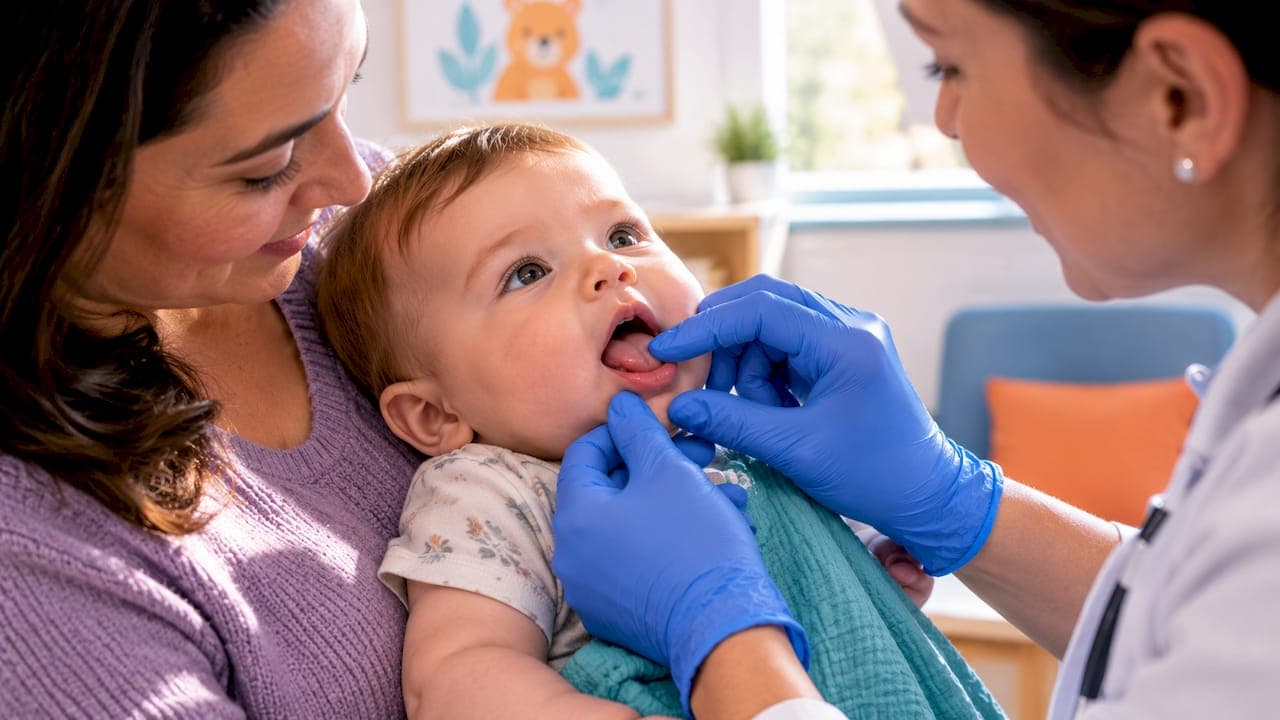
Thrush is common in babies but often overdiagnosed as the cause of nipple pain in breastfeeding parents. If your baby has white patches that don't wipe off or you have clear risk factors alongside burning nipple pain, treatment is reasonable. Otherwise, the smarter first step is a lactation-focused feed observation, since most persistent pain turns out to be mechanical, not fungal. Seek urgent care if your baby refuses feeds or shows fever or lethargy.
TL;DR:
- Mechanical causes like shallow latch or tongue-tie are responsible for most persistent nipple pain and should be addressed before treating suspected thrush.
- Proper diagnosis relies on observing a full feed and may require testing only if initial assessments are inconclusive or treatment fails.
- Topical nystatin for infants and topical azole antifungals for parents are effective treatments, with systemic options reserved for resistant cases and used cautiously during pregnancy.
- Continuing breastfeeding during thrush treatment is safe, and simplified hygiene practices, like thorough cleaning of pump parts, support quicker recovery.
- Mechanical factors and hygiene habits, such as pump fit and nipple air drying, are crucial in preventing recurrence and reducing the risk of misdiagnosis.
Table of Contents
- Signs and symptoms to watch for in the baby and in the breastfeeding parent
- Why sore nipples are often not thrush: common differential diagnoses
- How clinicians decide: the recommended diagnostic pathway and red flags
- Treatment options for infants and for breastfeeding parents, with safety notes
- Managing breastfeeding during treatment and practical hygiene steps
- Prevention and self-care to reduce risk and recurrence
- Duration and expected timeline for treatment and recovery
- Potential complications if thrush is left untreated
- Impact of thrush on milk supply and infant feeding behavior
- Guidance on pain relief methods for affected parents during breastfeeding
- When individualized lactation support makes the difference
- How Thriving Joy supports breastfeeding parents through thrush and beyond
- Sources
- FAQ
Signs and symptoms to watch for in the baby and in the breastfeeding parent
Recognizing true thrush starts with knowing what it actually looks like, in your baby's mouth and on your own nipples, because the symptoms often get confused with other, more common causes of breastfeeding pain.
In babies, oral thrush typically shows up as white or cream-colored patches on the tongue, gums, inner cheeks, or roof of the mouth. A helpful test: milk residue wipes away easily, while thrush patches stick and may leave a raw or reddened spot underneath if you try to remove them. Some babies show no discomfort at all, while others become fussy at the breast or feed less than usual.
For the breastfeeding parent, the signs people associate with nipple thrush include:
- Burning or itching pain that persists between feeds, not just during latch
- Nipples that look unusually pink, shiny, or flaky
- Sharp, shooting pain deep in the breast after a feeding ends
None of these signs are unique to a yeast infection. Shooting breast pain, in particular, is just as often linked to vasospasm or mechanical irritation. What actually points toward a fungal cause is the combination of visible infant mouth patches, recent antibiotic use, and skin changes that appear suddenly on both nipples at once, rather than pain alone.
Why sore nipples are often not thrush: common differential diagnoses
Persistent nipple pain has several more likely explanations than yeast, and telling them apart matters because the treatments are completely different.
Mechanical trauma is the most common culprit. A shallow latch, an unaddressed tongue-tie, or a poorly fitted pump flange can all create friction and compression injuries that feel remarkably similar to a fungal burn. This kind of pain tends to be sharpest at the moment of latch and eases somewhat once milk starts flowing.
Skin conditions and circulation issues also mimic thrush closely:
- Contact dermatitis from lanolin, soap residue, or breast pads causes redness, flaking, or itching tied to a specific product
- Vasospasm, sometimes related to Raynaud's phenomenon, causes nipples to blanch white then flush red or blue, with pain triggered by cold or the end of a feed
- Milk blebs and plugged ducts create localized tenderness and a visible white dot or firm lump, while bacterial mastitis brings redness, warmth, and often fever
Pro Tip: If pain is worse at the exact moment of latch and improves as the feed continues, suspect a latch or tongue-tie issue before assuming yeast.
How clinicians decide: the recommended diagnostic pathway and red flags
Getting the diagnosis right protects you from weeks of unnecessary antifungal treatment. The Academy of Breastfeeding Medicine's protocol on persistent pain lays out a clear sequence for pain lasting longer than two weeks.
- Start with a direct observation of a full breastfeeding session, checking your positioning, your baby's latch, and suck patterns, since this step alone often reveals a mechanical cause.
- Add a swab, culture, or short trial of treatment only when the picture is unclear, such as after treatment failure, an unusual rash, or nipple cracks with visible drainage.
- Escalate quickly if you notice fever, a baby who seems unusually sleepy or unwell, spreading redness on the breast, a possible abscess, or a baby refusing to feed altogether.
This feed-first approach exists because so many severe pain presentations trace back to positioning rather than infection, and jumping straight to antifungal cream can delay the fix you actually need.
Treatment options for infants and for breastfeeding parents, with safety notes
When thrush is confirmed or strongly suspected, treatment is usually straightforward and short.
For babies, topical oral nystatin is the standard first-line option, applied directly to the affected areas of the mouth several times a day. Most infants show improvement within days to two weeks of consistent use.
For the breastfeeding parent, treatment usually follows this order:
- Topical azole antifungal cream applied to the nipple and areola when a fungal cause seems likely
- Oral fluconazole reserved for severe or treatment-resistant cases, since systemic fluconazole carries pregnancy safety cautions and topical options are preferred whenever possible
- A fresh look at non-fungal causes if antifungal treatment does not bring noticeable relief within a short, defined window
Persistent pain despite antifungal treatment is itself useful information. Cleveland Clinic's review of nipple yeast infection notes that when antifungals fail to work quickly, the original diagnosis was probably wrong, and continuing the same cream for weeks on end usually just delays finding the real cause.
Breastmilk safety is rarely a concern during treatment. According to UR Medicine's guidance on treating yeast while breastfeeding, pumped milk, whether fresh, refrigerated, or frozen, remains generally safe to feed your baby. Freezing pauses yeast activity but does not reliably kill it, so label anything you pump during treatment and follow your pediatrician's guidance on how to use it.
Managing breastfeeding during treatment and practical hygiene steps
You can almost always keep breastfeeding while treating thrush, and doing so rarely slows recovery.
- Continue nursing on both sides unless a clinician advises a temporary pause on one, following pediatrician guidance for any pumped milk storage and labeling
- Wash pump parts and bottles thoroughly with regular dish soap and hot water; extreme sterilization routines are not necessary unless a provider specifically recommends them
- If one side is especially painful, feed from the more comfortable breast first and express just enough from the other side for comfort, rather than stopping entirely
- Skip extra creams, oils, or wipes on your nipples during treatment, since added products can irritate skin that is already inflamed and slow things down
Most parents find that sticking to this simpler routine, rather than an elaborate sterilization schedule, is enough to support recovery without adding stress to an already tender time.
Prevention and self-care to reduce risk and recurrence
A few upstream habits lower your odds of dealing with thrush again, and most of them address the same mechanical and hygiene factors that cause pain in the first place.
- Manage oversupply with block feeding or reduced pumping frequency, since over-expressing can worsen breast edema and disrupt the normal balance of skin flora
- Check that your pump flange fits correctly and use the gentlest suction setting that still empties the breast comfortably
- Use antibiotics only when truly needed, since antibiotic exposure is a recognized risk factor for Candida overgrowth, and rinse your mouth after inhaled steroid use
- Clean pacifiers and bottle nipples regularly, and let your own nipples air dry after feeds rather than staying damp under a nursing pad
Pro Tip: A flange that's even slightly too small or too large can cause the same friction pain people mistake for thrush, so it's worth double-checking the fit before assuming an infection.
Duration and expected timeline for treatment and recovery
When thrush is the actual cause, recovery tends to follow a fairly predictable arc. Infant oral thrush treated with topical nystatin often shows visible improvement within a few days, with most cases clearing within one to two weeks of consistent application. Nipple and breast symptoms in the parent, when truly fungal, typically start easing within a similar window once topical antifungal treatment begins.
If you are still in significant pain after a week or two of proper treatment, that is a signal worth acting on rather than waiting out. Cleveland Clinic's guidance is direct on this point: treatment that isn't working quickly is a clue that the diagnosis needs a second look, not a reason to extend the same cream for another month. This is exactly where a professional feed observation earns its place, since mechanical causes like a shallow latch do not resolve with antifungal cream no matter how long you use it.
Recovery timelines also depend on consistency. Missed doses of nystatin, inconsistent application on the nipple, or continuing to use an ill-fitting pump flange during treatment can all stretch out symptoms well beyond the typical one to two week window, even when the original diagnosis was correct.
Potential complications if thrush is left untreated
Untreated infant oral thrush can occasionally spread further into the diaper area as a related yeast rash, and persistent mouth discomfort sometimes leads a baby to feed less effectively or become reluctant at the breast. Most cases stay mild, but a baby who feeds poorly for an extended stretch is worth a pediatric check regardless of the cause.
For the breastfeeding parent, the bigger risk often isn't the yeast itself but what happens when the wrong diagnosis goes unaddressed. If nipple pain is actually caused by a shallow latch or tongue-tie and gets treated as thrush instead, the underlying mechanical injury continues, sometimes progressing to deep cracks, bleeding, or a bacterial infection layered on top of existing skin damage. Left unaddressed long enough, that combination of pain and skin breakdown becomes a common reason parents stop breastfeeding earlier than they wanted to.
There is also a practical cost to misdiagnosis: weeks spent applying antifungal cream that was never going to fix a positioning problem, while the actual cause and its discomfort continue uninterrupted. This is part of why a feed observation early on matters so much. It shortens the path to the treatment that will actually work, whether that turns out to be an antifungal, a latch adjustment, or a referral for tongue-tie evaluation.

Impact of thrush on milk supply and infant feeding behavior
Thrush itself rarely reduces milk supply directly, but the ripple effects around it sometimes do. A baby with mouth discomfort from oral thrush may feed less vigorously or for shorter stretches, and less effective milk removal over several days can start to signal your body to make less. The same pattern shows up when nipple pain, fungal or not, causes a parent to shorten feeds or favor one side to avoid discomfort.

Feeding behavior changes are often the first thing parents notice before they connect it to thrush at all. A baby who used to nurse calmly may become fussier at the breast, pull off repeatedly, or seem to prefer one side over the other if one nipple is more affected than the other. These behavior shifts are worth mentioning during any feeding evaluation, since they help a lactation professional or pediatrician distinguish a temporary discomfort response from a more concerning feeding aversion.
The good news is that once the underlying cause, fungal or mechanical, is properly treated, feeding behavior and supply typically bounce back within days as comfort returns and milk removal becomes effective again. This is one more reason getting an accurate diagnosis matters more than treating symptoms in isolation.
Guidance on pain relief methods for affected parents during breastfeeding
Managing pain while you sort out the underlying cause matters just as much as treating that cause itself. A few gentle strategies can make feeds more bearable in the meantime.
Applying a cool compress after feeds can calm burning or itching nipple skin, while a warm compress before a feed may help with the deep, aching pain some parents describe. Over-the-counter pain relievers that are considered compatible with breastfeeding, taken as directed and confirmed with your pediatrician or a pharmacist, can also help take the edge off while treatment or a latch correction takes effect.
Adjusting positioning during the feed itself, such as trying a different hold or breaking a poor latch and relatching your baby, often reduces pain in the moment more effectively than any product applied afterward. If pain consistently spikes at the exact second of latch, that timing is a clue worth mentioning to whoever evaluates your feed, since it points toward a mechanical fix rather than a medication one.
Above all, pain that lasts beyond a week or two, or that keeps you from wanting to nurse, deserves a real evaluation rather than trial and error with creams and compresses indefinitely.
When individualized lactation support makes the difference
If nipple pain has lasted more than two weeks, antifungal treatment hasn't helped, or your baby is struggling to feed or gain weight well, that's the point to bring in a lactation professional rather than keep guessing. A thorough evaluation typically includes watching a full feed, checking your baby's mouth and oral movement, assessing your pump fit, and building a plan that addresses both the immediate pain and whatever is causing it. Thriving Joy's lactation counseling approach centers on exactly this kind of root-cause, family-centered evaluation rather than a one-size-fits-all fix.
— Thriving Joy
How Thriving Joy supports breastfeeding parents through thrush and beyond
Sorting out whether persistent pain is thrush, a latch problem, or something else takes a trained eye, and that's exactly what our lactation counseling sessions are built around. Rather than guessing from a symptom list, we observe an actual feed, check your baby's oral anatomy, and look at your pump fit before recommending a treatment path, so you're not stuck applying antifungal cream for a problem it was never going to fix.
This approach fits parents who have already tried a cream or two without relief, or who simply want a clear answer before starting any treatment at all. A holistic, family-centered model looks at the full feeding picture, not just the nipple, and offers flexibility in where sessions happen, such as in an office, home, or daycare. If persistent pain, feeding struggles, or a stalled diagnosis have you stuck, book a lactation evaluation and get a plan built around what's actually happening at the breast.
This article is general information, not a substitute for advice from a qualified doctor. Consult a qualified healthcare professional about your own circumstances before acting on anything here.
Sources
- Healthychildren
- ABM Protocol #26 — Persistent pain with breastfeeding
- Cleveland Clinic — Nipple yeast infection article
- UR Medicine — Treating yeast while breastfeeding
FAQ
How can I tell if thrush is from breastfeeding?
Look for white patches in your baby's mouth that don't wipe away like milk residue, paired with burning nipple pain or pink, shiny nipple skin on your side. Because these signs overlap with latch problems and dermatitis, a professional feed observation is the most reliable way to confirm a fungal cause rather than symptoms alone.
Can thrush clear up on its own without treatment?
Mild infant oral thrush sometimes resolves without intervention, but most cases respond well to a short course of topical nystatin and clear faster with treatment than without it. Nipple thrush in the breastfeeding parent is less likely to resolve on its own and usually needs a topical antifungal once confirmed.
What else could look like thrush on the breast?
Shallow latch and mechanical trauma, contact dermatitis, vasospasm or Raynaud's phenomenon, and milk blebs or plugged ducts can all produce nipple pain, redness, or skin changes that resemble fungal infection. Cleveland Clinic's review notes these causes are common enough that treatment failure with antifungals should prompt a re-evaluation rather than a longer antifungal course.
Does oral thrush go away by itself in newborns?
Some very mild cases of infant oral thrush improve without treatment, but it is inconsistent, and untreated thrush can cause feeding discomfort in the meantime. Because topical nystatin typically brings improvement within days to two weeks, most pediatricians recommend starting treatment rather than waiting it out.
Is it safe to keep breastfeeding while treating thrush?
Yes, continuing to breastfeed during treatment is safe and generally recommended. Pumped breast milk, whether fresh, refrigerated, or frozen, remains safe to use during treatment, though freezing only pauses yeast activity rather than eliminating it, so label anything pumped during this period as your pediatrician advises.