

Yes, you can keep breastfeeding after returning to work, and most mothers who plan ahead do it successfully. Start now by asking your employer about break time and space, and use the weeks before your return to practice pumping and build a small backup supply. The PUMP Act protects your right to both, and CDC storage guidelines make transporting milk far simpler than it sounds.
TL;DR:
- Starting to practice pumping and introducing a bottle two to three weeks before returning helps establish a routine without interfering with breastfeeding.
- Most employers are legally required to provide a private, non-bathroom space and reasonable break time to express milk for up to a year after birth.
- Budget to spend 30 to 40 minutes per pumping session to accommodate setup, cleanup, and travel, even if the actual pump time is shorter.
- Using an insulated cooler with ice packs keeps milk safe for up to 24 hours, and labeling milk ensures proper rotation and minimizes waste.
- Address potential feeding mismatches by adjusting bottle flow and pacing, and seek early lactation support if supply issues or pain persist beyond a few days.
Table of Contents
- Prepare Before You Return: Pregnancy and Maternity Leave Steps
- Talk to Your Employer and Know Your Rights at Work
- Pumping at Work: Schedule, Time Budget, and Workflow
- Storing and Transporting Breast Milk Safely
- Choosing and Preparing a Childcare Provider for Expressed Milk
- Managing Milk Supply and Troubleshooting Common Problems
- Quick Checklist and Sample First Two Weeks Back Schedule
- Jamie's Perspective: Time Budgeting and When to Get Hands-On Help
- How Thriving Joy's Lactation Counseling Can Help
- Where to Read More
- Sources
Prepare Before You Return: Pregnancy and Maternity Leave Steps
The groundwork you lay before your first day back matters more than anything you do that first week. If your leave length is flexible at all, even two or three extra weeks can help your supply settle into a rhythm before you're managing it around a work schedule.
About two to three weeks before your return date, start introducing a bottle and practicing with your pump. This timing matters: too early can interfere with establishing breastfeeding, too late leaves no room to troubleshoot. Use paced bottle feeding, where the bottle is held horizontally and tilted only enough to let milk flow, so your baby doesn't develop a preference for faster bottle flow over breastfeeding.
You do not need a freezer stocked for a month. A day-ahead supply is usually enough, since you'll be pumping fresh milk during work hours to replenish what your caregiver uses.
Before day one, handle these:
- Schedule at least one visit with your childcare provider to walk through your feeding plan together.
- Practice your full pumping routine at home, including cleanup, so it's not brand new on a workday.
- Freeze or refrigerate a small "just in case" reserve, roughly one to two days' worth.
- Label everything with your baby's name and the date, a habit worth starting now.
Talk to Your Employer and Know Your Rights at Work
Under the federal PUMP for Nursing Mothers Act, most employers must give you reasonable break time and a private space, one that isn't a bathroom, to express milk for up to a year after your baby's birth. This is a legal floor, not a favor your manager is doing you.
Bring a short, specific plan to your employer conversation rather than a vague request. Try something like this:
- "I'll need two or three 20 to 30 minute breaks during my shift to pump."
- "I'd like to use [a specific room] since it has an outlet and a door that locks."
- "Can I store milk in the breakroom fridge, or should I bring my own cooler?"
- "I'll clean pump parts in [location] between sessions."
Put the agreed arrangement in writing, even a quick follow-up email summarizing what you discussed. If your employer pushes back or won't accommodate you, the Department of Labor is the right place to find your options.
Pro Tip: Ask about accommodations before your last day of leave, not your first day back. HR needs time to sort out logistics, and you'll return with one less thing to negotiate on the fly.
Pumping at Work: Schedule, Time Budget, and Workflow
Most working mothers pump every two to four hours, roughly matching how often their baby would nurse. If your supply starts dipping, adjusting your pumping schedule may help more than increasing the length of each session.
Budget more time than you'd expect. Between travel to your pumping space, setup, the pumping session itself, and cleanup, plan for 30 to 40 minutes total, even though the actual pumping might only take 15 to 20 minutes. This is the single most underestimated part of a return to work breastfeeding plan, and it's why so many new schedules feel tighter than expected in week one.
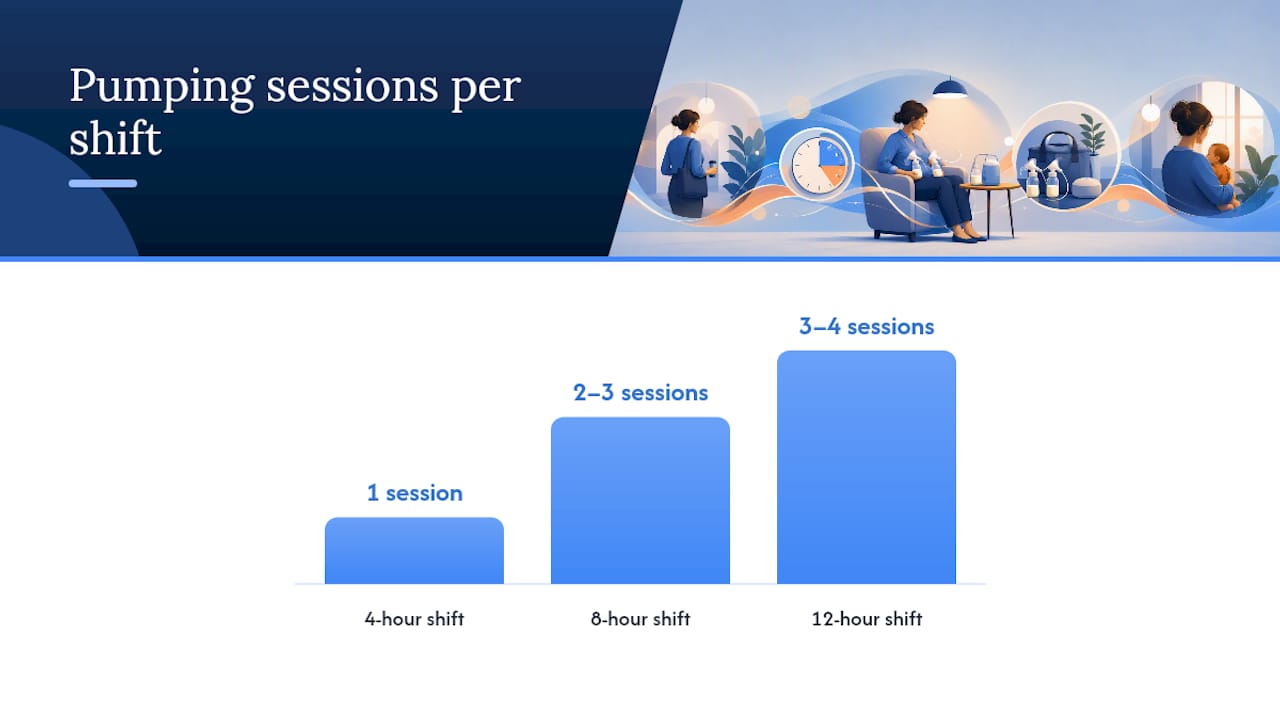
Sample schedules by shift length:
- 4-hour shift: One pumping session, roughly midway through.
- 8-hour shift: Two to three sessions, spaced every two to three hours.
- 12-hour shift: Three to four sessions, adjusted around meal breaks.
If your job doesn't offer built in breaks, a hands-free pumping bra lets you pump while working at a desk, and pumping right before your shift starts or right after it ends can fill in gaps.
Pack your bag the night before with:
- Pump, extra collection kit, and charged batteries or a power cord.
- Storage bags or bottles, already labeled.
- A small cooler with ice packs.
- Wipes or a quick-clean spray for parts between sessions.
Storing and Transporting Breast Milk Safely
Freshly pumped milk doesn't need to go straight into a freezer. An insulated cooler bag with ice packs keeps milk safe for up to 24 hours, which covers most commutes home with room to spare. Once home, refrigerate or freeze it according to the same CDC timelines.
Label every bottle or bag with your baby's full name and the date it was expressed. This isn't busywork. It supports the "first-in, first-out" rotation most daycares use, so older milk gets used before it expires and nothing goes to waste.
Storage snapshot: an insulated cooler with ice packs holds milk safely for up to 24 hours, giving you a wide buffer between pumping at work and refrigerating at home.
If your workplace fridge is shared or nonexistent, your cooler bag becomes your fridge for the day. Rinse pump parts with cold water right after each session, then do a full wash at home. Some offices allow a quick wipe-down with sanitizing wipes between uses in a pinch.

Choosing and Preparing a Childcare Provider for Expressed Milk
Not every childcare provider handles expressed milk the same way, and asking the right questions early saves confusion later. A provider comfortable with breastfeeding families should have clear routines already in place.
- Ask how they store and label bottles, and whether staff are trained on paced feeding.
- Ask about their feeding schedule flexibility since breastfed babies often eat smaller amounts more frequently than formula-fed babies.
- Ask whether they support an open-door policy for you to visit or feed during breaks.
- Confirm they'll follow a written feeding plan you provide, including typical serving sizes.
Before your return, schedule a trial visit and leave a written note about your baby's hunger and fullness cues. A caregiver who paces bottles slowly and offers smaller, more frequent servings will waste less milk and better match how your baby actually feeds at the breast.
Managing Milk Supply and Troubleshooting Common Problems
A caregiver reporting that your baby "goes through more milk than you're pumping" often reflects a feeding pattern mismatch, not a true supply problem. Faster bottle flow and larger servings can make a baby take more than they'd take at the breast. Smaller, paced servings usually close that gap.
If your own supply feels lower, increasing pumping frequency by even one session a day, or adding brief hand expression after pumping, often helps more than any supplement or tea.
Watch for these warning signs:
- A firm, tender lump in one area of the breast (possible clogged duct).
- Fever, chills, or flu-like aches paired with breast pain (possible mastitis).
- Symptoms that don't ease within 24 hours of rest, warmth, and frequent emptying.
Pro Tip: If you're going more than 12 hours without relief from a suspected clogged duct, or you develop a fever, don't wait it out. Early lactation support prevents small problems from becoming supply-threatening ones.
Sleep, hydration, and lowering stress genuinely affect supply, even though they're the advice everyone gives and skips.
Quick Checklist and Sample First Two Weeks Back Schedule
Before day one:
- Pump and bottles tested and clean.
- Caregiver visit completed, feeding plan in hand.
- Employer conversation documented in writing.
- Cooler bag packed with ice packs and labeled containers.
Two-week sample: Week one, pump on the same rough schedule your shift allows (every two to four hours), and expect some adjustment as your body and your workplace routine sync up. Week two, fine-tune session timing based on what your caregiver reports about feeding patterns.
Daily bag: pump, parts, bottles, cooler, spare batteries. One-line reminder: some days will feel harder than others, and that's normal, not a sign you're failing.
Jamie's Perspective: Time Budgeting and When to Get Hands-On Help
Budget an extra 10 to 20 minutes around every pumping session. That cushion is what separates a sustainable routine from a stressful one. In practice, the mothers who struggle most often aren't dealing with a true supply issue. They're dealing with a caregiver feeding mismatch or a schedule that never accounted for setup and cleanup time. Fixing the logistics fixes the panic. If supply concerns or pain last more than a few days, get evaluated early. Waiting rarely resolves it, and a short session with a lactation counselor often untangles what feels like a mystery.
— Jamie
How Thriving Joy's Lactation Counseling Can Help
If your return to work plan hits a snag, whether that's pain, a stubborn clogged duct, or a caregiver struggling to coordinate feedings, professional lactation counseling can provide support. A typical consultation may include assessment of feeding and pumping routines, guidance on pump fit, and development of a pumping plan tailored to your schedule and childcare arrangements.

Book a session if you're noticing persistent supply loss, ongoing pain, latch changes since returning to work, or trouble getting your caregiver's feeding routine to match your baby's actual cues. Bring your pumping notes and current schedule to the appointment so the plan built with you fits the life you're actually living. Start with lactation counseling to get a plan tailored to your return to work timeline, and if feeding challenges run deeper than pumping logistics, feeding therapy is available too.
Where to Read More
For workplace rights, the Department of Labor's PUMP Act page is the definitive source. For storage windows, rely on CDC breastfeeding guidance. For general planning, the Office on Women's Health covers the basics well, and for feeding-pattern questions, this guide to cluster feeding helps decode confusing hunger cues.
This article is general information, not a substitute for advice from a qualified doctor. Consult a qualified healthcare professional about your own circumstances before acting on anything here.
Sources
- Break Time for Nursing Mothers Under the FLSA (PUMP Act) — U.S. Department of Labor
- Breastfeeding: Frequently Asked Questions — Centers for Disease Control and Prevention (CDC)
- Breastfeeding and going back to work — Office on Women's Health (HHS)
- Pumping at Work: Example Schedule and Helpful Tips — Cleveland Clinic