
Phonological processes are the predictable ways young children simplify adult speech while their systems are still developing, like saying "wabbit" for rabbit or "nana" for banana. Most of these patterns are a normal part of learning language and fade out on their own by specific ages. When a pattern lingers past its expected age, shows up as an unusual error type, or makes your child hard to understand, it's time for a speech-language pathologist to take a look, using tools like the ASHA practice portal guidance and standardized tests.
TL;DR:
- Most phonological processes typically resolve by age 3 to early school age, but persistent patterns beyond that age may indicate a delay worth professional attention.
- Atypical patterns like backing or initial consonant deletion are rare in normal development and should trigger concern regardless of age.
- Speech samples and standardized tests are combined during evaluations to identify whether patterns or individual sounds are the main source of difficulty.
- Therapy usually involves broad pattern targeting through cycles or minimal pairs, with family coaching to reinforce progress at home.
- Noticing a child's difficulty understanding or a persistence of multiple atypical processes beyond the typical age range increases the need for professional assessment.
Table of Contents
- What Are Phonological Processes, and How Do They Differ From Articulation Errors?
- Common Phonological Processes Parents Actually Hear
- When Do Phonological Processes Typically Disappear?
- Typical Delay or Something More? Red Flags to Watch
- What Happens During a Speech-Language Evaluation
- Therapy Approaches That Actually Move the Needle
- Simple Ways to Support Speech Practice at Home
- Getting From Concern to Evaluation: Your Next Steps
- Thriving Joy's Perspective on Helping Families With Phonological Delays
- Ready to Get Your Child Evaluated? Here's How Thriving Joy Helps
- Sources
- FAQ
What Are Phonological Processes, and How Do They Differ From Articulation Errors?
Phonology is the set of mental rules your child's brain uses to organize speech sounds into words. When a toddler says "tup" for cup, that's not a random mistake. It's a rule being applied consistently, in this case, replacing a back sound with a front one. That consistency is the key clue clinicians look for: a true phonological process shows up across many different words, not just one stubborn sound.
Articulation errors work differently. They're motor based, meaning the child physically can't position their tongue, lips, or jaw correctly to produce a specific sound, regardless of what pattern it belongs to. A child with an articulation disorder might distort their "r" sound in every single word it appears in, but the rest of their speech follows typical rules. A child with a phonological disorder, on the other hand, might apply the same simplification rule (like dropping final consonants) across dozens of unrelated words.
This distinction shapes therapy from day one. Clinicians analyze speech samples for patterns rather than counting individual wrong sounds, because targeting the underlying rule often fixes multiple sounds at once.
Here's how the two categories typically show up:
- Phonological (rule based): affects sound classes or word positions across many words
- Articulation (motor based): affects one or two specific sounds regardless of context
- Overlap: many children show a mix of both, which is why a full evaluation matters
- Diagnostic clue: consistency of the error pattern across vocabulary, not just frequency
Common Phonological Processes Parents Actually Hear
Phonological processes fall into three broad buckets: substitutions, syllable structure changes, and assimilations. Recognizing these patterns in your own child's speech, sometimes called building a mental phonological processes list, helps you describe what you're hearing when you talk to a pediatrician or SLP.
Substitution processes happen when a child swaps one sound class for another:
- Fronting: back sounds like "k" or "g" become front sounds, so "cat" becomes "tat"
- Stopping: flowing sounds like "s" or "f" become quick stop sounds, so "sun" becomes "tun"
- Gliding: "r" or "l" become "w" or "y," so "rabbit" becomes "wabbit"
- Deaffrication: sounds like "ch" or "j" lose their stop element, so "chip" becomes "ship"
Syllable structure processes change the shape of the word itself:
- Cluster reduction: consonant blends get simplified, so "stop" becomes "top"
- Final consonant deletion: the last sound of a word disappears, so "dog" becomes "dah"
- Weak syllable deletion: unstressed syllables vanish, so "banana" becomes "nana"
- Reduplication: a syllable repeats, so "bottle" becomes "baba"
Assimilation processes occur when one sound in a word influences another, so "dog" becomes "gog" because the final "g" pulls the initial sound to match it.
Most speech-language pathologists watch these three categories closely because they account for the overwhelming majority of typical simplifications documented in clinical phonological pattern research. A handful of patterns fall outside this normal range and deserve extra attention.
Atypical processes are worth flagging early:
- Backing: front sounds become back sounds (the reverse of the typical fronting pattern), so "tap" becomes "cap"
- Initial consonant deletion: the first sound of a word disappears entirely, so "cat" becomes "at"
These two rarely appear in typically developing speech at any age, which is exactly why clinicians treat them as red flags rather than a phase to wait out.
When Do Phonological Processes Typically Disappear?
Age norms give you a rough map, not a strict deadline, but they're the best tool for deciding whether to watch and wait or make a call. Clinical phonological process charts group common patterns by the age most children stop using them.
| Process | Typical age of elimination |
|---|---|
| Final consonant deletion | Around age 3 |
| Reduplication | Around age 3 |
| Weak syllable deletion | Typically fades during preschool years |
| Fronting | Typically fades during preschool years |
| Cluster reduction | Usually resolves in early school age |
| Stopping of /f/, /s/ | By age 3 |
| Gliding of /r/, /l/ | Often fades by early elementary school age |
| Assimilation | Around age 3 |
A few practical notes belong alongside any chart like this:
- Regional dialects and multilingual development can shift these timelines without signaling a disorder.
- Bilingual children often show cross-language patterns that look unusual on an English-only chart but reflect normal dual-language learning.
- One process past its typical age, in isolation, is rarely urgent on its own.
- Multiple processes persisting together, or one process persisting well beyond its window, is the combination worth a professional opinion.
Treat these ages as guardrails rather than deadlines. A child who still glides "r" at age five is unremarkable. A child who still deletes final consonants at age five is a different story, and that's the kind of pattern a clinician should weigh in on.
Typical Delay or Something More? Red Flags to Watch
Intelligibility, or how well an unfamiliar listener understands your child, matters more than tallying individual errors. Clinicians generally expect strangers to understand roughly half of a 2-year-old's speech, most of a 3-year-old's speech, and nearly all of a 4-year-old's speech in context, according to ASHA's clinical guidance. If your child falls noticeably below that range for their age, it's worth a conversation with a professional.
Beyond intelligibility, a short list of warning signs tends to matter more than any single missed sound:
- A process persisting well past its typical age of elimination
- Any atypical process, such as backing or initial consonant deletion
- Regression, meaning your child used to say a sound or word correctly and has stopped
- A very small consonant inventory, where only a handful of sounds appear across all speech
- Feeding difficulties, drooling, or other signs of a structural or motor issue alongside the speech pattern
None of these on their own means something is wrong. But two or more together, especially paired with low intelligibility for your child's age, is a strong argument for evaluation rather than waiting another six months.
Pro Tip: Record a two or three minute video of your child talking during play, once a month. It's a low-effort way to track whether patterns are fading over time or staying put, and it gives an SLP a real-world sample to compare against clinic observations.
What Happens During a Speech-Language Evaluation
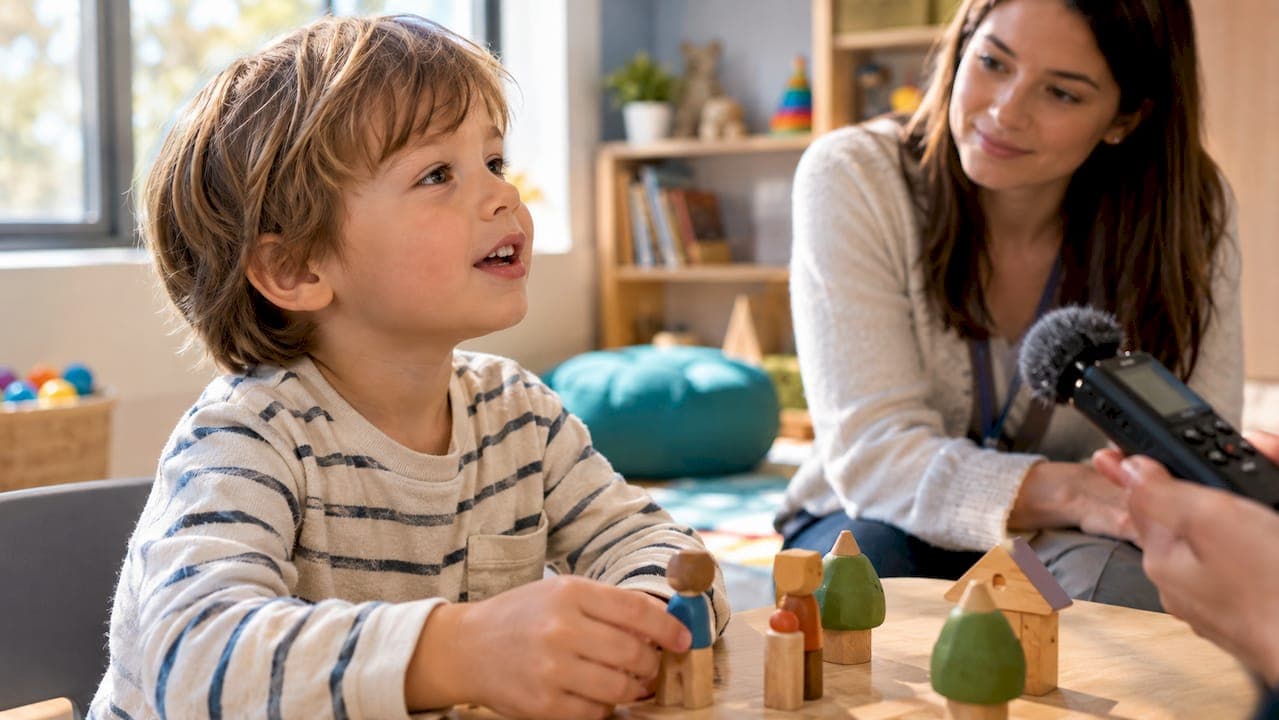
An evaluation usually blends two tools: a natural speech sample and standardized testing. The speech sample is exactly what it sounds like: an SLP records or transcribes your child talking during play or conversation, then analyzes it for patterns rather than isolated mistakes. You can help by bringing a short recording from home, since children sometimes talk more freely there than in a clinic room.
Standardized tests add a structured comparison point. The Goldman-Fristoe Test of Articulation (GFTA-3) has your child name pictures, letting the clinician document exactly which sounds are produced correctly and which aren't. Results from that same picture-naming task often feed directly into the Khan-Lewis Phonological Analysis (KLPA-3), which reorganizes the errors by pattern to reveal whether fronting, cluster reduction, or another process is driving most of the difficulty.
A few things worth knowing before your visit:
- Bring a short conversational sample and a few specific words your child struggles with; three to five minutes of natural talk is often enough for a clinician to start spotting patterns.
- Expect the appointment to combine play-based observation with formal testing, not just one or the other.
- The clinician will use both pieces together to decide whether therapy should target broad patterns, individual sounds, or a combination of both.
Therapy Approaches That Actually Move the Needle
Two research-informed methods dominate phonological therapy, and understanding the difference helps you follow along with your child's treatment plan. The cycles approach targets one phonological pattern at a time, working through a rotation of related sounds over several weeks before circling back, rather than drilling a single sound to mastery before moving on. It's often used with children who have multiple patterns and lower intelligibility, since it builds broad progress across the whole sound system instead of narrow gains in one spot.
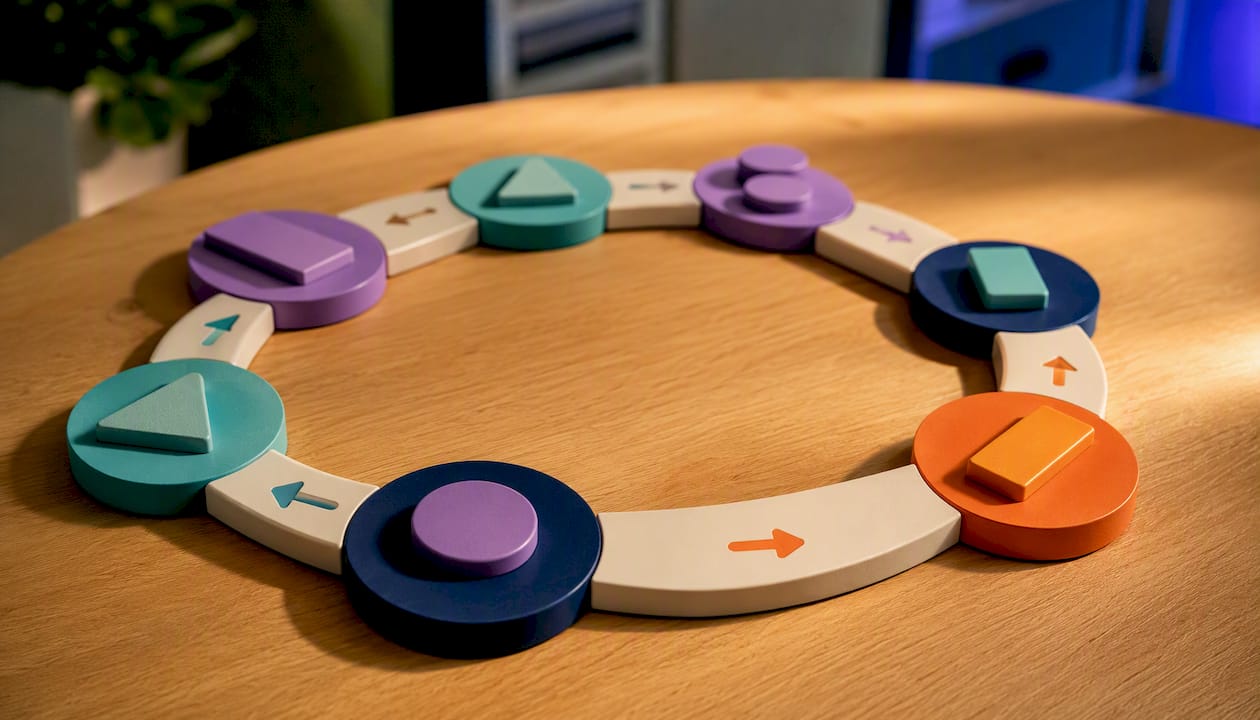
Minimal pairs therapy, sometimes called contrastive approaches, works differently. The clinician presents word pairs that differ by just one sound, like "key" and "tea," so the child has to use the correct sound to be understood. This method leans on real communication breakdowns as the teaching tool, since saying "tea" for "key" while pointing at a key card doesn't get the message across.
A few things to expect from either approach:
- Therapy often targets whole patterns rather than isolated sounds, since fixing the rule tends to improve several sounds at once.
- Progress is usually measured in generalization, meaning the corrected pattern starts appearing in words never directly practiced in session.
- Family coaching is typically built into both methods, since practice between sessions speeds up carryover more than clinic time alone.
- Speech-language pathologists commonly draw on cycles and minimal-pair methods as first-line, evidence-informed options for phonological disorders.
Simple Ways to Support Speech Practice at Home
You don't need a therapy background to reinforce good speech habits between sessions. A few consistent habits, built into routines you already have, make a real difference.
- Model, don't correct. If your child says "I see a wabbit," respond with "Oh, a rabbit! I see it too." This recasts the word correctly without turning the moment into a correction.
- Play minimal-pair games. Line up simple picture pairs like "boat" and "goat," and ask your child to point to the one you say. It's low-pressure practice disguised as a game.
- Narrate your own actions. Describing what you're doing during bath time, meals, or errands gives your child extra exposure to target sounds in natural context.
- Celebrate attempts, not just accuracy. A child who tries a hard word and gets it partly right needs encouragement, not a repeat correction on the spot.
Pro Tip: Keep home practice under five minutes and tie it to something you're already doing, like snack time or the car ride to daycare. Short, frequent bursts beat one long weekly session for building carryover. For more structured ideas, Thriving Joy's guide to home speech practice walks through activities session by session.
Getting From Concern to Evaluation: Your Next Steps
Once you've noticed a pattern that seems off, the path forward is straightforward. Start by asking your pediatrician for a referral to a speech-language pathologist, or search directly for a caring pediatric dentist near me in Western Sydney for cross-disciplinary family care in your area.
Before the appointment, gather a few things:
- A short video or written list of words your child struggles with
- Notes on when the pattern started and whether it's changed over time
- Any family history of speech or language delays
- A summary of feeding or motor concerns, if any
At the evaluation itself, don't hesitate to ask direct questions: which standardized tests will be used, what therapy approach they'd recommend based on the pattern, and how family coaching fits into the plan. Ask about session frequency too. Most phonological therapy runs weekly, though this varies by severity. Most practices accept private pay and major insurance plans, so ask about coverage before your first visit to avoid surprises. Learning what to expect during an evaluation ahead of time takes a lot of the guesswork out of that first appointment.
Thriving Joy's Perspective on Helping Families With Phonological Delays
Diagnosing a pattern is only half the job. What actually changes outcomes is a plan that fits into a specific family's routines, not a generic worksheet handed out at the end of a session. Thriving Joy builds therapy around root causes, whether that's an underlying motor issue, a feeding difficulty tangled up with speech development, or simply a pattern that needs targeted practice, and coaches parents directly so progress doesn't stop when the session ends.
Families working with Thriving Joy can expect individualized goals, direct coaching on how to reinforce sounds at home, and a plan that adjusts as your child grows.
— Thriving Joy
Ready to Get Your Child Evaluated? Here's How Thriving Joy Helps
Thriving Joy is the alternative to a generic clinic waitlist for families who want a plan built around their specific child, not a one-size-fits-all worksheet. Every evaluation combines a natural speech sample with standardized testing, then translates the results into goals you actually understand, paired with direct parent coaching so progress continues outside the therapy room.
If you've noticed a pattern lingering past its typical age, or your child is hard for strangers to understand, the next step is booking a speech evaluation rather than waiting another few months to see if it resolves on its own. Sessions are available in office, at home, or wherever fits your family's routine, and private pay and major insurance plans are commonly accepted so cost doesn't have to be a guessing game. If you'd rather start with group support, the parent coaching classes offer another low-commitment way to get expert guidance before committing to individual therapy.
Sources
For clinical detail beyond this guide, these resources carry real weight in the speech-language field:
- Selected Phonological Patterns — ASHA Practice Portal
- Phonological Processes Chart: Age Of Elimination — SimplePractice
This article is general information, not a substitute for advice from a qualified doctor. Consult a qualified healthcare professional about your own circumstances before acting on anything here.
FAQ
What Are the Five Phonological Processes?
There isn't one official list of exactly five, but the most commonly discussed processes are fronting, stopping, gliding, cluster reduction, and final consonant deletion. These five show up in nearly every clinical chart because they're the most frequent patterns young children use while their speech systems mature.
At What Age Should Phonological Processes Disappear?
It depends on the specific process. Final consonant deletion and reduplication typically fade by around age 3; cluster reduction usually resolves in early school age; fronting typically fades during preschool years; and gliding of "r" and "l" often fades by early elementary school age. A pattern lingering well past its expected age, rather than a single missed sound, is what warrants a closer look.
What Causes a Phonological Processing Disorder?
A phonological disorder happens when a child keeps applying simplification rules past the age most kids drop them, or uses atypical patterns like backing that rarely appear in typical development. The exact cause varies by child, but clinicians identify it through pattern analysis rather than a single test, often using tools like the GFTA-3 and KLPA-3 together.
Can You Give Examples of Phonological Processes?
Sure. Fronting turns "cat" into "tat," gliding turns "rabbit" into "wabbit," and final consonant deletion turns "dog" into "dah." Cluster reduction is another common one, turning "stop" into "top" by dropping part of a consonant blend.
How Does Thriving Joy Approach Phonological Delays?
Thriving Joy builds individualized therapy plans around each child's specific patterns, combining evaluation results with direct parent coaching so families can reinforce progress at home. Current pricing and scheduling details are available directly on the speech therapy services page.