

Oral sensory seeking means a child needs extra input in the mouth, through chewing, sucking, or tasting, to feel calm, focused, or regulated. It's common and usually harmless in babies and toddlers, but when intense mouthing continues past age two it's worth a closer look. Start with safe, supervised strategies at home, and call your pediatrician if you notice choking risk, non-food eating, or feeding refusal.
TL;DR:
- Persistent oral sensory seeking beyond age five may indicate underlying sensory processing differences or other medical concerns.
- During transitions or boredom, behaviors like chewing, mouthing, or teeth grinding tend to spike, reflecting a need for calming oral input.
- Safe, supervised strategies such as chewy tools, crunchy foods, or resistive sipping can meet sensory needs without risks, but require consistent trial and monitoring.
- Signs like choking, biting, or refusal to eat a variety of foods warrant pediatrician consultation to rule out pica, dental issues, or nutritional deficiencies.
- Professional evaluation can distinguish sensory, motor, or medical causes and develop a tailored treatment plan, which usually progresses gradually over weeks or months.
Table of Contents
- What Oral Sensory Seeking Looks Like in Everyday Life
- Why Kids Crave Oral Input in the First Place
- Safe Strategies to Try at Home Right Now
- Safety Checklist: When to Call Your Pediatrician
- What Happens During a Professional Oral Sensory Evaluation
- A Clinician's Take on Getting This Right
- Get Hands-On Support From Thriving Joy
- Sources
What Oral Sensory Seeking Looks Like in Everyday Life
You'll probably recognize this before you have a name for it. Your child chews on shirt collars until they're frayed. They lick furniture, mouth crayons during art time, or grind their teeth while watching a screen. Some kids gravitate toward intensely sour candy or spicy food that would make an adult wince, seemingly craving that jolt of flavor.
Context matters here. A baby mouthing everything within reach is doing normal developmental work, exploring textures and building oral awareness. That's expected well into the second year. What raises a flag is when a four or five-year-old is still chewing on backpack straps, pencil erasers, or hoodie strings on a daily basis, or when the behavior shows up in predictable, almost compulsive patterns.
Watch for these situational patterns, since they often reveal the real trigger:
- Chewing collars, sleeves, or hair during quiet, low-stimulation moments like car rides
- Mouthing toys, markers, or classroom supplies during focused seatwork
- Seeking extra-crunchy or intensely flavored foods at meals while rejecting bland textures
- Grinding teeth or clenching the jaw during transitions or stressful moments
- Frequent licking of hands, surfaces, or objects that aren't food
Jot down when and where these behaviors spike. That pattern becomes valuable information for a therapist later.
Why Kids Crave Oral Input in the First Place
The mouth delivers three kinds of sensory feedback at once: tactile information from lips and tongue, proprioceptive pressure from the jaw muscles working against resistance, and gustatory input from taste and texture. For some children, this combination is deeply organizing. Heavy jaw work can calm an overwhelmed nervous system the same way a weighted blanket calms a body craving pressure elsewhere.
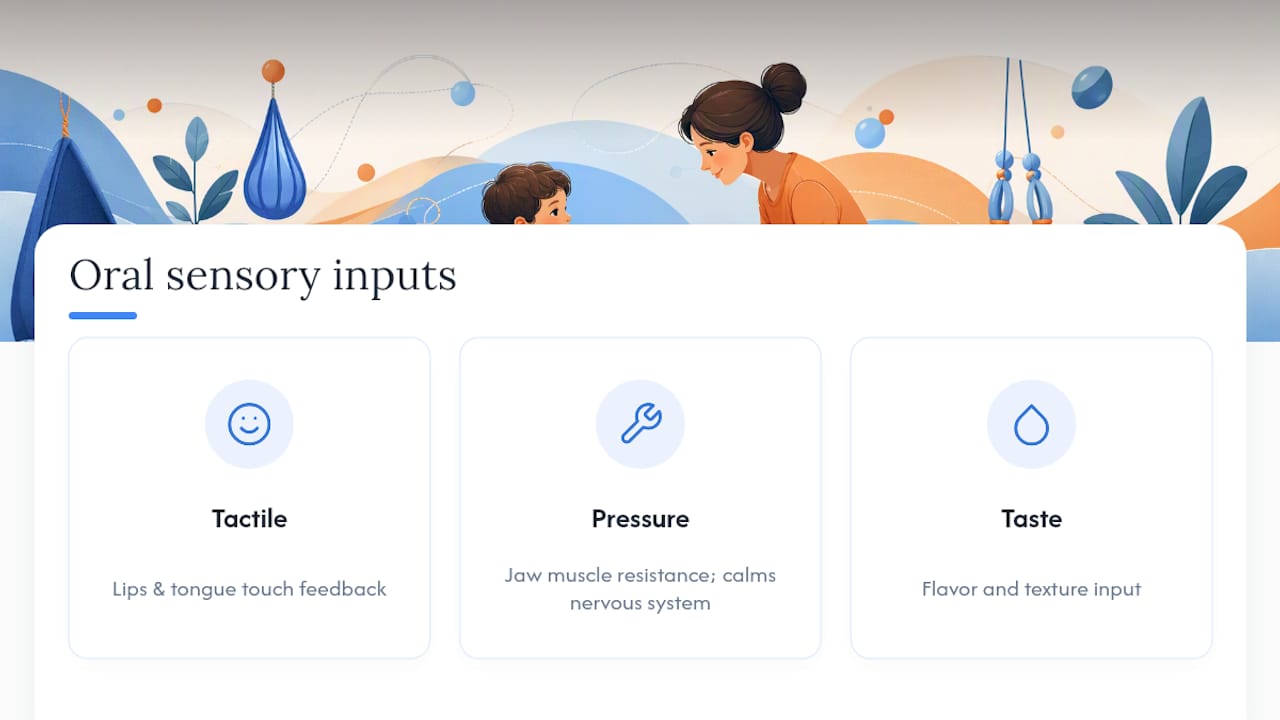
That's often why oral seeking spikes during transitions, boredom, or sensory overload. The behavior isn't defiance or a bad habit. It's a child's system reaching for input it needs.
Oral sensory seeking sits on a spectrum. It's developmentally typical in infancy, becomes worth monitoring in early childhood, and can point toward sensory processing differences, a co-occurring diagnosis like autism or ADHD, dental pain, or in rarer cases pica, when a child repeatedly eats non-food items. Distinguishing between these matters, because the right response differs for each.
Research backs up the feeding connection. A study analyzing 130 mother child pairs in the ROLO longitudinal birth cohort found that children with higher oral sensory processing scores showed a stronger desire to drink, more food fussiness, and lower enjoyment of food overall. Oral sensitivity and picky eating are frequently connected, not coincidental.
Safe Strategies to Try at Home Right Now
Before trying anything new, understand the goal: give your child's mouth the input it's asking for, but through channels that are safe, supervised, and easy to phase in or out.
Pro Tip: Trial one strategy at a time for three to seven days before adding another. Keep a simple log with the time, the activity, and how your child responded. This makes it far easier to spot what's actually working instead of guessing.
Here's a prioritized order for introducing options:
- Start with chewy tools. Silicone chew necklaces or bracelets and dedicated chewy tubes give jaw muscles resistance to push against. Always supervise use, inspect for wear regularly, and retire anything that's cracked or bitten through, since a compromised piece becomes a choking risk.
- Layer in food-based input. Crunchy foods like carrots, apple slices, or crunchy vegetable snacks satisfy the same proprioceptive craving through mealtime, alongside chewy options like dried fruit or bagels for kids with the appropriate chewing skills and no swallowing concerns.
- Add resistive sucking. A thickened smoothie through a narrow straw makes the mouth work harder and can be remarkably calming. Skip this for children with any swallowing or aspiration concerns without clearance from a feeding therapist.
- Bring in organizing oral-motor activities. Blowing bubbles, whistles, or a kazoo, or using a vibrating toothbrush during brushing time, all provide structured input outside of mealtimes and outside of unsafe mouthing targets.
- Offer sports-style water bottles. The resistance of drinking through a valve gives many kids a satisfying, low-effort way to get oral feedback throughout the day.
A few safety notes apply across the board. Always supervise chew tools with younger children, check age recommendations on the packaging, and stop immediately if you notice gagging, increased agitation, or a child biting through material faster than expected. Not every strategy fits every child, and that's expected. Therapist-compiled activity lists exist precisely because trial and error is part of the process.
If your child spends time in daycare or school, loop the staff in early. Send chew tools in a labeled pouch, write a short note explaining the purpose so a well-meaning teacher doesn't confiscate it, and agree on a simple safety plan, like when the tool comes out and when it gets put away. Consistency between home and school makes these strategies far more effective. And resist the urge to simply say no to unsafe mouthing without offering an alternative. Swapping in a safer substitute, rather than punishing the behavior outright, tends to work better and preserves trust between you and your child.
Safety Checklist: When to Call Your Pediatrician
Most oral seeking is manageable at home, but a few signs mean it's time to get professional eyes on the situation. Trust your gut here; you know your child's baseline better than anyone.
Call your pediatrician if you notice:
- Choking episodes or a child gagging repeatedly on chew tools or food
- Eating non-food items like dirt, paper, or paint chips on a repeated basis, which can signal pica or a nutritional deficiency and may warrant lab work
- Blood in the mouth from biting, or visible dental damage from grinding
- Sudden feeding refusal or a noticeable drop in the variety of foods your child accepts
- Unexplained weight loss or a flattening growth curve at checkups
Ask your pediatrician directly for a referral to occupational therapy, a speech and feeding therapist, or a pediatric dentist if any of these show up. Getting the right specialist involved early tends to shorten the whole process.
What Happens During a Professional Oral Sensory Evaluation
A feeding or speech evaluation typically starts with an oral-motor exam, checking jaw strength, tongue mobility, and lip closure, paired with a sensory profile questionnaire like the CSP2 and a detailed feeding history from you. This combination helps a therapist pinpoint whether the behavior is purely sensory, motor-based, or tied to something medical.
From there, treatment usually includes:
- A personalized sensory diet built around your child's specific triggers and calming inputs
- Oral-motor exercises to build jaw strength and control
- Graded exposure to new textures and flavors, introduced slowly and without pressure
- Caregiver coaching so strategies carry over consistently at home
- Coordination with school staff to keep expectations aligned across settings
Progress is usually gradual, measured in weeks and months, not days. Therapy builds skills and regulation tools. It doesn't erase a child's underlying sensory profile, and that's a realistic expectation worth holding onto from the start.
A Clinician's Take on Getting This Right
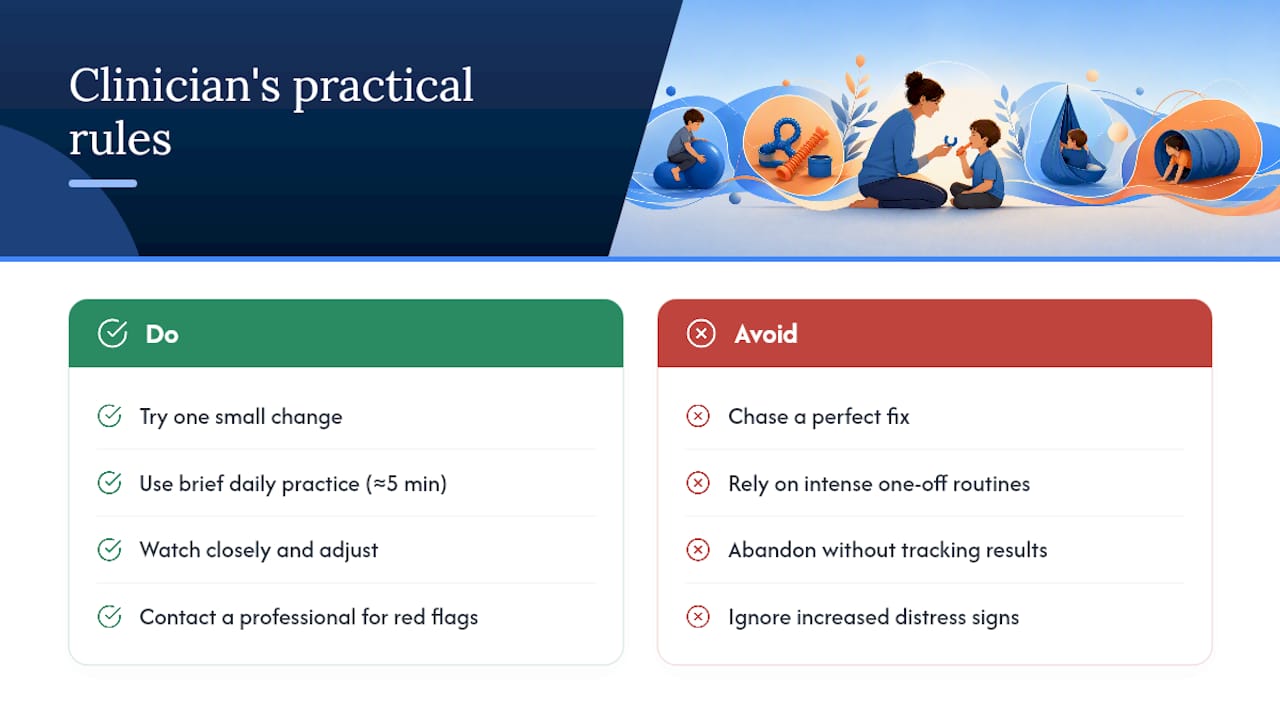
The families who make the fastest progress aren't the ones chasing a perfect fix. They're the ones willing to trial one small change, watch closely, and adjust based on what their own child actually needs, not what worked for a neighbor's kid.
Consistency beats intensity here. A chew necklace worn for five minutes a day, every day, tends to outperform an elaborate sensory routine attempted once and abandoned. And if something on this list triggers more distress instead of less, that's useful information, not failure. Pull back, and if red flags show up, don't wait to loop in a professional.
— Jamie
Get Hands-On Support From Thriving Joy
Home strategies solve a lot, but some kids need a trained eye to figure out what's actually driving the behavior, especially when oral seeking overlaps with picky eating, feeding refusal, or a stalled growth curve. Thrivingjoy specializes in exactly that overlap: pediatric feeding therapy, lactation counseling, and speech therapy for kids from birth through elementary school, built around finding the root cause rather than handing you a generic activity list.

A first appointment typically includes a detailed feeding and sensory history, an oral-motor exam, and a conversation about what's already working at home so nothing gets duplicated. Thrivingjoy accepts private pay, most major insurance plans, and offers scholarships for families who qualify, so cost doesn't have to be the barrier that delays care. If your child's oral seeking comes with feeding struggles, mealtime battles, or signs worth flagging to a doctor, book an evaluation through Thrivingjoy's feeding therapy services page to get a plan built around your child specifically.
Sources
For deeper background on the guidance in this article, these sources are worth bookmarking. NHS Lothian's clinical advice outlines when oral seeking is developmentally typical versus concerning. The ROLO cohort study in Nutrition Journal connects oral sensory processing to appetite and feeding traits. Children's Wisconsin details what a clinical oral-motor evaluation involves, and if you're navigating multiple specialists or want a second set of eyes on a diagnosis, this advocacy guide walks through how to get one.
- Oral sensory seeking advice — NHS Lothian
- Sensory processing and child appetitive traits: findings from the ROLO longitudinal birth cohort study — Nutrition Journal
- Oral-motor and oral-sensory problems — Children’s Wisconsin
- Everything oral sensory processing: activities and input ideas — YourKidsTable