

If breastfeeding is hurting, check the latch first. A shallow latch is the single most common cause of nipple pain, and fixing it, while protecting the skin with moist wound healing, stops most soreness before it becomes a bigger problem. That means expressed breast milk or ultrapure lanolin applied after feeds, cool gel pads between sessions, and a re-latch the moment something feels wrong.
Here are three things you can do before you finish reading this page:
- Break the suction and re-latch. Slide a clean finger into the corner of your baby's mouth to release the seal, then bring baby to breast again, chin first, mouth wide.
- Express a little milk onto the sore spot. Let it air-dry rather than wiping it off. Breast milk has natural antibacterial properties that support healing.
- Start on the less painful side. Milk flow triggers faster, so by the time you switch to the sore side, baby's suck is calmer and less aggressive.
Most early soreness fades within the first couple of weeks once the latch is corrected, according to La Leche League International. But some symptoms mean you shouldn't wait it out: heavy bleeding, fever, a hot or hard area on the breast, or pain that's severe and unrelenting. Those signs call for a lactation consultant or your doctor now, not tomorrow.
Key Takeaways
Correcting a shallow latch resolves most nipple pain, while moist wound healing with expressed milk or lanolin protects the skin as the fix takes hold.
| Point | Details |
|---|---|
| Fix the latch first | Check that baby takes in a deep mouthful of areola with chin to breast before treating symptoms. |
| Use moist wound healing | Apply expressed milk or ultrapure lanolin after feeds and let it air-dry rather than wiping it off. |
| Match pain pattern to cause | Shooting pain suggests vasospasm, deep burning suggests thrush, constant heat with fever suggests mastitis. |
| Know the red flags | Fever, spreading redness, or no improvement after 48 to 72 hours means it's time to call a professional. |
| Get an observed feed | Thrivingjoy's lactation counseling offers hands-on latch coaching and pump-fit checks for persistent pain. |
Table of Contents
- What Does Nipple Pain During Breastfeeding Feel Like?
- What Causes Nipple Pain When Breastfeeding?
- How Do You Fix a Shallow Latch?
- How Do You Soothe and Heal Sore or Cracked Nipples?
- Could Nipple Pain Be an Infection or Something Else Medical?
- Is Your Pump Causing Nipple Pain?
- When Should You Call a Lactation Consultant?
- What Daily Habits Prevent Nipple Pain?
- What Does the Research Say About Treating Nipple Pain?
- What Happens During a Lactation Consultation?
- A Word of Encouragement for Sore, Tired Mothers
- Get Hands-On Help From a Lactation Consultant
- Frequently Asked Questions
- Sources
What Does Nipple Pain During Breastfeeding Feel Like?
Pain patterns tell you a lot, and paying attention to when it hurts, not just that it hurts, is the fastest way to narrow down the cause.
Pain only at the initial latch, easing after a few seconds. This is common in the first days as nipples toughen up, but if it lingers past the first week, suspect a shallow latch. Try breaking suction and re-latching with a wider mouth angle.
Sharp or burning pain that continues through the whole feed. This pattern often points to nipple trauma from friction or, if the nipples look shiny, pink, and cracked, thrush. Check for creases, blisters, or a flattened "lipstick" shape at the tip after baby unlatches.
A dull, continuous ache that doesn't spike or ease. This can mean engorgement, a mild latch issue, or simply new-nipple sensitivity that hasn't yet adjusted to feeding.
Sudden shooting or stabbing pain between feeds, sometimes with the nipple turning white then red. This is the signature of vasospasm, a temporary narrowing of blood vessels around the nipple that's often triggered by cold and linked to a shallow latch.
Ask yourself these questions before your next feed: Does it hurt only on latch, or the entire time? Is there visible damage like a crack or blister? Any discharge, redness, or fever? Does the pain happen even when you're not nursing? Your answers will point you toward the right fix in the next section.
What Causes Nipple Pain When Breastfeeding?
Nipple pain rarely has just one cause. It's often a shallow latch layered on top of a skin irritant or a pump that doesn't fit right, so it pays to check more than one possibility at once.
A shallow or poor latch is the top cause by far. When baby sucks mainly on the nipple instead of drawing in the areola, friction and compression damage the tip. Look for a flattened, creased, or blanched nipple immediately after a feed. This typically shows up from day one.
Tongue-tie (a tight band of tissue under baby's tongue) restricts movement and forces a shallower latch no matter how you position baby. Suspect it if latch correction alone doesn't relieve pain, or if baby clicks while feeding, loses suction repeatedly, or struggles to gain weight.
Vasospasm causes intermittent, shooting pain, often right after a feed when the nipple is exposed to air or cold. It frequently coexists with nipple trauma from an underlying latch problem.
Thrush (a yeast infection) produces deep, burning pain that continues even when the latch looks fine, sometimes with shiny or flaky skin and pain radiating into the breast.
Bacterial infection or mastitis causes localized heat, redness, and pain, usually paired with flu-like symptoms.
Engorgement makes the breast firm and the areola tight, which can make it hard for baby to latch deeply, compounding nipple pain.
A nipple bleb or blister is a small white or yellow dot on the nipple tip, often intensely painful during let-down.
Friction from ill-fitting pump flanges or breast pads that stick to healing skin can create or worsen soreness independent of anything happening at the breast, a detail worth checking according to the Australian Breastfeeding Association.
| Cause | Key sign | Typical onset |
|---|---|---|
| Shallow latch | Flattened or creased nipple after feed | Day 1 onward |
| Tongue-tie | Clicking, poor weight gain, pain despite latch fixes | Day 1 onward |
| Vasospasm | Nipple turns white then red, shooting pain between feeds | Often after day 3 to 5 |
| Thrush | Deep burning pain, shiny or flaky skin | Any time, often 2+ weeks in |
| Mastitis | Hot, red, firm area with fever | Usually after week 2 |
| Bleb/blister | Small white or yellow dot, sharp pain at let-down | Variable |
How Do You Fix a Shallow Latch?
Correcting the latch resolves most nipple pain, and it's the intervention that systematic reviews consistently point to as the most effective first step, ahead of any cream or gadget.
Here's the checklist to run through at every feed until it becomes automatic:
- Align baby's body with yours. Ear, shoulder, and hip should form a straight line, facing your breast, chest to chest.
- Wait for a wide-open mouth, like a yawn, before bringing baby to the breast, not the breast to baby.
- Aim baby's chin to touch the breast first, with the nose free to breathe.
- Check that baby takes in more of the lower areola than the upper, since a deeper latch on the bottom protects the nipple from compression.
- Watch the cheeks and jaw. They should move slowly and rhythmically, not with rapid, shallow sucking.
- Break suction correctly if you need to reposition. Insert a clean finger into the corner of the mouth to release the seal before pulling away, never yank baby off.
Different positions change the pressure points on your nipple, which is exactly why rotating them helps when one spot is sore.
- Laid-back (biological nurturing): You recline slightly and baby lies on your chest, using gravity and instinct to self-attach. Good for the early days and for babies who latch aggressively.
- Cross-cradle: You support baby's head with the opposite hand from the breast being used, giving you more control over the angle. Useful for smaller babies or when you're still learning the mechanics.
- Football (clutch): Baby is tucked under your arm like a football, facing you. Especially helpful after a cesarean birth or with larger breasts.
- Cradle: The classic hold, baby's head resting in the crook of your arm. Best once latch is already comfortable and consistent.
Pro Tip: Before latching, express a few drops of milk onto the nipple and areola. It softens the skin, makes it easier for baby to draw in a deep mouthful, and gives baby an immediate taste that encourages a wide, eager latch instead of a shallow, tentative one.
If pain persists despite correct positioning on every attempt, ask a lactation consultant to evaluate for tongue-tie or lip-tie. It's a five-minute check that can end weeks of guessing.
How Do You Soothe and Heal Sore or Cracked Nipples?
Moist wound healing is the approach most consistently backed by clinical guidance, and it means keeping the skin slightly moist rather than letting it dry out and crack further.
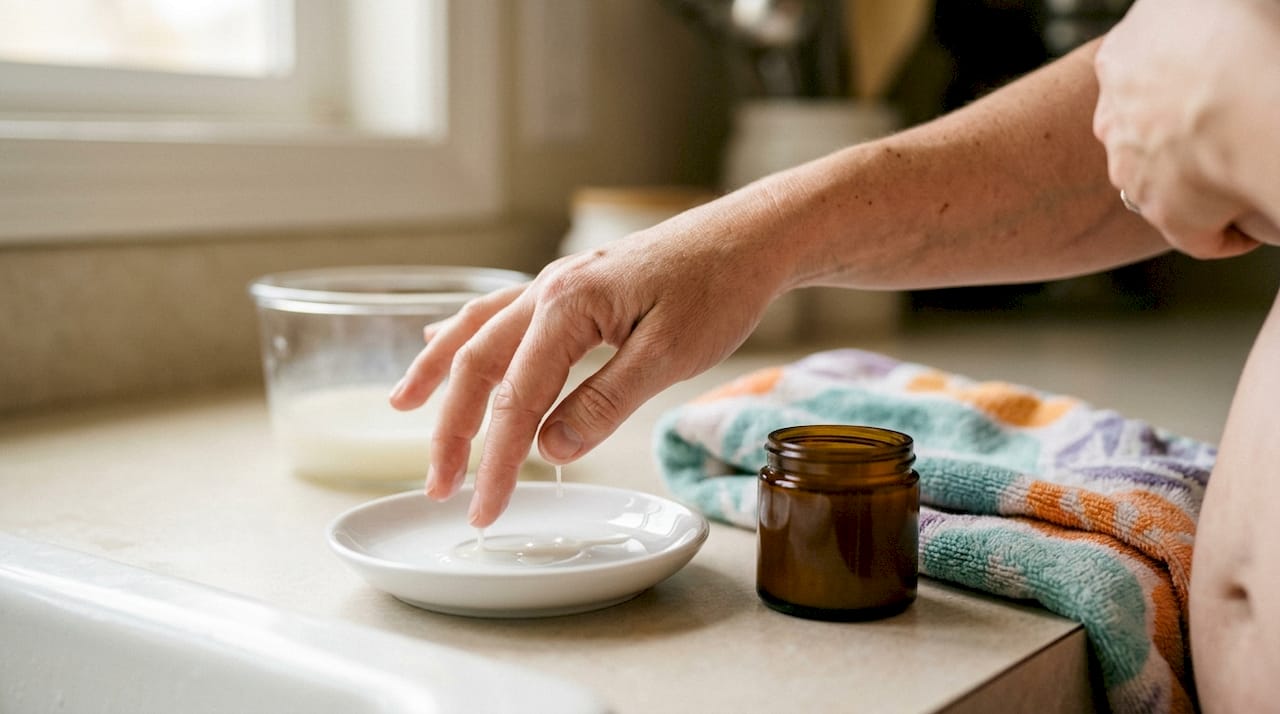
After each feed, express a small amount of milk and smooth it over the nipple, then let it air-dry for a minute or two before covering up. For an added barrier between feeds, a thin layer of ultrapure lanolin, such as HPA Lanolin, doesn't need to be wiped off before the next feed and is safe for baby to ingest in the tiny amounts left on the skin.
Cooling gel pads slipped inside your bra between feeds numb the area and reduce inflammation, which many mothers find takes the edge off enough to get through the next latch without dreading it. If the skin is broken or blistered, a hydrogel pad can also protect the wound from rubbing against clothing.
A few things to avoid while healing:
- Skip soap on the nipples; warm water alone is usually enough, and harsh soap strips protective oils.
- Don't use a hair dryer or blow air directly on cracked skin. It sounds like a reasonable drying trick, but it can worsen irritation.
- Avoid alcohol-based wipes or creams, which sting and slow healing.
- Change breast pads as soon as they're damp, since pads that stick to broken skin reopen wounds when removed.
Nipple shields have a place here too, though they're a short-term tool rather than a long-term fix. A thin silicone shield can protect a badly damaged nipple long enough for skin to start healing while you and a consultant work on the underlying latch issue. Used indefinitely, though, shields can reduce milk transfer and mask a latch problem that still needs fixing.
Pro Tip: Keep a couple of gel pads in the fridge, not the freezer. Extreme cold on already sensitive skin can be uncomfortable, while a cool (not icy) pad delivers relief without the sting.
Give correct latch and consistent wound care about a few days to two weeks to show real improvement. If the pain isn't easing in that window, something beyond simple friction is likely at play.
Could Nipple Pain Be an Infection or Something Else Medical?
Not all nipple pain responds to latch fixes and lanolin, and recognizing an infection early keeps a manageable problem from becoming a painful one.
Thrush produces a distinct kind of pain: deep, burning, and often described as feeling like it's radiating into the breast rather than sitting on the surface. Nipples may look unusually shiny, pink, or flaky, and you might notice white patches inside baby's mouth. Thrush typically needs a topical antifungal treatment for both mother and baby simultaneously, since it passes back and forth between the two.
Bacterial mastitis shows up as a localized area of the breast that's red, hot, and tender, often paired with fever, chills, or body aches that feel like the flu. It usually requires antibiotics along with continued breast emptying, either by nursing or pumping, since stopping the flow of milk can make it worse.
Vasospasm causes the nipple to blanch white, then flush red or purple as blood flow returns, accompanied by shooting pain, often triggered by cold air right after a feed. Management typically starts with warmth immediately after nursing (a warm compress or simply covering up quickly) and avoiding vasoconstrictors like nicotine and caffeine. Persistent cases sometimes warrant a prescribed medication, but that's a conversation for your clinician, not a decision to make solo.

A nipple bleb or blister is a small, often painful white or yellow spot at the tip of the nipple, sometimes linked to a blocked milk duct just beneath it.
Before you call your provider, jot down: when the pain started, whether it's constant or intermittent, any fever or flu-like feelings, what the skin looks like, and whether baby is feeding and gaining weight normally. Pain that is severe, continuous, or returns after a period of comfort is a signal worth acting on, not riding out for another week.
Is Your Pump Causing Nipple Pain?
Pumping can create the exact same trauma as a bad latch if the flange doesn't fit, and it's an easy variable to overlook when you're focused on baby's mouth instead of the machine.
Run through this quick check:
- Confirm your flange size. Your nipple should move freely in the tunnel without rubbing the sides; too small pinches, too large pulls in too much areola.
- Lower the suction setting if you're wincing or if skin looks discolored right after pumping.
- Watch for blisters or persistent soreness that lasts well past the pumping session, both signs the fit or settings need adjusting.
If pumping hurts, switch to hand expression for a day or two while you sort out the fit, then book a pump-fit check with a lactation consultant rather than guessing at sizes online. Silicone milk collectors that catch letdown from the opposite breast are handy, but constant suction from them can add unnecessary friction, so use them briefly rather than for entire feeds.
When Should You Call a Lactation Consultant?
Some symptoms mean home care has done what it can, and it's time for professional eyes on the situation.
Call promptly if you notice: fever, spreading redness across the breast, a lump that feels like an abscess, severe pain that isn't easing, or no improvement at all after 48 to 72 hours of a corrected latch and consistent wound care.
A lactation consultant will typically observe a full feed, check for tongue-tie or lip-tie, assess pump fit if you're expressing milk, and examine the nipple skin itself for signs of thrush, trauma, or infection. If infection is suspected, they'll coordinate with your doctor for prescriptions rather than trying to treat it themselves.
What Daily Habits Prevent Nipple Pain?
A few small, consistent habits do more for prevention than any single product.
- Rinse with warm water only, skipping soap unless your provider recommends a soap-free cleanser for a specific issue.
- Choose breathable cotton bras and avoid tight clothing that traps moisture against healing skin.
- Rotate feeding positions across the day so pressure doesn't concentrate on the same spot of the nipple every time.
- Recheck your pump flange fit every few months, since breast tissue changes as your supply shifts.
- Swap breast pads as soon as they're damp, and avoid ones that stick to sore skin.
- Feed at the first hunger cue rather than waiting until baby is frantic, since a calm baby latches more gently than a screaming one.
Staying hydrated and eating well supports skin healing generally, though no food or drink replaces a corrected latch as the primary fix. Think of nutrition as backup support for your body's repair process, not a stand-in for the mechanical adjustments that actually stop the trauma.
What Does the Research Say About Treating Nipple Pain?
The clinical evidence lines up cleanly behind a few core ideas, and it's worth knowing they're not just anecdotal advice passed between mothers.
Education focused on positioning and attachment is repeatedly identified as the most consistent and effective first-line intervention for nipple pain, with topical products serving a supportive, not primary, role.
That framing comes from systematic-review evidence on interventions for painful nipples, and it's echoed by the organizations most breastfeeding mothers already trust:
- La Leche League International recommends trying position and latch adjustments before considering any bigger change, including temporary rest of the nipple with shields when pain is severe.
- Cleveland Clinic's clinical guidance defines exactly what a correct latch looks like, giving mothers a concrete visual to check against.
- HealthLink BC's guidance aligns with the same red flags: fever, spreading redness, and lumps all warrant urgent evaluation.
Moist wound healing and ultrapure lanolin remain the conservative measures with the strongest, most consistent support across these sources, which is exactly why they anchor the immediate relief steps at the start of this article.
What Happens During a Lactation Consultation?
A good consultation moves fast because it's built around watching, not just talking, and that observation is often what finally identifies what's actually going wrong.
Expect the consultant to watch a full feed from start to finish, assess baby's mouth and tongue movement for possible tongue-tie, check your nipples before and after nursing, and review your pump fit if you're expressing milk. If anything suggests infection, they'll loop in your physician rather than trying to treat it independently.
To get the most out of the visit:
- Bring notes on the last 24 hours of feeding or pumping, including timing and any pain patterns you've noticed.
- Take a few photos of your nipple right after a feed, since shape changes fade quickly and photos capture what a description can't.
- Bring your pump parts, including the flange, so sizing can be checked on the spot.
- Write down your questions in advance. Fatigue makes it easy to forget what you meant to ask.
An in-person visit is worth prioritizing when there's visible skin damage, suspected tongue-tie, or when pain hasn't responded to a few days of correct latch and home care. A remote consult can work well for quick positioning questions or a follow-up check once the bigger issue is already identified.
A Word of Encouragement for Sore, Tired Mothers
Nipple pain is common, and it's solvable. That combination matters, because it's easy to assume that if breastfeeding hurts, something is fundamentally wrong with you or your body. Usually it isn't. It's a fixable mechanical issue, an infection that responds to treatment, or a temporary adjustment period that eases with the right support.
Give yourself permission to rest between feeds, use expressed milk to soothe the skin, and lean on a bottle of pumped milk for a feed or two if you need a break from the pain while you sort things out. Flexible goals beat rigid ones here. Whether that means working with a lactation consultant, adjusting positions, or simply giving your body more time, asking for help early tends to prevent small problems from becoming bigger ones.
Get Hands-On Help From a Lactation Consultant
Reading about latch mechanics only goes so far. Watching your actual feed in real time, and adjusting it on the spot, is what closes the gap between knowing what a good latch looks like and getting one. Thrivingjoy's lactation counseling gives you that direct, observed session: a consultant watches baby feed at your breast, checks for tongue-tie or positioning issues, and coaches you through a re-latch until it feels different, not just sounds different on paper.
Sessions cover latch coaching, pump-fit checks, and coordinated referrals if an infection needs a doctor's attention, all built around your specific feeding history rather than generic troubleshooting. Thrivingjoy accepts private pay, major insurance plans, and scholarships, so cost doesn't have to be the reason pain goes unaddressed. If you're in your first weeks of nursing and something still feels off after trying the steps in this article, book a lactation consultation and get a second set of trained eyes on your feed before the discomfort turns into something that takes longer to heal.
Frequently Asked Questions
How long does nipple pain from breastfeeding usually last? Mild soreness in the first few days is common as skin adjusts, and it typically improves within one to two weeks once the latch is corrected. Pain that persists or worsens past that window usually points to an underlying issue that needs assessment.
Is it normal for breastfeeding to hurt every time? No. Occasional discomfort at initial latch can happen early on, but pain that continues through every feed, every time, usually signals a shallow latch, trauma, or an infection like thrush.
Can I keep breastfeeding through nipple pain? Often yes, once the cause is identified and addressed, though severe pain or visible damage may call for temporary rest of the nipple using a shield, expressed milk feeds, or a lactation consultant's guidance while healing happens.
Should I stop breastfeeding on the painful side? Not usually. Starting on the less sore side until milk flows, then switching, often makes nursing on the painful side more tolerable rather than skipping it altogether.
What's the difference between thrush pain and latch pain? Latch pain is typically sharp and tied directly to positioning, easing with correction. Thrush pain feels deep and burning, often continuing between feeds, and doesn't resolve with latch adjustments alone.
This article is general information, not a substitute for advice from a qualified doctor. Consult a qualified healthcare professional about your own circumstances before acting on anything here.
Sources
The guidance in this article draws on clinical reviews and established breastfeeding organizations, and each source is worth a closer read if you want the science behind a specific recommendation.
- Management of nipple pain and trauma — NCBI Bookshelf
- Interventions for treating painful nipples among breastfeeding women — PMC
- Breastfeeding with Sore Nipples — La Leche League International
- Breastfeeding: Sore nipples — HealthLink BC