
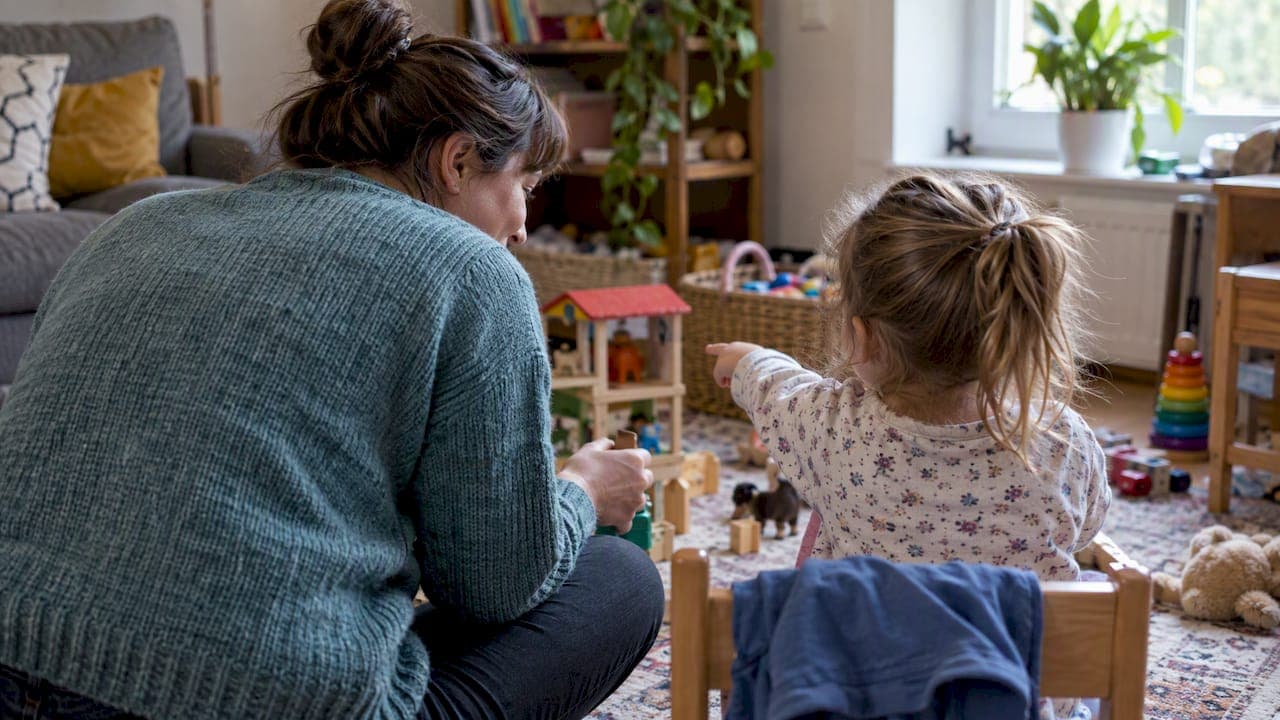
Holistic pediatric therapy combines conventional care, such as occupational, physical, and speech-language therapy, with evidence-informed integrative supports and hands-on caregiver coaching to address a child's whole development rather than one isolated symptom. We treat the root causes behind feeding, communication, or movement challenges while building skills that carry over into mealtimes, playtime, and the classroom. The practical result is twofold: a child who gains functional abilities and a caregiver who leaves every session more confident and equipped.
TL;DR:
- Caregiver coaching works best when therapists model a strategy during real routines and caregivers practice it daily, starting with one moment such as breakfast.
- Seek coordinated assessment if feeding brings coughing or choking, your pediatrician is concerned about growth, progress stalls, or challenges span feeding, speech, and movement.
- For complex feeding or swallowing needs, a team may include medical, speech, occupational, physical, and nutrition specialists, with shared goals and home practice.
- A trial involving 872 children reported roughly 40.9% to 48.0% reductions in pain, nausea, and anxiety with adjunct integrative therapies and no serious adverse events.
- Before adding integrative treatments, verify the provider's pediatric credentials, tell your child's care team, and get medical advice before trying supplements or unproven therapies.
Table of Contents
- What holistic pediatric therapy includes: core components and modalities
- Family-centered care and caregiver coaching: what it looks like
- Multidisciplinary assessment and when to pursue coordinated care
- What to expect from therapy sessions and tracking progress
- Evidence and safety: what research says about integrative pediatric care
- How our holistic, family-centered model reflects the evidence
- A note from our founder on whole-child care
- How Thriving Joy can help your family get started
- FAQ
- Sources
What holistic pediatric therapy includes: core components and modalities
A holistic plan starts with the conventional therapies that form its foundation: occupational therapy for daily living and sensory skills, speech-language pathology for communication and swallowing, and physical therapy for movement and strength. These disciplines are well established and typically lead a child's care team.
Many families also benefit from integrative modalities layered alongside conventional care. These are not replacements for therapy but tools that help a child settle into a session and engage more fully:
- Mindfulness and guided relaxation to ease anxiety before a feeding or speech task
- Music therapy to support attention, rhythm, and expressive language
- Therapeutic massage or calming touch to prepare a child's body for movement work
- Sensory-based strategies like weighted tools or brushing protocols for regulation
Mind-body approaches and music-based interventions tend to carry the strongest supporting evidence among integrative options used in pediatric settings. A thoughtful clinician chooses modalities based on a child's specific needs, a family's priorities and comfort level, and basic safety considerations, never as a one-size-fits-all add-on.
Family-centered care and caregiver coaching: what it looks like
Family-centered care means therapists treat parents and caregivers as active partners, not bystanders. ASHA guidance describes coaching models where a therapist consults and demonstrates while the caregiver practices and implements strategies during everyday routines, a sharp contrast to direct-only therapy where a child works one-on-one with a clinician and parents watch from the sidelines.
In practice, coaching shows up in small, specific moments: a therapist might model a mealtime pacing strategy, suggest a dressing sequence that builds independence, or turn a play routine into a language-building opportunity. A typical coaching session tends to follow this pattern:
- The therapist and caregiver review how the previous week's strategy worked at home.
- They observe or practice the skill together during a real routine, like a snack or diaper change.
- The caregiver tries the strategy with coaching and feedback in real time.
- They agree on one or two adjustments to practice before the next visit.
Pro Tip: Pick one small moment each day, like breakfast or bath time, to practice your therapist's strategy consistently rather than trying to apply it everywhere at once.
This approach supports better generalization of skills, stronger caregiver confidence, and outcomes that hold up long after therapy ends.
Multidisciplinary assessment and when to pursue coordinated care
Some children need more than one discipline working in sync. Watch for these signs that point toward a multidisciplinary workup:
- Poor weight gain or growth that concerns your pediatrician
- Persistent refusal to eat or extreme mealtime distress
- Coughing, choking, or gagging during feeds
- Progress that has plateaued despite consistent therapy
- Challenges spanning multiple areas, like feeding, speech, and motor skills together
AAP guidance recommends a multidisciplinary team for children with complex feeding and swallowing needs, since no single provider can address every underlying cause alone. A typical team includes a pediatrician for medical oversight, a speech-language pathologist for swallowing and communication, an occupational therapist for sensory and motor skills, a physical therapist for movement, a registered dietitian for nutrition, and sometimes a gastroenterologist or psychologist for medical or behavioral factors.
A coordinated plan sets shared goals across providers, tracks measurable outcomes everyone agrees on, and clearly defines what caregivers will practice at home between visits.
What to expect from therapy sessions and tracking progress
Sessions generally fall into three formats: direct one-on-one therapy, caregiver coaching sessions, and hybrid visits that blend both in your home or our office. Frequency varies by need, from weekly sessions for mild delays to multiple sessions a week for more complex feeding or communication challenges.
Goals should be specific and tied to real routines, not vague milestones. A good goal sounds like "accepts three new pureed foods during dinner" or "uses two-word phrases to request a favorite toy during play," not simply "improve feeding" or "improve speech."
Timeline depends on several factors:
- The severity and complexity of the underlying challenge
- Any coexisting medical conditions
- How consistently caregivers practice strategies between sessions
- How quickly a child responds to sensory or motor adjustments
Meaningful progress often looks like small, steady wins, a new food tolerated, a clearer word attempt, rather than a single dramatic breakthrough.
Evidence and safety: what research says about integrative pediatric care
A pragmatic cluster-controlled trial of 872 children found that integrative therapies such as acupuncture, massage, and Reiki, delivered alongside usual hospital care, reduced pain, nausea, and anxiety by roughly 40.9% to 48.0% with no serious adverse events reported. That gives parents a research-backed reason to view well-chosen integrative supports as a safe complement to standard care rather than an unproven detour.
Broader reviews of pediatric integrative medicine describe these combined program models as adjuncts to conventional treatment, with the best outcomes reported when integrative options are coordinated by clinicians who stay in communication with a child's full medical team. ASHA and AAP guidance reinforce the same principle for family-centered and multidisciplinary feeding care: coordination, not isolation, drives results.
A few practical safety habits go a long way. Check that any provider offering integrative therapies holds relevant credentials and experience with children, make sure every therapy is shared with your pediatrician or care team, and avoid starting supplements or unproven treatments without medical review first.

How our holistic, family-centered model reflects the evidence
Our team at Thriving Joy Pediatric Therapy built our approach around the same principles the research supports: feeding therapy, lactation counseling, speech therapy, and parent coaching, all grounded in finding the root cause of a challenge rather than offering a quick fix. We individualize every plan to a child's specific needs and a family's daily routines.
Families working with us gain hands-on coaching, flexible session locations, and access to group workshops that reinforce strategies between visits. If you are weighing where to start, reaching out for a conversation about your child's specific situation is a reasonable next step.
A note from our founder on whole-child care
Our approach grew out of years in pediatric healthcare and our own experience as parents navigating feeding and communication worries firsthand. We believe coaching, not just direct treatment, is what makes progress stick. When you start evaluating providers, ask how they involve caregivers in sessions and loop in your pediatrician early.
— Thriving Joy
How Thriving Joy can help your family get started
If your child is struggling with feeding, breastfeeding, or speech and language development, our feeding therapy, lactation counseling, and speech therapy services are built around the family-centered model described throughout this guide. Each plan starts with understanding your child's unique needs, not applying a generic protocol.
Getting started is straightforward: reach out through our feeding therapy page to schedule an initial conversation, and we will walk you through private-pay and insurance options together. For caregivers who want structured coaching and community support, our parent coaching and workshops offer another way to build skills at your own pace. We serve families using a warm, collaborative approach from the very first visit.
This article is general information, not a substitute for advice from a qualified doctor. Consult a qualified healthcare professional about your own circumstances before acting on anything here.
FAQ
What do holistic pediatric therapists do?
Holistic pediatric therapists combine conventional therapies, like speech, occupational, or feeding therapy, with caregiver coaching and, when appropriate, integrative supports such as mindfulness or sensory strategies. The goal is to address the root cause of a challenge and build skills that transfer into daily routines at home and school.
What does a holistic approach in child care mean?
A holistic approach treats a child's development as connected across feeding, communication, movement, and emotional regulation rather than isolating a single symptom. It also treats caregivers as active partners, with coaching built into sessions so progress continues between visits.
Where can I find holistic pediatric therapy near Tampa, Florida?
Families in the Pasco and Hillsborough County areas can access holistic, family-centered feeding, lactation, and speech therapy through Thriving Joy Pediatric Therapy, which offers sessions in-office, at home, or at daycare and preschool settings. Checking a provider's credentials and willingness to coordinate with your pediatrician is a good first step wherever you search.
What type of therapy works best for children with developmental delays?
The most effective approach combines targeted therapy, such as speech-language or occupational therapy, with consistent caregiver coaching so strategies get practiced daily, not just during sessions. For complex needs like feeding disorders, a multidisciplinary team covering medical, nutritional, and therapeutic angles tends to produce the most complete results.
Sources
- Family-centered care and coaching in early intervention
- Feeding and swallowing disorders in infants and children (AAP guidance)
- Pediatric integrative medicine: overview and program examples