

If your breasts are engorged, feed your baby now or hand-express just enough to soften the areola, not to empty the breast. Warm the area briefly right before nursing, then apply a cold pack for 15 to 20 minutes afterward. Use reverse pressure softening if your baby is struggling to latch, and skip vigorous massage. Call your provider if you develop a fever above 101°F, worsening pain on one side, or no relief within a day or two.
TL;DR:
- Frequent, effective breastfeeding or minimal hand-expressing to soften the areola helps prevent and relieve engorgement, especially in the first two weeks postpartum.
- Cold packs applied for 15 to 20 minutes after feeding are recommended to reduce inflammation and ease throbbing, with longer sessions offering no added benefit.
- Avoid vigorous massage and pumping to full emptiness, which can worsen swelling and signal the body to produce more milk.
- A proper latch and position are crucial, and in severe cases, professional lactation counseling can teach safe techniques like reverse pressure softening.
- Persistent symptoms, a fever above 101°F, or worsening pain after 24 to 48 hours require medical attention to rule out complications like mastitis.
Table of Contents
- What Causes Engorgement, Relief, and Breastfeeding Challenges?
- How to Prevent Engorgement Before It Starts
- What Is the Fastest Way to Relieve Engorgement?
- Which Engorgement Techniques Should You Avoid?
- When Should You Call a Doctor About Engorgement?
- How Lactation Counseling Helps With Engorgement
- Finding Comfortable Positions When You're Engorged
- Does Diet or Hydration Affect Engorgement?
- Will Engorgement Hurt My Milk Supply?
- Which Medications Are Safe While Managing Engorgement?
- Coping Emotionally When Engorgement Feels Overwhelming
- An Editorial Take on Engorgement Advice
- Get Hands-On Help for Engorgement in Lutz, Florida
- Sources
- FAQ
What Causes Engorgement, Relief, and Breastfeeding Challenges?
Engorgement happens when milk production ramps up faster than your baby (or a pump) is removing it, and the tissue around your milk ducts fills with extra blood and lymph fluid on top of the milk itself. That combination is what turns a soft breast into something that feels rock hard, hot, and painful almost overnight.
Most mothers notice it in the early days postpartum, typically around three to five days, though it can appear somewhat later in some cases. Symptoms typically ease within about two weeks as your supply and your baby's demand find their rhythm, according to Children's Hospital of Philadelphia.
Left untreated, engorgement creates a frustrating cycle. Swollen, flattened tissue makes it hard for your baby to get a deep latch, poor latch means less milk gets removed, and that backup can eventually tip into a clogged duct or mastitis.
Watch for these signs:
- Breasts that feel tight, heavy, or hard to the touch
- Warmth or visible shininess of the skin
- Throbbing pain, sometimes radiating toward the armpit
- A flattened or firm areola that resists compression
- Low-grade fever in more severe cases (distinct from the higher fevers of mastitis)
How to Prevent Engorgement Before It Starts
Prevention beats treatment here, and the fix is almost always about rhythm and removal, not products or gadgets.
Feed on demand and aim for frequent nursing sessions throughout each 24 hour period, especially in the first two weeks. This single habit does more to prevent engorgement than any compress or supplement, according to La Leche League. Skipping feeds, even to let your baby sleep longer, can let milk build up faster than your body expects.
A few other habits matter almost as much:
- Let your baby finish one breast fully before offering the second; a shallow, rushed feed leaves milk behind.
- Alternate which breast you offer first at each feed so both sides get equal, thorough drainage.
- Skip tight bras and underwire, especially at night. Constriction on already swollen tissue can restrict flow and add pain.
- Keep your baby skin to skin as often as you can in the first days. It cues more frequent, effective feeding and calms both of you.
Pro Tip: It can help to set reminders for feeds, as missing sessions in the early days postpartum may increase the risk of engorgement.
What Is the Fastest Way to Relieve Engorgement?
A predictable routine around each feed does more than any single trick. Here is the sequence lactation professionals generally recommend:
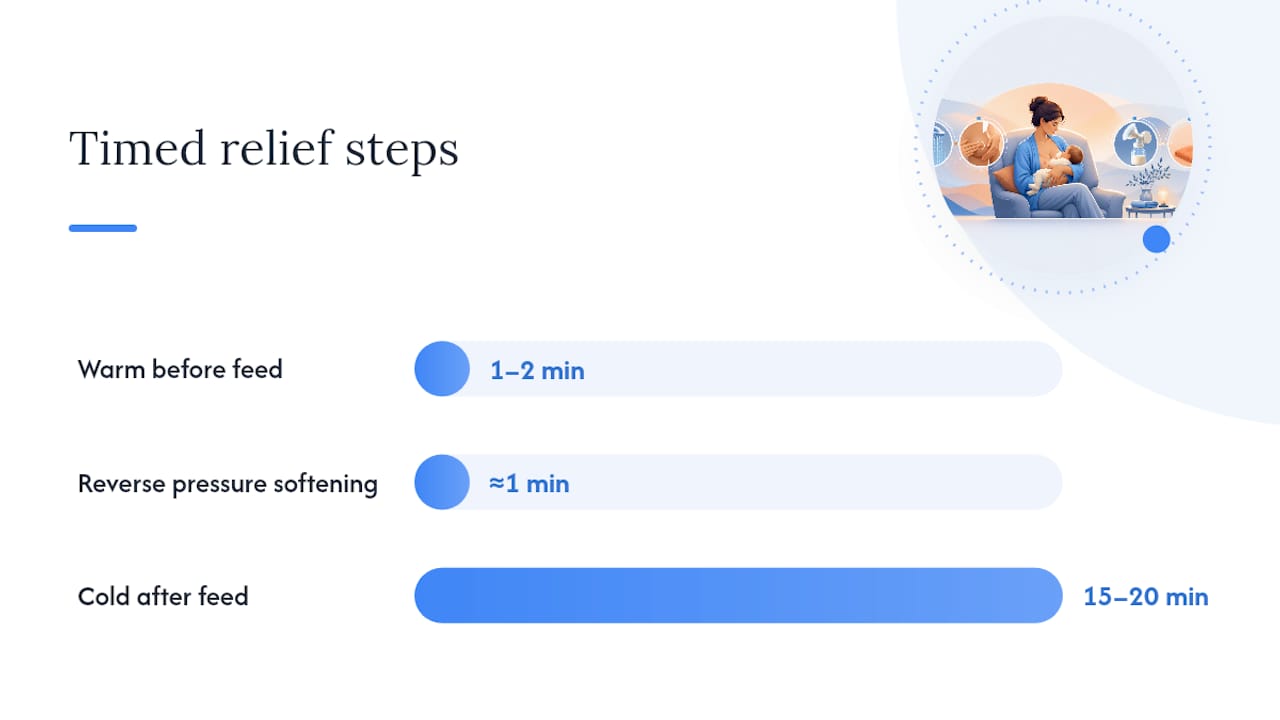
- Warm briefly before feeding. A one to two minute warm shower or a warm washcloth on the breast helps milk start flowing. Keep it short. Extended heat can add to swelling rather than relieve it.
- Try reverse pressure softening. Place your fingertips in a ring around the base of the nipple and press gently inward toward the chest wall for about a minute. This pushes fluid back away from the areola so your baby has softer tissue to latch onto.
- Position your baby for a deep latch. Side-lying or cross-cradle holds give you a free hand to support the breast and guide a wide-open mouth onto the areola, not just the nipple tip.
- If your baby won't latch, hand-express or pump minimally. Remove just enough milk to soften the areola. Stop once it feels less tense. This is not the moment for a full pumping session.
- Apply cold after the feed. Gel packs or a bag of frozen peas wrapped in a thin towel, held against the breast for 15 to 20 minutes, calms inflammation and eases throbbing between feeds, per La Leche League.
Feeding directly from the engorged side first, with gentle massage before and during the feed, is also the approach outlined in USDA breastfeeding guidance for parents managing engorgement at home.
Statistic Callout: Government breastfeeding guidance and clinical sources converge on a recommended cold compress duration of 15 to 20 minutes between feeds. Longer sessions do not speed relief and can numb the skin without added benefit.
Some parents add chilled cabbage leaves inside the bra between feeds for extra comfort. Evidence on cabbage is mixed. It may ease pain, but it does not reliably reduce swelling itself, so treat it as a comfort add-on, not your main strategy, according to research reviewed by NCBI. Over the counter ibuprofen or acetaminophen, taken according to your provider's guidance, can also take the edge off pain enough to make latching and hand expression more manageable.
Which Engorgement Techniques Should You Avoid?
Not every instinct during engorgement is a helpful one. Some common reactions actually slow recovery.
- Avoid pumping to full emptiness. Removing every drop signals your body to make even more milk, which can deepen the cycle of swelling.
- Skip deep or vigorous massage. Forceful kneading of already inflamed tissue can bruise ducts and worsen swelling rather than relieve it, according to Cleveland Clinic.
- Use cabbage leaves for short periods only, typically around 20 minutes a few times a day, and discontinue once swelling begins to improve.
Two gentler techniques are worth learning properly rather than guessing at. Reverse pressure softening, described above, moves fluid away from the areola with light, controlled pressure. Manual lymphatic drainage uses very light, rhythmic strokes to encourage fluid movement through lymph pathways rather than milk ducts. Both work best when a clinician demonstrates them on you directly, since pressure that is too firm defeats the purpose, per Cleveland Clinic.
Pro Tip: If a technique causes new bruising, sharp pain, or breaks the skin, stop immediately. Nothing that helps engorgement should hurt more than the engorgement itself.
When Should You Call a Doctor About Engorgement?
Most engorgement resolves with consistent feeding and the steps above within a day or two. Some situations call for professional eyes sooner rather than later.
- A fever above 101°F, chills, or flu-like body aches
- Redness, heat, or a firm area on only one breast that is getting worse instead of better
- No improvement after 24 to 48 hours of frequent feeding and gentle relief measures
- Your baby seems to be transferring little to no milk despite a seemingly good latch
Any of these can signal a clogged duct progressing toward mastitis rather than straightforward engorgement, and that distinction matters for treatment. An International Board Certified Lactation Consultant (IBCLC) can assess latch and drainage in person, a breastfeeding medicine specialist or your obstetric provider can evaluate infection risk, and your baby's pediatrician can confirm adequate milk transfer and weight gain. Cleveland Clinic notes that manual lymphatic drainage and IBCLC referral are appropriate next steps once home measures stop being enough.
How Lactation Counseling Helps With Engorgement
A hands-on session with a lactation consultant covers ground that no article can. A typical lactation counseling visit starts with a latch assessment, watching how your baby actually feeds rather than relying on your description of it. From there, the consultant teaches reverse pressure softening and safe hand expression directly on your own tissue, adjusting pressure and hand position until you can replicate it confidently at home.
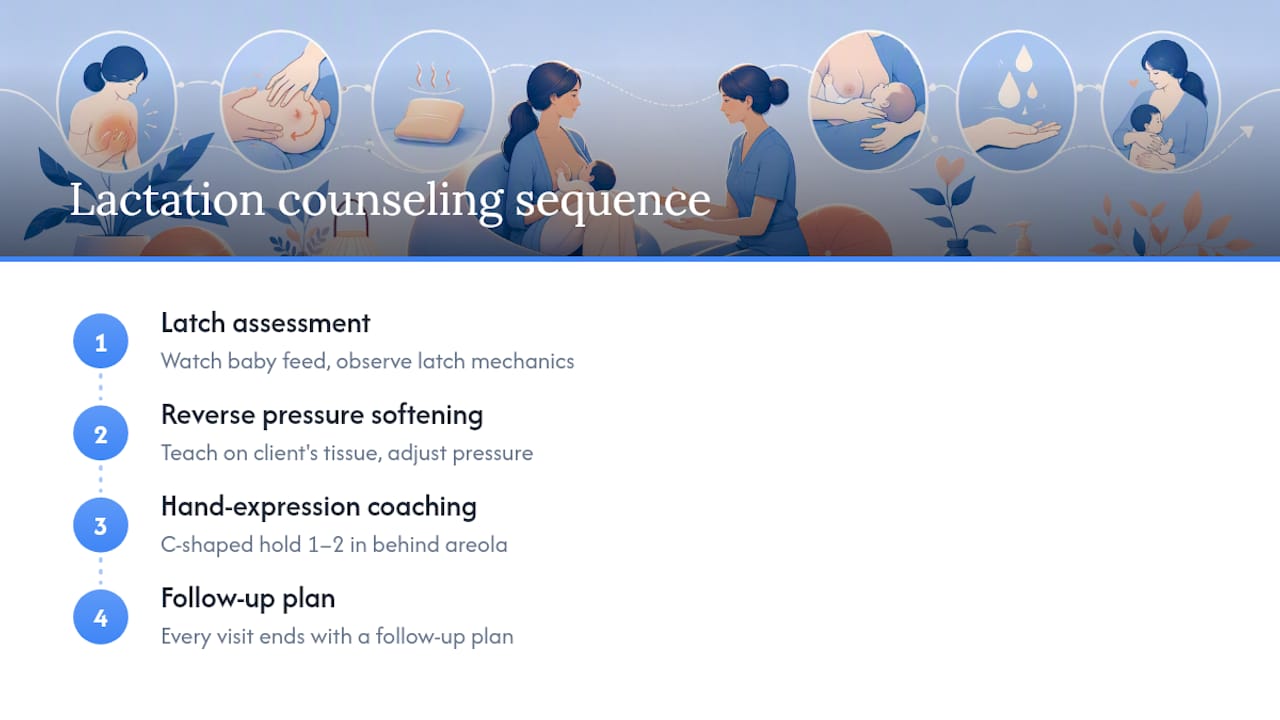
Hand expression itself has a technique worth learning correctly: a C-shaped hold with your thumb and forefinger about one to two inches behind the areola, compressing rhythmically toward the chest wall, per guidance from Children's Hospital of Philadelphia. Done wrong, it can bruise tissue. Done well, it is one of the most useful skills a new parent can have.
In-person visits work best when latch mechanics need direct observation or engorgement is severe enough that timing matters. Remote consults suit follow-up check-ins or milder cases where a quick troubleshooting conversation is enough. Every visit ends with a follow-up plan, so you are not left guessing what comes next.
Finding Comfortable Positions When You're Engorged
Positioning matters more during engorgement than at any other stage of breastfeeding, because swollen tissue changes how your baby needs to approach the breast.
The football hold (tucking your baby along your side, facing you, supported by a pillow) keeps pressure off an already tender chest and gives you a clear view of the latch. Side-lying nursing works well at night or when you are simply too sore to sit upright for long stretches. Whatever position you choose, support the breast in a C-hold well back from the nipple so your fingers do not interfere with your baby's mouth.
Before positioning your baby, briefly shape the nipple and areola with reverse pressure softening so there is something soft to latch onto rather than a hard, flattened surface. A few gentle strokes from the outer breast toward the nipple during the feed, never firm kneading, can also encourage flow without adding to soreness.
Leaning slightly forward during a feed, rather than reclining flat, lets gravity help milk move and often reduces the pulling sensation on tender skin. Some parents find warm compresses tucked against the side of the breast, away from the direct latch area, provide comfort mid-feed without interfering with the baby's mouth position.
If one position consistently causes sharp pain rather than the expected tenderness of engorgement, switch positions before pushing through. Pain that sharpens rather than eases as a feed continues usually means the latch needs adjusting, not that you need to tolerate more discomfort.
Does Diet or Hydration Affect Engorgement?
Hydration and nutrition will not cure engorgement on their own, but neglecting them can make the discomfort harder to manage.
Dehydration thickens milk slightly and can leave you feeling more fatigued and less able to cope with pain, so keep water within reach during every feed. A glass alongside your nursing chair, refilled each session, is a low-effort habit that adds up over a day of frequent feeding.
Caffeine and salty snacks are not off limits, but heavy caffeine intake can worsen the jittery exhaustion many new parents already feel during engorged, sleep-deprived days. Balanced meals with protein and complex carbohydrates support the energy demands of milk production, which run higher than many people expect in the early postpartum weeks.
There is no proven diet that prevents or resolves engorgement itself. Claims about specific foods reducing swelling circulate widely among new parents, but the physiological driver is fluid and milk buildup, not nutrition. Focus your energy on frequent, effective feeding, and treat good hydration and regular meals as support for your overall stamina rather than a direct fix for swollen tissue.
Will Engorgement Hurt My Milk Supply?
Engorgement itself is often a sign your body is producing plenty of milk, sometimes more than your baby currently needs, which is why many parents wonder if it means an oversupply rather than a problem. That said, engorgement left unmanaged can genuinely threaten supply over time.
When breasts stay overly full, the pressure inside milk-producing cells sends a signal that slows future production, a built-in feedback mechanism your body uses to match supply with demand. Frequent, effective removal is what keeps that signal from working against you. Improving milk removal through consistent feeding and correct latch is the single most effective intervention to protect supply and calm swelling at the same time, according to La Leche League.
If engorgement led to a rough patch where feeds were missed or your baby struggled to transfer milk, your supply can dip afterward. Rebuilding it usually means increasing feeding frequency again, adding a session or two if your baby seems less satisfied, and considering brief hand expression after feeds if your breasts still feel full. A partner resource on increasing supply through frequent feeding covers this rebuilding process in more detail. Supply almost always responds to consistent demand within a few days.
Which Medications Are Safe While Managing Engorgement?
Both ibuprofen and acetaminophen are generally considered compatible with breastfeeding at standard over-the-counter doses, and either can take the edge off engorgement pain enough to make latching and hand expression far more tolerable.
Ibuprofen also carries anti-inflammatory action, which some parents find more effective for the swelling component of engorgement, not just the pain. Acetaminophen works well if ibuprofen is not appropriate for you for other medical reasons. Neither requires you to pause breastfeeding or pump and discard milk.
Always confirm dosing with your obstetric provider or pharmacist, since individual health history, any complications from delivery, and other medications you are taking all affect what is appropriate for you specifically. This is especially true if you had a cesarean delivery or are managing other postpartum recovery needs alongside engorgement.
Topical options carry more mixed evidence. Some small trials suggest aloe vera compresses may ease breast pain and irritation, though study quality varies and results are not consistent enough to call it a reliable primary treatment, per research published on PMC. Treat any topical remedy, including cabbage leaves, as a secondary comfort layer on top of frequent, effective feeding, not a replacement for it.
Coping Emotionally When Engorgement Feels Overwhelming
The physical pain of engorgement is real, but so is the emotional weight it carries in those first exhausting days home with a newborn. Feeling teary, irritable, or briefly resentful of breastfeeding during a bad engorgement stretch does not mean you are failing at this.
Engorgement tends to peak right around the same days that sleep deprivation, hormone shifts, and the general shock of new parenthood are also at their heaviest. That overlap is not a coincidence, and it means the discomfort you feel is rarely just about your breasts.
Give yourself permission to ask for help with everything else while you focus on frequent feeding. Let someone else handle meals, laundry, or visitors for a few days. Talk through what you are feeling with your partner, a friend who has breastfed before, or your provider, rather than assuming you should push through silently. If a low mood or anxiety lingers past the physical engorgement itself, mention it at your postpartum checkup. Pain that resolves in two weeks should not leave a lasting emotional shadow, and support is available if it does.
An Editorial Take on Engorgement Advice
Most engorgement advice online treats it as a purely mechanical problem: apply cold, apply heat, hand-express, repeat. The mechanics matter, but the research keeps circling back to one point that gets buried under all the tactics: frequent, effective feeding outperforms every gadget and remedy on this list combined.
Where conventional advice tends to fall short is in treating pumps and cabbage leaves as equal partners to breastfeeding itself, when they are really supporting actors. A hospital-grade pump used aggressively to "get ahead" of engorgement can backfire by signaling your body to make even more milk. Cabbage leaves feel productive because you can see and feel them working, but the clinical evidence behind them is genuinely thin.
If there is one thing to prioritize, it is this: get the latch right before you reach for anything else. A poor latch during engorgement creates a problem that compresses and cold packs cannot fix, and it is exactly the kind of issue an IBCLC catches in minutes that might take you days to figure out alone. Trust the frequent feeding, treat everything else as support, and get hands-on help early if something feels off rather than late.
— Jamie
Get Hands-On Help for Engorgement in Lutz, Florida
A checklist can get you through tonight's engorgement, but it cannot watch your baby latch or feel whether your hand expression technique is actually working. Direct, hands-on lactation counseling is available to support parents who need more than an article can provide.
A first visit typically includes a full latch assessment, guided practice with reverse pressure softening and hand expression on your own body, and a follow-up plan tailored to how your engorgement is behaving. For families juggling feeding challenges alongside engorgement, Thrivingjoy also provides broader feeding therapy services that address latch and transfer issues from every angle. If you are noticing fever, one-sided worsening pain, or persistent symptoms past 48 hours, do not wait for a scheduled visit. Contact your provider first, then reach out to book lactation counseling for ongoing support once any urgent concern is addressed.
This article is general information, not a substitute for advice from a qualified doctor. Consult a qualified healthcare professional about your own circumstances before acting on anything here.
Sources
- Breast Engorgement | Children's Hospital of Philadelphia
- Engorged Breasts – avoiding and treating — La Leche League
- Breast engorgement: Causes, Complications & Treatment — Cleveland Clinic
- Treatments for breast engorgement during lactation — NCBI/NIH
- Engorgement - WIC Breastfeeding Support — USDA
FAQ
How Do You Relieve Breast Engorgement Fast?
Feed your baby or hand-express just enough to soften the areola, warm briefly beforehand, and apply a cold pack for 15 to 20 minutes afterward. Reverse pressure softening before latching often brings the fastest relief for a stubborn latch.
Does Engorgement Mean You Have a Good Milk Supply?
Engorgement often signals your body is producing plenty of milk, sometimes more than needed, but it is not a reliable measure of long-term supply on its own. Consistent, effective feeding is what actually protects and calibrates your supply over time.
Will an Engorged Breast Go Away on Its Own?
Yes, engorgement typically eases within about two weeks as your supply adjusts to your baby's demand, especially with frequent feeding of 8 to 12 times every 24 hours. Symptoms that worsen instead of improve, or persist past 48 hours despite home care, warrant a call to your provider or an IBCLC.
How Do You Relieve Engorgement After Stopping Breastfeeding?
Use cold compresses for 15 to 20 minutes several times a day, wear a supportive but not tight bra, and take ibuprofen or acetaminophen as needed for pain. Chilled cabbage leaves can offer short-term comfort, and hand expression of small amounts can relieve pressure without signaling your body to keep producing milk.