
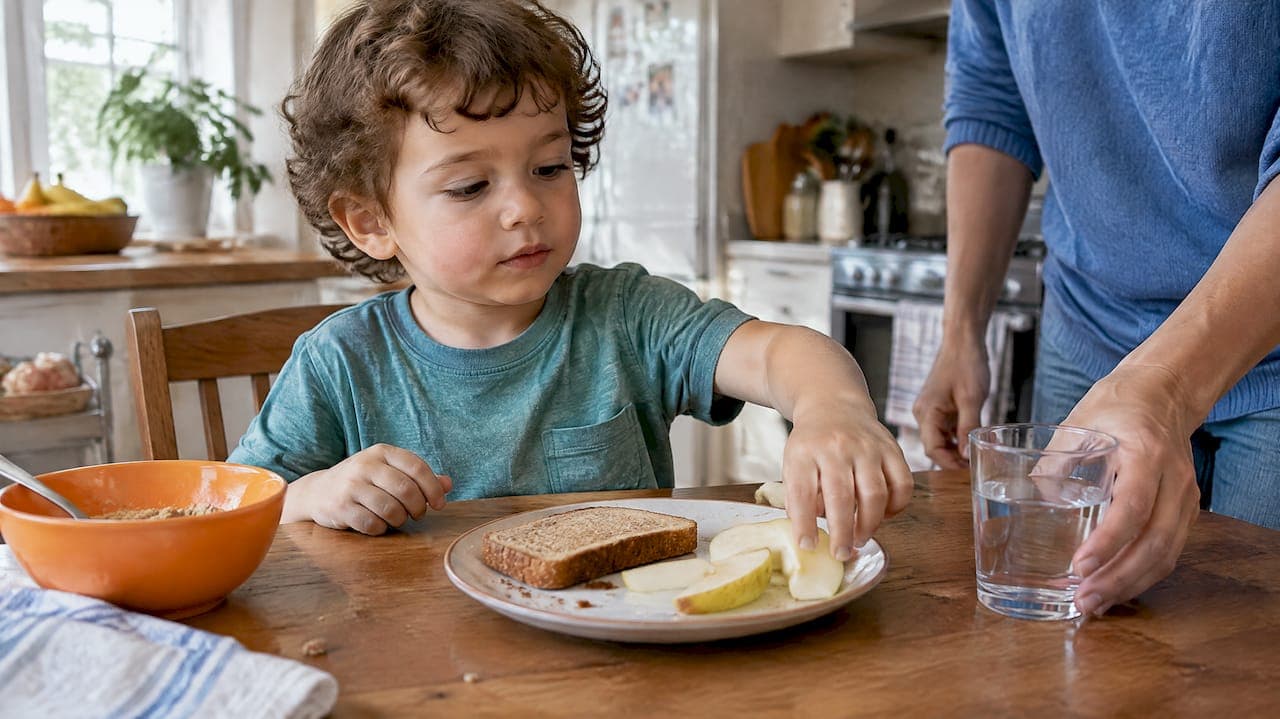
Start with hydration, gentle fiber additions, and a predictable toilet sitting routine after meals. These three steps relieve mild constipation for many kids within a few days. Call your pediatrician before starting any regular laxative, including polyethylene glycol (PEG), and seek care sooner if your child has severe pain, vomiting, or blood in the stool. The good news: picky eating and constipation often form a cycle you can break together.
TL;DR:
- Increasing fluid intake with flavored water or soup is essential, especially since fiber alone can worsen constipation if not paired with sufficient liquids.
- Picky eaters are more prone to constipation due to lower consumption of fiber-rich foods like fruits, vegetables, and whole grains, which can create a cycle of discomfort.
- Medical intervention with polyethylene glycol (PEG) should always be supervised by a healthcare provider, with both oral and enema options appropriate for stool disimpaction.
- Establishing consistent toilet routines after meals, using a step stool, and avoiding punitive measures improve stool regularity in children.
- Addressing underlying eating patterns and behavioral factors alongside medical care reduces the risk of constipation becoming chronic or leading to encopresis.
Table of Contents
- What to try now: safe steps that help today
- Why picky eaters get constipated more often
- When to call the pediatrician and what the visit involves
- Medical treatments: what's evidence-based and how they're used
- Building low-pressure toilet habits that actually work
- Adding fiber and fluids without a mealtime battle
- When constipation becomes chronic: understanding encopresis
- Everyday foods and snacks that genuinely help
- What probiotics and gut health actually contribute
- Why untreated constipation deserves early attention
- Feeding therapy's role alongside medical care
- How we can help when home strategies aren't enough
- FAQ
- Sources
What to try now: safe steps that help today
When your child is uncomfortable, you want relief fast. A few at-home changes, made together, often soften stool within a day or two.
- Boost fluids with flavored water, warm soup, or popsicles made from diluted fruit juice, since fiber alone without enough liquid can backfire, according to NIDDK.
- Add fiber gradually, working in a few extra grams through fruit purees, oatmeal, or whole-grain crackers rather than a sudden overhaul.
- Try comfort measures like a warm bath, gentle clockwise tummy massage, or active play to encourage movement.
- Sit on the toilet for five to ten minutes after meals, even if nothing happens right away.
If you suspect a larger blockage (several days without a bowel movement, firm belly, or distress), skip adding more fiber until your child is evaluated, since fiber can worsen things when stool is already impacted.
Pro Tip: Serve high-fiber foods alongside a favorite "safe" food so your child still has something familiar on the plate while trying something new.
Why picky eaters get constipated more often
Picky eating and constipation feed each other. Children who limit their diets tend to eat fewer fruits, vegetables, and whole grains, which means less fiber moving through the gut, and softer, more regular stools depend on that fiber working alongside enough fluid as peer-reviewed research on picky eating describes.
Sensory aversions to texture or smell often drive the food avoidance in the first place, and once a bowel movement becomes painful, some children start withholding stool to avoid the discomfort, which only makes the next one harder to pass.

Picky eaters show an increased likelihood of hard stools compared to children with more varied diets, and constipation prevalence in children can be relatively high in some estimates, according to a widely cited pediatric review. That overlap is exactly why addressing the eating pattern matters as much as treating the constipation itself.
When to call the pediatrician and what the visit involves
Most mild constipation resolves with home care, but certain signs call for a same-day conversation with your child's doctor.
- Severe abdominal pain, repeated vomiting, or a swollen, hard belly.
- Blood in the stool or on toilet paper.
- Fever alongside bowel symptoms.
- No stool for several days combined with visible distress.
- Soiling accidents in underwear (a sign of encopresis, covered below).
During the visit, expect questions about how often your child goes, what the stool looks like, typical daily diet, fluid intake, and whether your child seems to be holding it in. Diagnosis is usually based on this history and a physical exam alone. Abdominal X-rays are rarely necessary, since imaging findings for constipation tend to be nonspecific. If stool has built up significantly, the pediatrician may recommend a disimpaction process before starting a regular maintenance routine.
Medical treatments: what's evidence-based and how they're used
Polyethylene glycol 3350, often called PEG, is widely recommended as the first-line osmotic laxative for ongoing pediatric constipation management, according to pediatric gastroenterology sources. Dosing is individualized by your child's age and weight, which is exactly why it should be started under a clinician's guidance rather than guessed at home.
For significant stool buildup, doctors may recommend one of two disimpaction approaches:
- Oral PEG cleanout, a higher short-term dose over a few days.
- Enemas, which work rectally and act faster in some cases.
Both approaches show similar effectiveness for clearing impaction when supervised medically. Suppositories and enemas are reasonable short-term tools, while stimulant laxatives (which trigger muscle contractions) are typically reserved for situations where osmotic agents alone aren't enough, always under medical direction. Many parents worry that laxatives like PEG cause dependence or long-term gut damage, but current pediatric guidance supports PEG as safe for extended maintenance use when a clinician is overseeing the plan. Ask your pediatrician for a written constipation action plan so you know exactly what to do if symptoms return.
Building low-pressure toilet habits that actually work
Routine does more for a constipated child than most parents expect, and it costs nothing but consistency.
- Sit after meals. The gut naturally contracts after eating, a reflex called the gastrocolic reflex, so a five to ten minute sit within thirty minutes of a meal takes advantage of a window your child's body is already opening.
- Use a step stool. Raising the knees above the hips while seated relaxes the muscle around the rectum and straightens the path stool has to travel, according to anatomical research on toileting posture.
- Keep it predictable, not punitive. A sticker chart or small reward for sitting (not for producing a bowel movement) keeps the routine positive.
- Pause if resistance grows. If toilet time becomes a battleground, step back for a week and rebuild gently rather than forcing it.
If stool withholding persists despite a consistent routine, ask your pediatrician about a referral for behavioral support alongside medical treatment, since combining both approaches tends to work better than either alone. Our guide to building family routines covers more on making new habits stick without turning them into a fight.
Pro Tip: Keep a small notebook or phone note tracking bowel movements for two weeks. Patterns often become obvious that you'd otherwise miss.
Adding fiber and fluids without a mealtime battle
Direct substitutions rarely work with a picky eater, but blending usually does.
- Hide fiber in favorites. Puree carrots or zucchini into pasta sauce, or blend spinach into a fruit smoothie your child already likes.
- Choose fiber-enriched versions of familiar "beige" foods, like whole-grain crackers or fiber-added bread, instead of introducing a completely new item.
- Expect repetition to matter. Food acceptance research suggests it can take ten to twenty neutral exposures before a new food becomes familiar enough to eat, so one refusal isn't the final answer.
- Keep fluids visible and easy. A water bottle your child likes or a daily smoothie habit builds hydration without a lecture.
For babies under one year, fiber and fluid guidance differs significantly from toddlers, so check with your pediatrician before making changes to an infant's diet. For more on handling outright food refusal, our post on toddlers who refuse new foods walks through gentler exposure tactics.
When constipation becomes chronic: understanding encopresis
When constipation goes untreated long enough, stool can build up and stretch the rectum, eventually causing liquid stool to leak around the blockage without the child's control. This is encopresis, and it's often mistaken for a potty training issue rather than a medical one, according to Healthychildren.
Treatment usually combines a stool cleanout, a maintenance medication plan, and consistent toilet habit-building, sometimes alongside feeding or behavioral therapy if food aversions are part of the picture. If a toilet routine and dietary changes haven't improved things within a few weeks, or if soiling accidents appear, it's reasonable to ask your pediatrician about a referral to a pediatric gastroenterologist for a more structured plan.

Everyday foods and snacks that genuinely help
A handful of foods show up again and again in pediatric constipation guidance, and most can be adapted for a picky eater's preferences rather than forced as a whole new meal.
Pears, prunes, and peaches tend to be gentler starting points than raw vegetables, since they're naturally sweet and often tolerated even by kids who reject most produce. Prune puree in particular blends easily into oatmeal, yogurt, or muffins without changing the texture a child notices most. Whole grains, like oatmeal or whole-wheat toast, add fiber in a form that's usually easier to accept than vegetables because the texture is familiar.
Legumes and beans carry a high fiber payoff, but introducing them as a smooth dip, like a mild bean puree, tends to go over better than whole beans on a plate. Popcorn, berries, and high-fiber cereals work well as snacks once a child is a bit older and comfortable with more texture variety.
Water remains the simplest addition alongside any of these foods, since fiber without enough fluid can make stool harder to pass rather than easier. A realistic approach is choosing two or three of these foods your child already tolerates in some form, then building fiber around them instead of introducing an entirely new list of foods at once. Small, steady wins beat a complete diet overhaul that triggers more mealtime resistance.
What probiotics and gut health actually contribute
Parents often ask whether probiotics can fix constipation on their own, and the honest answer is that gut bacteria play a supporting role rather than a standalone fix. A healthy gut microbiome helps regulate digestion and stool consistency, and some picky eaters, who eat a narrower range of foods, may have less microbial diversity simply because fewer plant fibers are reaching their gut to feed beneficial bacteria.
Fermented foods like yogurt with live cultures or kefir are reasonable ways to introduce probiotic exposure in a format many kids already accept, especially flavored yogurt that doesn't require a big sensory leap. That said, probiotics work best as one piece of a broader plan that includes fiber, fluids, and routine, not as a replacement for any of them.

If you're considering a probiotic supplement rather than food-based sources, it's worth discussing the choice with your pediatrician first, since formulations and recommended strains vary and aren't standardized the way a medication dose would be. For most picky eaters, focusing on fiber-rich foods and adequate hydration will move the needle more than a supplement alone, with probiotic-rich foods serving as a helpful addition rather than the main strategy.
Why untreated constipation deserves early attention
Constipation that lingers for weeks or months rarely stays a simple digestive issue. Chronic discomfort during bowel movements reinforces the withholding behavior that caused the problem in the first place, deepening the cycle rather than resolving it on its own.
Beyond physical discomfort, prolonged constipation can affect appetite, since a full, uncomfortable gut naturally reduces hunger, which can tighten the picky eating pattern even further. Some children also experience disrupted sleep, irritability, or reduced energy for play and learning when constipation becomes a daily background stressor rather than an occasional issue.
Left unaddressed long enough, chronic constipation can progress to encopresis, as described earlier, which carries its own emotional toll for children who feel embarrassed by accidents they can't control. Early, consistent action, hydration, fiber, routine, and medical guidance when needed, prevents this progression far more reliably than waiting to see if things improve on their own.
Feeding therapy's role alongside medical care
We address feeding challenges by looking for the root cause, not just the symptom in front of us. When picky eating and constipation persist together, family-centered feeding therapy builds the mealtime and routine habits that support regular digestion, working alongside a pediatrician's medical plan rather than replacing it.
— Thriving Joy
How we can help when home strategies aren't enough
When fiber tweaks and toilet routines only go so far, individualized support including guidance on bottle feeding positions can close the gap. Support options include feeding therapy for children whose food aversions go beyond typical picky eating, parent coaching sessions for building better mealtime habits early, and flexible visit locations, including home, daycare, or an office setting, to fit family routines.
An initial evaluation looks at eating patterns, sensory responses, and daily habits alongside any medical plan already set by a pediatrician. If you're ready for a closer look, visit our feeding therapy page to schedule an evaluation.
This article is general information, not a substitute for advice from a qualified doctor. Consult a qualified healthcare professional about your own circumstances before acting on anything here.
FAQ
What is the 7 second trick for constipation?
There isn't a clinically supported "7 second trick." Reliable relief comes from hydration, fiber, and a consistent post-meal toilet routine rather than a single quick maneuver, and persistent symptoms deserve a pediatrician's input.
What is the 3-3-3 rule for bowel movement?
This isn't an established medical guideline, so treat any version you encounter online with caution. A more reliable marker is the clinical definition of constipation: fewer than two to three bowel movements per week, or hard, dry stools, according to pediatric research.
What are the three F's of constipation?
This phrase isn't a recognized clinical term, and definitions vary depending on where you see it. The consistent, evidence-based factors that matter most are fiber, fluids, and a regular toilet routine, as outlined by NIDDK.
How can my child be constipated when they barely eat?
Eating less doesn't protect against constipation. In fact, a limited diet often means fewer fiber-rich foods and less fluid intake overall, both of which slow digestion and harden stool regardless of how much food a child consumes.
Sources
- Treatment for constipation in children - NIDDK
- Picky eating in children: causes and consequences — PubMed Central (review)
- Healthychildren